



An Outdoor Hot Spring Fragrance Diffuser Left in the Rain All Night – Can It Still Be Used the Next Day?
A diffuser left in the rain all night, in most cases, cannot simply be put back as it was. But whether it can be saved depends on three components. Once rainwater enters the bottle, the oil-water ratio is altered. The scent that evaporates is no longer the original one. Acetate fragrance systems are especially obvious – after rain, the scent becomes sharp. Once the reeds have absorbed enough water, the internal capillary channels are occupied by water. The path for fragrance to rise is cut off. Wooden bases and metal rings are irreversibly damaged by moisture. Once mould spots and rust appear, the entire set can only be replaced. So the first action after rain is not to wipe dry – it is to disassemble and judge by component.
Guest Experience: First, Answer Whether It Can Be Used – Judge by Five Components
The judgment sequence is from outside to inside: first the lid and tray, then the reeds, and finally the liquid level in the bottle. The deeper you go, the closer to irreversible.
As long as rainwater has entered the bottle – regardless of whether the scent change is obvious – it is not recommended to put it back at the outdoor station.
A diffuser left in the rain all night, even if it can still evaporate, has an uncontrollable rate – the atmosphere in the same area will fluctuate between strong and weak.
Among the five components, only the lid and tray are worth salvaging. The other three – if abnormal – are replacement signals.
Hotel Operations: What Guests Notice First Is Actually the Water
Guests by the hot spring notice not that the scent is weaker – but that the bottle is covered in water droplets and the countertop is wet.
After rain, the scent becomes sharp. Guests cannot articulate what is wrong – they only remember this spot smells a bit pungent.
Once the acidic system is diluted by rainwater, it smells closer to vinegar than the originally designed scent.
When the wooden base grows mould, guests touching the bottle feel the mould spots – this instantly cancels the atmosphere of the entire area.
After reeds absorb water, fragrance no longer rises. Guests only conclude that the fragrance here is broken – without knowing why.
Wet bottles placed on stone or wood leave water marks – visually, cleanliness is lost first.
Folding umbrellas and towels are often placed in the same spot. The acidic smell in the moisture attaches to fabrics and follows guests into the changing room.
Guests' expectations for outdoor stations are actually not high. Not making mistakes is remembered. Once a mistake occurs, it easily gets written into reviews.
Hotel Operations: The Real Problem Is Who Collects Them Before Rain
The first difficulty of outdoor stations is not the formula – it is who is responsible for collecting them before rain, and where they are collected to.
Every station must have a number and a responsible person. Otherwise, after rain, no one can say which one was rained on.
Humidity by the soaking pool is persistently high. Even without rain, reed evaporation rates differ completely from indoor stations.
Replacement cycles cannot share the same table as indoor stations. Outdoor stations need separate marking and separate stocking.
Spare parts must be kept on hand. Lids and bases are consumable parts. When out of stock, the only option is to continue using the rain-soaked set.
During rainy season, inspect weekly. Use a simple checklist to record water accumulation, mould spots, and scent changes.
Staff training must clearly define judgment boundaries: what can be air-dried and rechecked, what must be replaced directly.
The actions of pouring water and wiping dry must be written into the process. Pour out standing water before disassembling – avoid carrying water into the bottle.
Outdoor fragrance is one of the most error-prone items in atmosphere spending. The cost of errors all lands on experience.
Product Competitiveness: Structure Determines the Speed of Post-Rain Handling
Whether it can be quickly disassembled determines whether post-rain handling takes ten minutes or a whole day.
The lid must have drainage – not be made into a small bowl that collects water.
Wooden and bamboo accessories must use moisture-resistant density grades, or have a waterproof treatment, with the outer layer made as a detachable part.
Reeds are consumable parts. They must be separately replenishable – not purchased as a whole set.
There must be a sealing structure between bottle opening and reeds – preventing rainwater from seeping into the bottle along the reeds.
The oil-water ratio of the liquid must be written on the label – for judging whether scent changes after water ingress exceed the range.
Acetate fragrance systems must be controlled from both formulation and packaging – stable acidity, reliable sealing.
Markings and instructions must be water-resistant. After rain, replacement dates and station numbers must still be legible.
Bottles must be anti-tip. Outdoor stations have wind year-round.
Product Competitiveness: Three Rain Protection Solutions for Outdoor Stations
Night collection type: collect diffusers into lidded storage boxes. Suitable for properties with sufficient staff.
Fixed cover type: add a fixed cover above the bottle opening – blocks rain without sealing completely, air still circulates.
Spare rotation type: equip each station with two sets. The set removed on rainy days has time to air-dry and be rechecked.
The three solutions can be mixed. Main movement flows use fixed covers. Deep soaking pool areas use night collection.
Whichever is chosen, reeds and bases must have separate spare parts boxes, stored by station number.
Outdoor stations are better suited to fixed covers. Acidic systems have lower tolerance for dilution.
Product Competitiveness: Six Actions for Post-Rain Handling
First, collect: move the rain-soaked diffuser away from the outdoor station entirely – avoid continuing to be seen by guests.
Second, pour: pour out standing water in the lid and tray first. Do not shake the bottle.
Third, disassemble: separate reeds from base. Lay wooden and metal parts separately to air-dry.
Fourth, smell: compare against the retained standard fragrance sample. Judge whether the scent has exceeded acceptable range.
Fifth, replace: reeds saturated with water are replaced directly. Wooden bases with mould spots are replaced directly.
Sixth, record: record station number, rain date, and handling result into the inspection sheet – forming a judgment basis.
Write the six actions onto one page. Any shift can follow it. Judgment criteria become unified.
Profitability: Stability Is Worth More Than the Fragrance Itself
Investment in outdoor fragrance is spread across many stations. The loss from one rain incident far exceeds one full set of spare parts.
Once judgment criteria are unified, handling actions shift from experience-dependent to process-dependent. Labour costs decrease accordingly.
If outdoor stations remain stable long-term, guests' memory of the entire area becomes clearer. This is the most direct return on atmosphere investment.
Keeping spare parts on hand looks like inventory pressure. In practice, it minimises downtime from one incident.
After two years of records, they become the property's own rainy season experience. New properties can reuse it directly.
Fragrance does not need to be expensive. It needs to still stand after every rain.
Frequently Asked Questions
Q: Can a diffuser left in the rain all night be put back after drying?
A: It depends on the component. The lid and tray can continue to be used after air-drying. Reeds saturated with water and wooden bases with mould spots must be replaced. Bottles that have had rainwater enter are no longer recommended for outdoor stations.
Q: Why does the scent of an acidic system diffuser change so noticeably after rain?
A: These scents are more sensitive to dilution. After rainwater enters, the oil-water ratio changes. The presence of acidity is amplified – it smells closer to vinegar than the intended fragrance.
Q: Is there a way to make outdoor stations completely rain-proof?
A: There is no completely rain-proof method. But risk can be pressed very low. Lids with drainage, sufficient replacement reeds and bases, and weekly inspections during rainy season – these three things are enough.
Q: Does judging whether it can continue to be used require professional equipment?
A: No. A retained standard fragrance sample and a checklist are sufficient. The key is that someone actually does it – and that judgment criteria are consistent every time.
Browse our Acetate Fragrance Collection – from drainage outdoor lids to separately replenishable reed accessories, and full private-label solutions, all covered in one stop. Our flexible production line supports small-batch orders with flexible MOQs.
latest articles
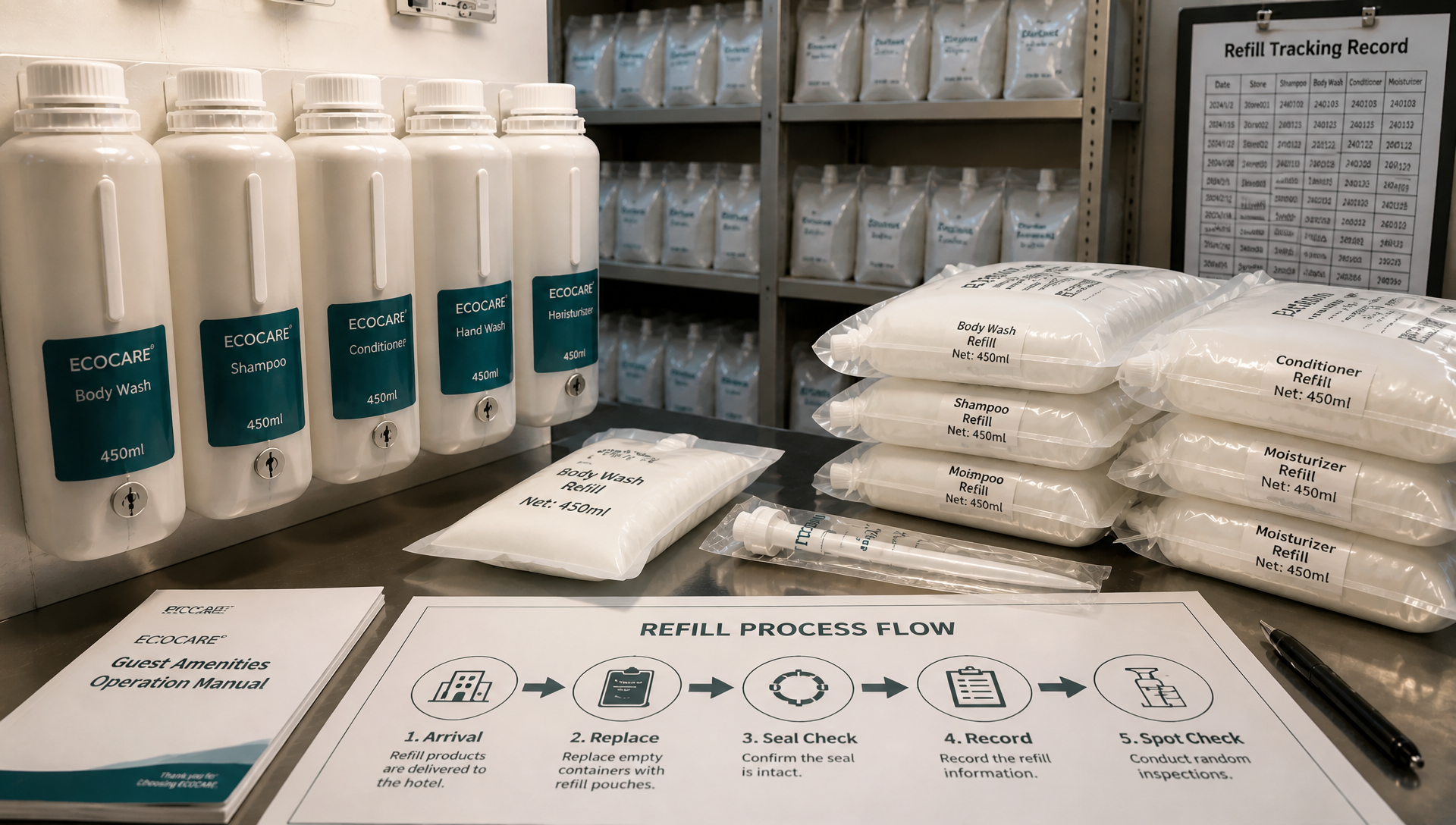
 Nov 09, 2026Large Bottle Refill Is Replacing Small Bottles – The Real Barrier Isn't the Bottle, It's the Replenishment Process
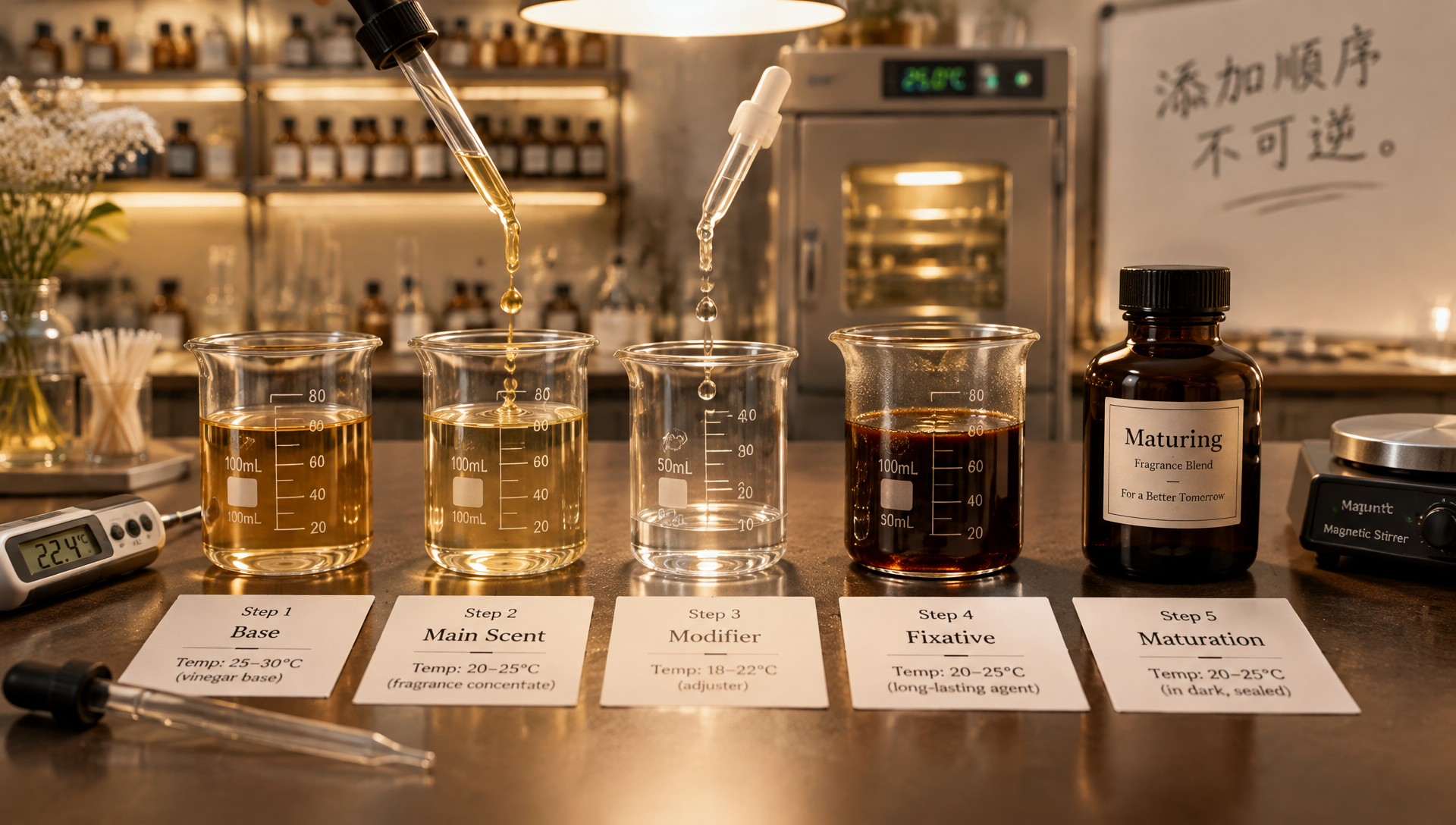
 Nov 06, 2026Blending Fragrance Liquid Is Not Stirring: Get the Sequence Wrong, and the Scent Notes Flip Front to Back
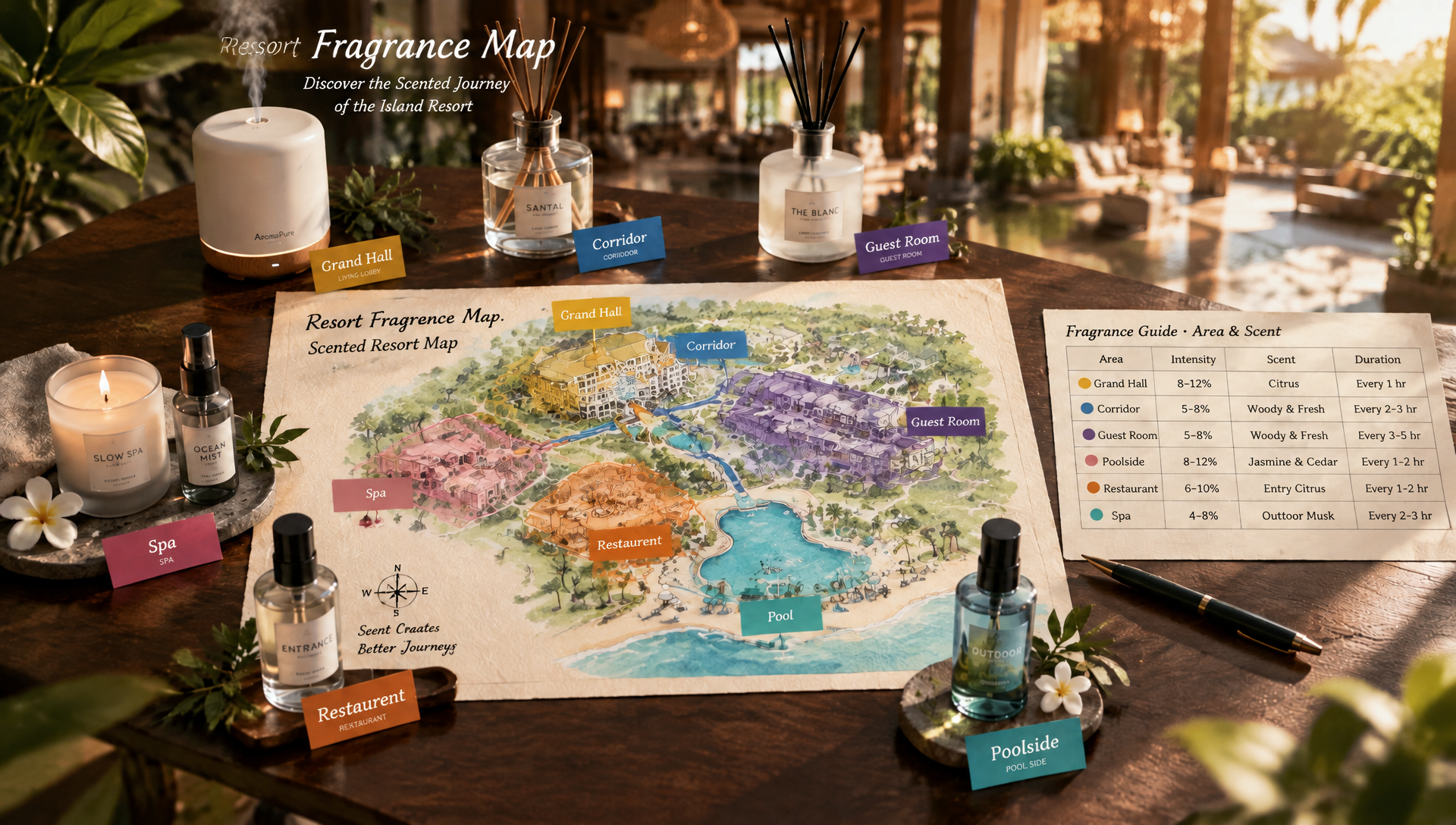
 Nov 04, 2026Resort Fragrance Solution Design: A Full-Scenario Olfactory Experience from Lobby to Spa
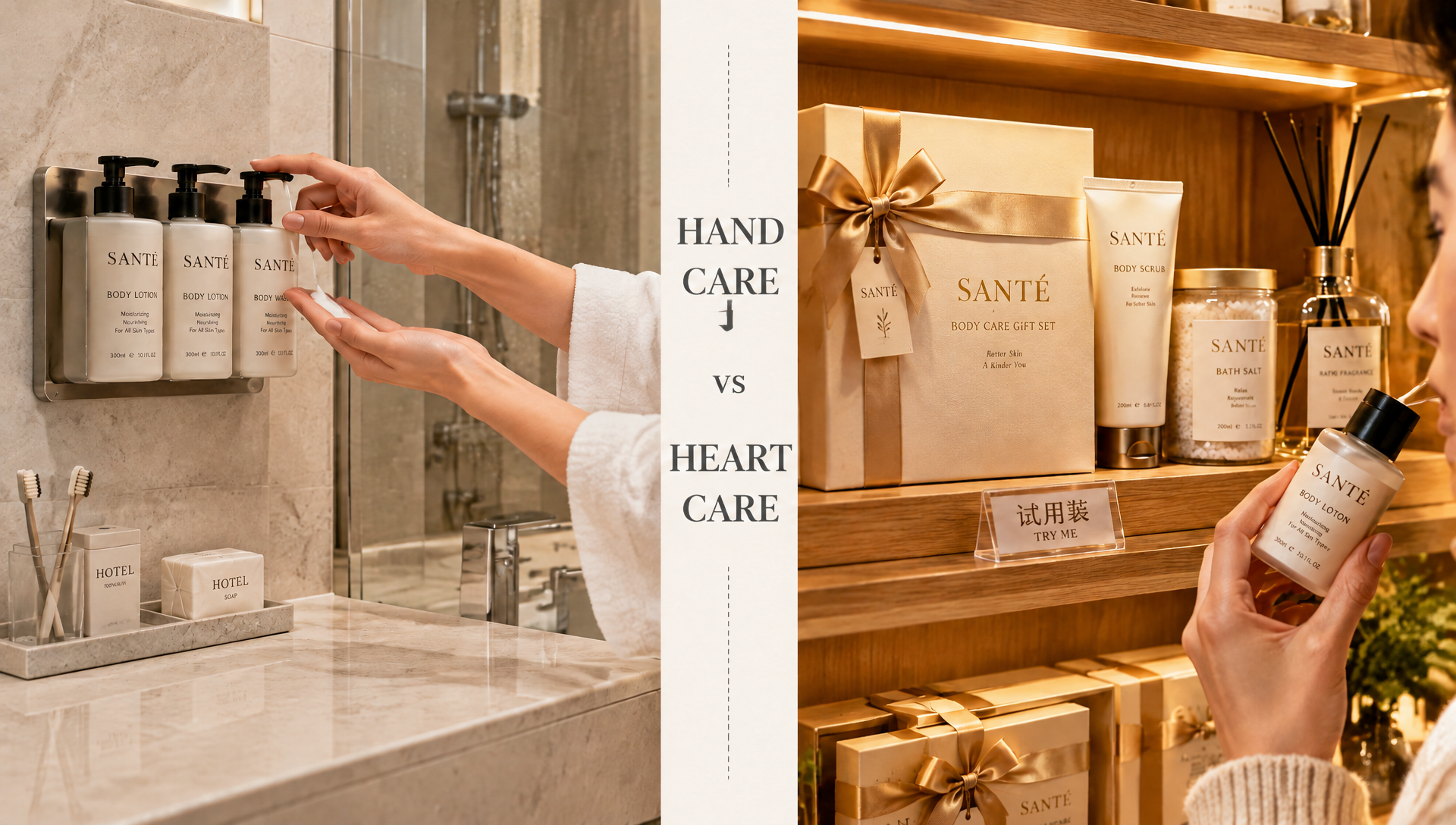
 Nov 02, 2026Retail Corner Display Logic and Guest Room Placement Logic Are Two Different Systems
Ask For A Quick Quote
If you are looking for more information on our services, or how we could potentially help, we would love to hear from you!