



Fine, Soft Hair Guests Aren't Complaining About Lack of Smoothness – They're Complaining About Flatness: Two Types of Complaints Correspond to Two Levels of Conditioning
Two reviews from the same hotel, one week apart.
One says: "The conditioner isn't smooth enough – hair won't blow straight, the comb snags every time."
The other says: "After washing, my hair was flat all day, plastered to my scalp like I hadn't washed it in three days."
The same bottle of conditioner receiving two opposite verdicts means the problem isn't quality – it's grade.
Conditioning level is the seesaw between smoothness and volume. Turn the formula up – coarse, damaged hair becomes smooth; fine, soft hair goes flat. Turn the formula down – fine, soft hair gains volume; coarse hair turns frizzy.
There's no universal grade – only the right grade. In hotel amenities selection lists, the hair care column shouldn't have just one model – it should have two. This article breaks down these two complaints, clarifying who each conditioning level is meant to save.
A Seesaw: Smoothness and Volume Can't Both Win
The mechanism of conditioning level in one sentence: Cationic conditioning agents in conditioner adsorb onto the hair surface, neutralizing the negative charge after shampooing. Cuticles close. Feels smooth, combs through.
The greater the adsorption, the smoother – this is the high grade. But as adsorption increases, friction between strands decreases while weight increases. Fine, soft hair can't support this film – it goes flat.
Smoothness and volume sit at opposite ends of this seesaw. The formula can only press down on one end. Formulas trying to win both ends lose a little on both.
When evaluating hotel toiletries suppliers, whether they can supply two conditioning grades simultaneously is a hard metric. Suppliers offering only one grade leave the guest profile matching problem for the hotel to guess.
Two Complaints, Two Hair Type Verdicts
Fine, soft hair's verdict: flat. Fine, soft hair has thin strands – can't support the extra adsorbed conditioning film. After high-conditioning conditioner, it feels smooth during washing – two hours after blow-drying it starts clinging to the scalp – by noon it looks unwashed. Guests won't write "conditioning level too high" – they write "hair was flat all day after washing." This specific sentence stays in the review.
Coarse, damaged hair's verdict: frizzy. Coarse hair and chemically damaged hair have open cuticles and more negative charge. Low-conditioning conditioner can't suppress it – tangles, frizz, strands exploding in photos. Guests write: "The comb won't go through – the conditioner feels like nothing."
In hotel bath amenities, conditioner is the only category that simultaneously receives two opposite complaints. Shampoo – if lather isn't rich enough or fragrance is off, complaints point in one direction. Only conditioner gets scolded from both ends.
Three Ledgers
Attribution ledger. Flat complaints get attributed to "the hair dryer isn't good enough." Frizzy complaints get attributed to "the guest's hair is difficult." Neither end checks the conditioner. Changing hair dryers won't buy volume.
Replacement ledger. Receiving complaints, switching brands – the replacement is still the same conditioning grade. Properties with many coarse-haired guests switch several brands – complaints unchanged – all wasted effort.
Guest profile mismatch ledger. Business guest profiles have a higher proportion of fine, soft hair – yet get paired with the smooth grade. Family resort guests get paired with the volume grade. Grades and guest profiles exactly reversed – complaints follow the reversal.
Two Conditioning Grades – Where the Formulas Differ
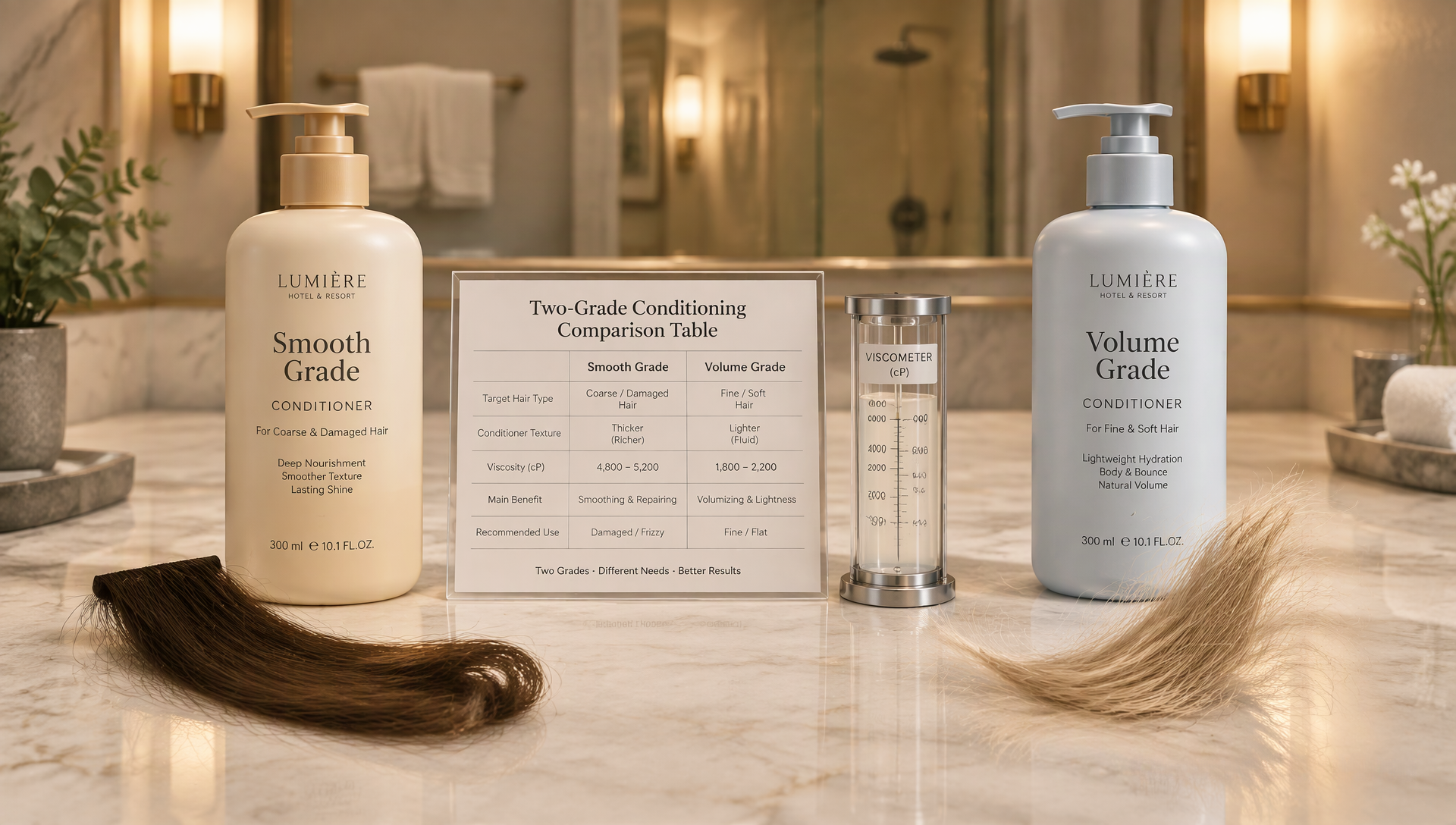
Cationic conditioning agent dosage. High grade raises adsorption. Low grade deliberately leaves margin. This is the biggest difference between the two grades.
Silicone type and ratio. High grade uses silicones with obvious film-forming feel. Low grade uses lightweight silicones or none. Post-wash hair weight feels completely different.
Thickening system. Low grade often formulated lighter – rinses fast, no residue feel. High grade thicker – stronger lingering feel. Each serves its own hair type.
pH fine-tuning. Both grades must fall within the cuticle-closing range. Low grade closer to neutral – reducing burden on fine, soft hair.
Two-Grade Comparison Table
Three Steps to Set Grades by Guest Profile
Step one: map the guest profile. Review guest demographics. Fine, soft hair is more common among younger women and families with children. Coarse, damaged hair is more common among middle-aged and chemically treated guests. Precision isn't needed – the tendency must be right.
Step two: ask for data. Report the guest profile tendency to the hotel amenities supplier – request real-person test data for both grades. How much volume fine, soft hair retains hours after use; how smooth coarse hair feels after use – more useful than reading ingredient lists. Luxury hotel supplies suppliers typically have real-person test hair swatch records available for reference. Companies willing to provide data usually have solid formulation confidence.
Step three: small-scale trial. Select two or three floors – each configured with one grade. Review reviews for two weeks. Whichever grade gets more specific positive reviews – roll it out to match. Suites and villas can have both grades – separated by floor: business floors get volume grade, family floors get smooth grade – each takes what it needs.
Note on the wall-mounted side: Once hotel dispenser amenities are installed, it's one grade for the whole building. To offer different grades, you'd need to revert to the whole-bottle route. Think it through before renovating.
Public restroom hotel dispenser amenities don't need agonizing – use a middle-slightly-smooth grade. Public restroom usage time is short – both flat and frizzy complaints are rare.
Six Points at the Factory End
Two-grade separate line production. When switching grades, thoroughly switch liquid and tubing – prevent high and low grades from cross-contaminating. Cross-contaminated batches resemble neither grade.
Clear label language. "Smooth Grade" and "Volume Grade" printed on bottles – guests take what they need, not guess.
Batch consistency. Conditioning agent dosage is a sensitive parameter. Large cross-batch fluctuations mean the same grade feels different before and after.
Real-person test records retained. Fine, soft hair and coarse hair each get a batch of real-person tests. Photos and hair swatch data delivered with each batch.
Rinsability verification. Low grade fears residue most. Formulas that don't rinse clean get categorized by guests as "fake smooth."
Cross-grade appearance differentiation. Bottle colors or markings clearly distinguished between grades – housekeeping doesn't mis-ship during replenishment.
Few hotel guest amenities manufacturers are willing to do real-person testing and deliver data with each batch – but they can be found. Luxury hotel supplies suppliers typically have the most complete hair swatch archives – borrowing for comparison saves much trial and error.
Hotel bath amenities' shampoo and conditioner must be validated as a pair. Testing conditioner without testing the shampoo pairing is only looking at half the picture. During acceptance, request batch consistency records for both grades from the hotel amenities supplier – review alongside real-person test reports.
Customization and Replenishment Implementation
The true landing point of personalized hotel amenities is guest profile matching. Same brand, two grades running in parallel, unified labeling – guests take what they need.
Branded hotel amenities' two-grade lines are typically more mature – grade naming and bottle differentiation have been refined over many rounds.
Hotel guest custom amenities should produce both grade samples at the sampling stage – let housekeeping and trial floors each use for two weeks before deciding.
Custom hotel consumables lists add a column for conditioning grade codes – replenishment matched by floor – no mis-shipment.
From Experience to Profit
There's a rarely written line in branded hotel amenities' reputation: whether hair is flat or voluminous after washing. Guests will write specific sentences into reviews – these sentences are worth far more than "amenities are average."
If hotel toiletries suppliers only offer one grade, they leave the guest profile matching problem for the hotel to guess – and the direction of the guess becomes the direction of the complaint.
From a profitability perspective – matching the right grade saves not money, but those specific positive reviews. Business guests write "hair was voluminous all day." Resort guests write "my chemically treated hair finally feels smooth." These sentences bring the next booking.
Personalized hotel amenities' grade-differentiated solution isn't extra inventory – it's turning the direction of complaints into the direction of praise.
FAQ
Q: Can we create a middle grade that satisfies both ends?
A: Middle grades satisfy neither end well. Properties with high proportions of fine, soft hair guests will still receive flat complaints. Grade differentiation is more effective than compromise.
Q: Fine, soft hair guest used the smooth grade and went flat – is that a formula problem?
A: Not a quality problem – a grade-hair type mismatch. The formula performs qualified on coarse hair. The solution for this type of complaint is adjusting the grade – not returns.
Q: Will two grades complicate housekeeping replenishment?
A: It's a matter of one more code column. Hotel guest amenities manufacturers mark conditioning grade on each batch. Replenishment matched by floor – workload increase is limited.
Q: Can small batches order both grades?
A: Yes. Hotel guest custom amenities ordering by guest profile grade is standard practice. When custom hotel consumables volume is small, prioritize stock formulas for both grades – most stable lead time.
Browse our hotel amenities wholesale collection – from volume grade to smooth grade, two conditioning levels, plus guest-profile-based replenishment solutions, all covered in one stop. Our flexible customization production line supports small-batch flexible MOQs.
latest articles
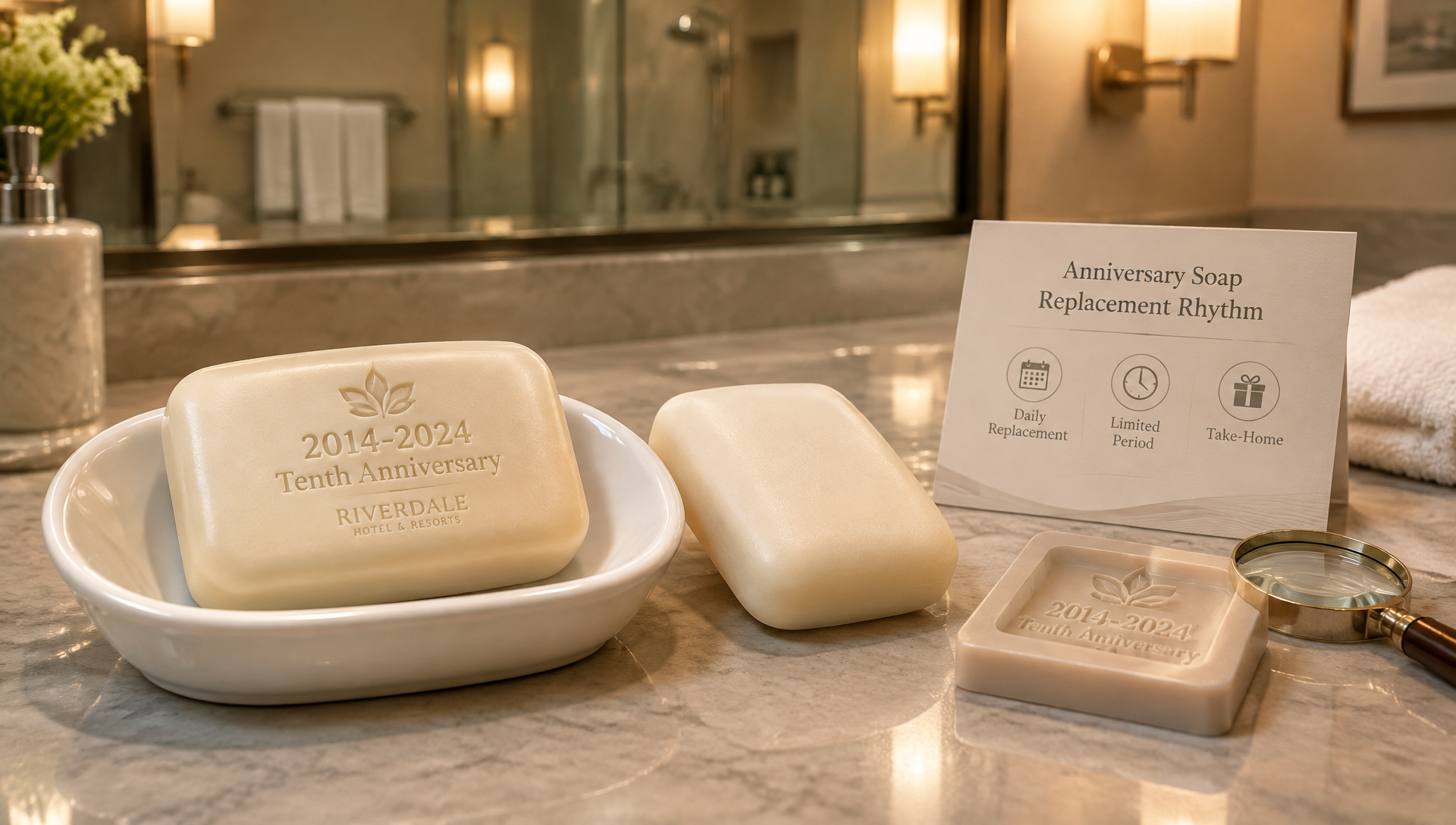
 Nov 18, 2026Anniversary Soap: Engraving the Opening Date into the Bar – A Fresh Bar Every Day, and the Sense of Ritual Takes Hold
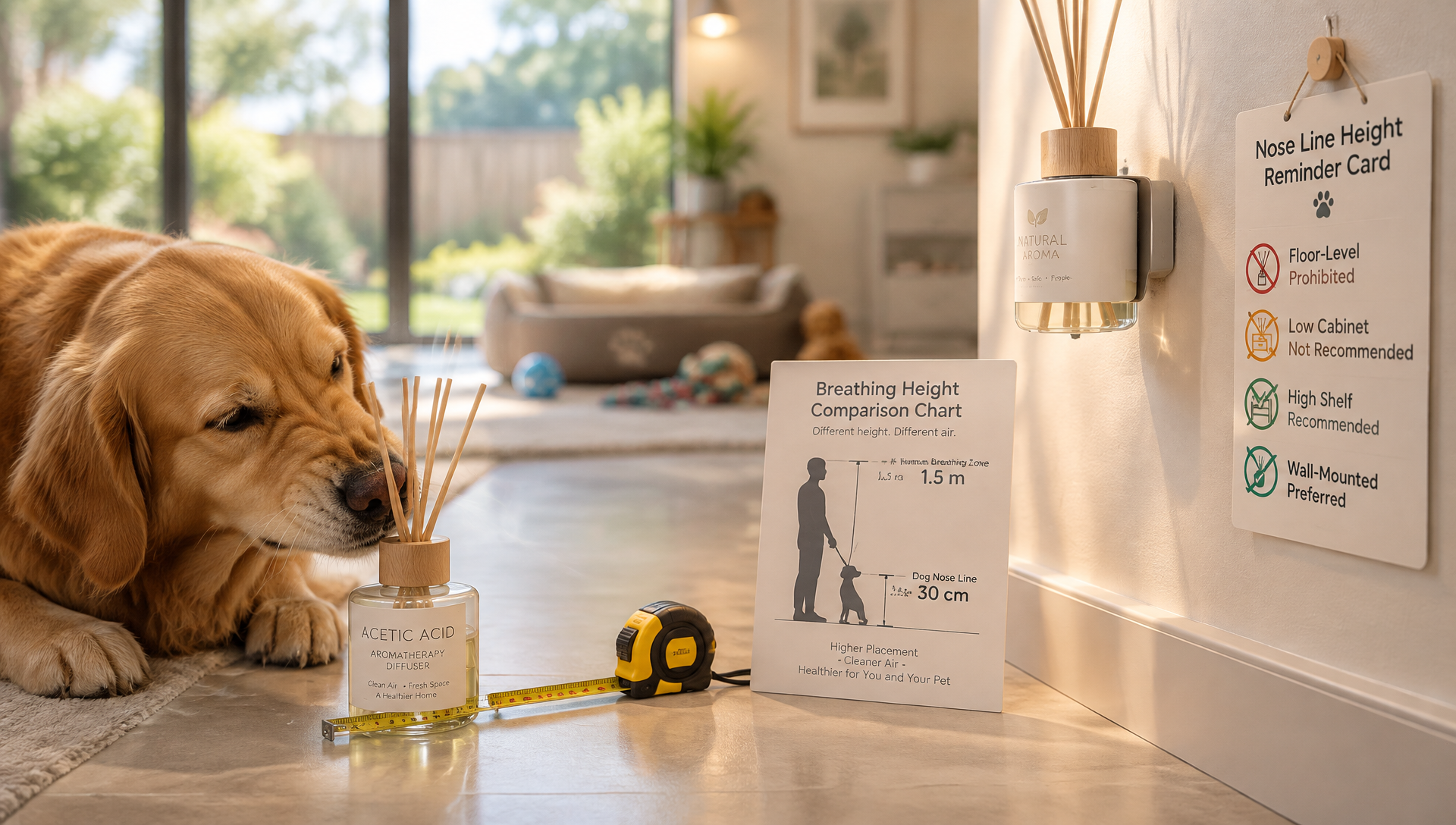
 Nov 17, 2026Placing Aromatherapy on the Floor Means Keeping Your Dog in the Highest-Concentration Air Layer All Day
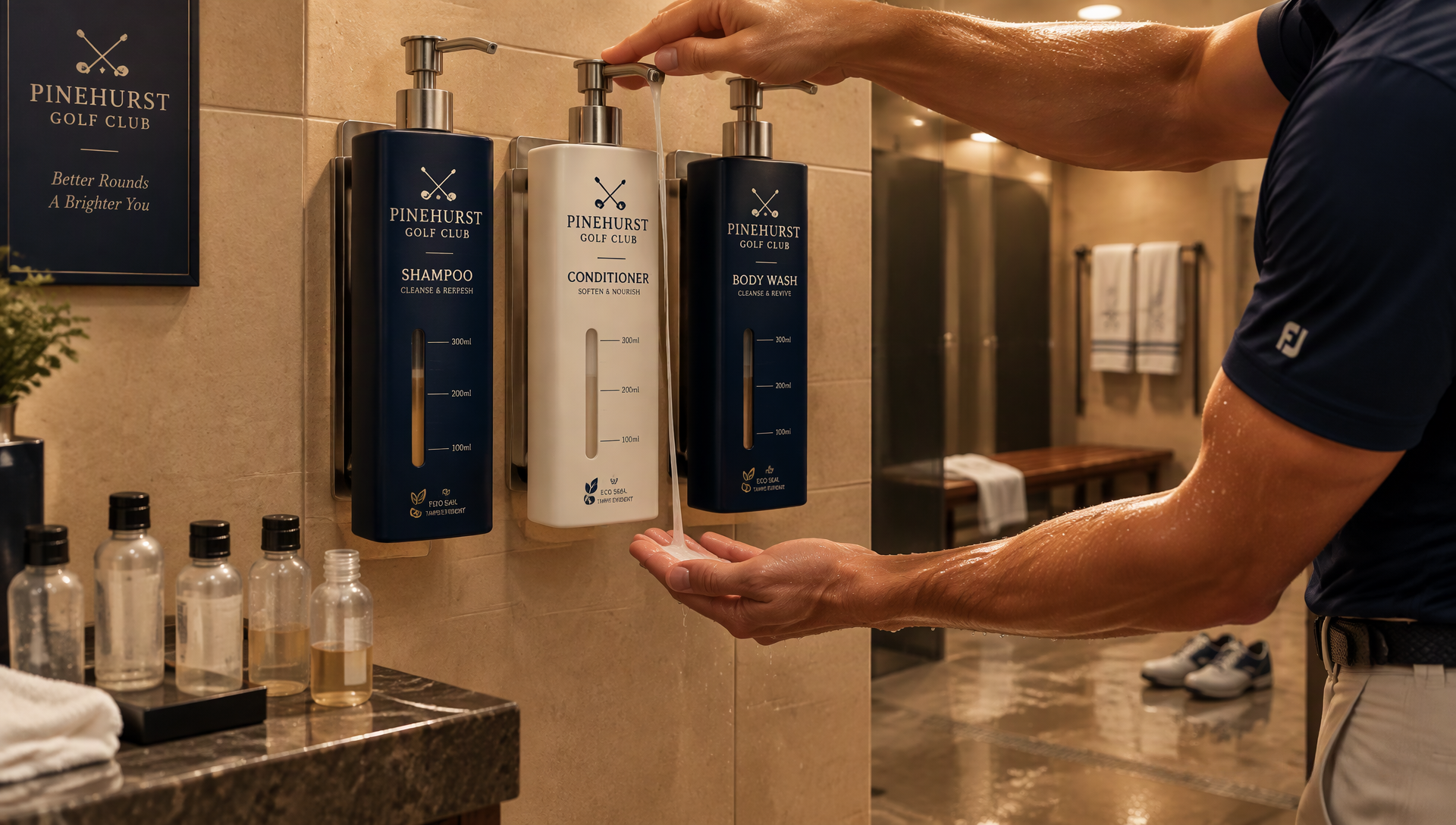
 Nov 13, 2026Golf Club Changing Room Toiletry Consumption Is Three Times That of Guest Rooms – Wall-Mounted Large Bottles Are More Cost-Effective Than Small Bottle Placement
 Nov 12, 2026Fine, Soft Hair Guests Aren't Complaining About Lack of Smoothness – They're Complaining About Flatness: Two Types of Complaints Correspond to Two Levels of Conditioning
Ask For A Quick Quote
If you are looking for more information on our services, or how we could potentially help, we would love to hear from you!