



Placing Aromatherapy on the Floor Means Keeping Your Dog in the Highest-Concentration Air Layer All Day
Putting acetic acid aromatherapy in pet rooms – the starting point is mostly right: suppress the odors pets leave behind.
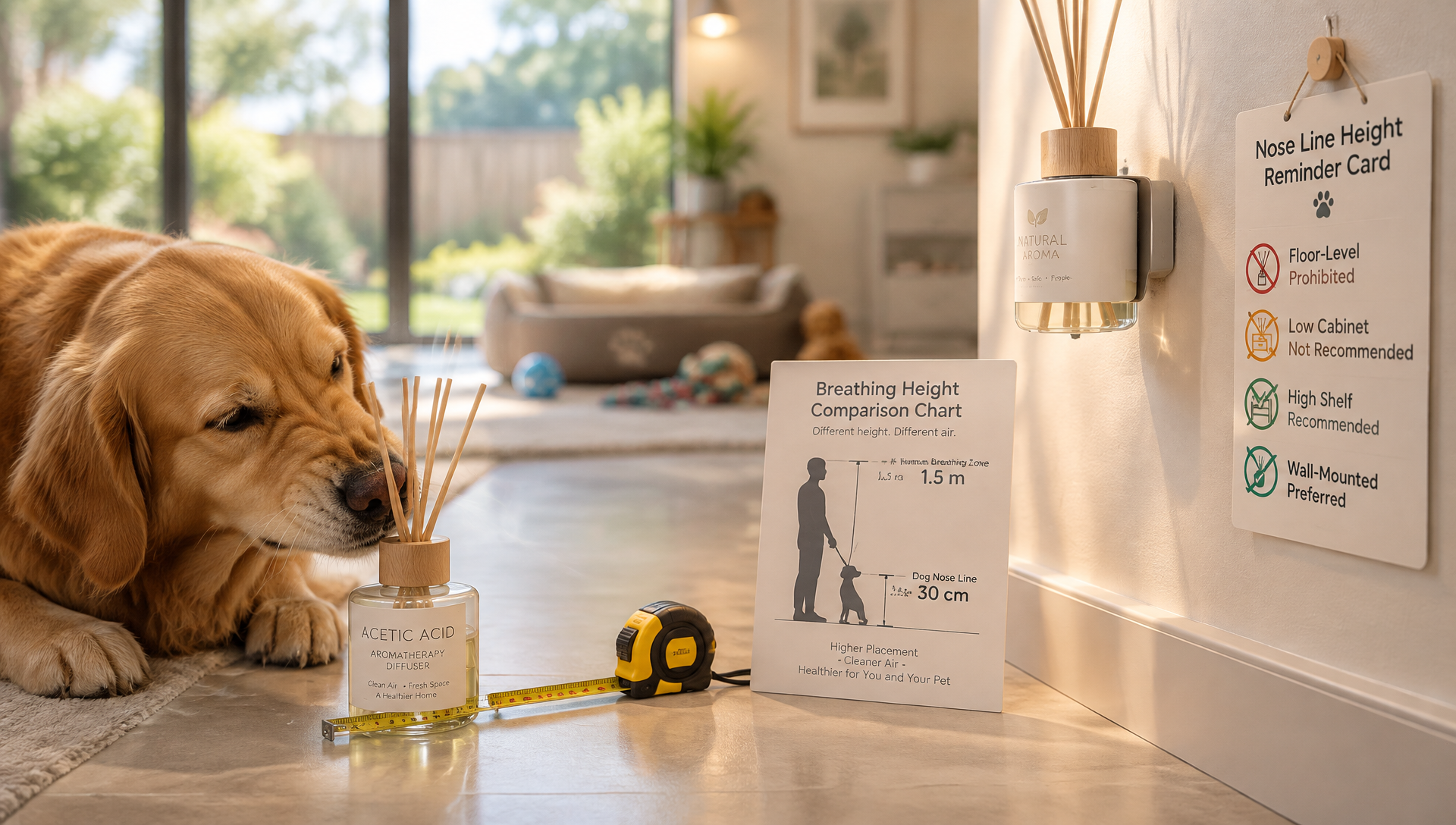
What's wrong is the position. Once the diffuser is placed on the floor, the volatilized scent molecules spread close to the ground. Human breathing zone is over one meter up. A dog's nose line is only tens of centimeters off the floor. Same room – what humans smell is a faint ambiance, while the dog spends all day soaked in the highest-concentration air layer.
Dogs have dozens of times more olfactory cells than humans. Long-term exposure to high concentrations – sneezing, rubbing their nose, hiding in the bathroom – all are protests.
This article clarifies the breathing height issue from four perspectives – guest experience, hotel operations, product competitiveness, and hotel profitability – then provides a placement standard for pet rooms based on the dog's nose line.
Same Room, Humans and Dogs Live in Two Layers of Air
The term "breathing zone" – guest room design defaults to human calculations. Standing height around 1.5 meters, sitting height also well above counter level.
A dog's nose line is only tens of centimeters off the floor. Cats are even lower when lying down. Same room – humans live in the upper layer of air, dogs live in the lower layer. The scent concentration between the two layers isn't the same.
Scent molecules have their own temperament. Components heavier than air sink with cooler air currents – the closer to the floor, the higher the concentration. Humans standing straight think it's just faintly elegant – crouch down and sniff, the scent immediately goes up a grade. And dogs aren't occasionally crouching down – they spend most of the day lying in that layer.
Why the Ground Layer Has the Highest Concentration
Breaking down this near-floor layer – it's a disaster zone stacked from several factors.
Molecule settling. Heavy molecules in fragrance sink with cooler air toward the floor. The near-floor layer is their terminal station.
No airflow. Air conditioning and exhaust are designed for human breathing zones. The near-floor layer is a wind blind spot – scent sinks in and can't disperse.
Dog activity zone. Dogs lie down to sleep, lie down to chew toys – nose line suspended in the concentration peak all day. Cats entering the room to patrol also walk close to the floor.
Odor stacking. The floor also retains cleaning agent odors. Two smells mix in the ground layer – what the dog smells is a blended formula.
Why This Type of Aromatherapy Often Gets Placed Wrong
Acetic acid aromatherapy's characteristic is direct odor elimination – acidic molecules neutralize alkaline odors. Pet room urine smell and dampness happen to be alkaline odors – the original purchase intent was to suppress odor.
The logic error is treating an odor-elimination tool as an ambiance tool. The moment you think "suppress odor," you want to place it near the odor source. The odor source is on the floor – so the diffuser goes down to the floor.
The result: odor not fully eliminated – dog熏着 first. The correct approach is the opposite – raise the diffuser, rely on air circulation to distribute effective concentration evenly – let the scent dilute in the upper layer before settling down – rather than pressing hard against the odor source. Raise the position – dosage can actually decrease – but the effect is more stable.
Height Standard Based on the Dog's Nose Line
Pet room placement standards – the ruler shouldn't be human height. It should be the dog's nose line.
Beyond height, four supporting measures:
Timed release. Align release periods with room usage periods. Stop release at night – the dog's sense of smell is still on duty at night.
Concentration grading. Different grades for check-in day and extended-stay days. After the dog adapts, downgrade.
Ventilation linkage. Align release periods with fresh air supply – diffuse while supplying – no deposition left behind.
Reaction observation. Dog sneezing, nose rubbing, frequently leaving the room – any one of these three signals – first downgrade, then check position.
Profitability Ledger: Is Aromatherapy Reputation or Hazard? Position Decides
From a profitability perspective, pet room aromatherapy is a double-edged sword. Placed right – it's "the nicely scented dog den" in reviews. Placed wrong – it's a stress source.
Pet guests are more sensitive to odors than standard guests – because they live with a dog's nose every day. A video of a dog sneezing at the diffuser gets posted – aromatherapy shifts from selling point to complaint point. Comments no longer discuss whether the room is good – they discuss whether this hotel understands pets.
After raising the height, guests' descriptions become "no weird smell entering the room, dog didn't sneeze" – these sentences hold up the pet subcategory ranking – and are the most valuable kind of review.
Another ledger is hidden cost. Dogs irritated by scent will bark, scratch doors, fuss. Front desk must come soothe. Neighboring rooms may complain. A whole chain of handling starts from one misplaced diffuser.
"No odor" is the hardest thing to write into advertising – yet always the first quality guests perceive upon entering. Hold this line, and pricing power stays in hand.
How to Configure the Supply Chain – Write Height into the Solution
Confirm three things with the supplier: the diffuser's adjustable release height range, whether timed-release function exists, the volatilization curve and ventilation recommendations for this type of acidic formula.
Don't sample in the office – place it in a real pet room for one night. Dog sleeps steadily, human doesn't find it overpowering – only then does it pass sampling.
Write placement height into the usage instructions in the contract. Include a nose-line height reminder card with each room – both cleaning staff and guests can understand it.
FAQ
Q: Is this type of aromatherapy safe for dogs?
A: Safe when concentration and height are controlled. The problem was never the scent type itself – it's the dog's nose line suspended at the concentration peak long-term. Raising the height and adding timing resolves it.
Q: Isn't placing it on the floor more direct for suppressing urine odor?
A: Direct but rough. Near-floor concentration is a burden on the dog. Raise it and rely on air circulation to distribute evenly – odor elimination effect undiminished – irritation plummets.
Q: Should it be turned off at night?
A: Yes. Timed release stops during sleep hours. The dog's sense of smell is still on duty at night – continuous release equals all-night pressure.
Q: How to judge if the concentration is appropriate?
A: Watch the dog's reactions. Sneezing, nose rubbing, frequently leaving the room – all signals. Crouch down at nose-line height and sniff – if there's an obvious sharp scent, it's too high.
Browse our acetic acid aromatherapy wholesale collection – from adjustable-height diffusers to timed-release solutions to full private-label solutions, all covered in one stop. Our flexible customization production line supports small-batch flexible MOQs.
latest articles
 Nov 18, 2026Anniversary Soap: Engraving the Opening Date into the Bar – A Fresh Bar Every Day, and the Sense of Ritual Takes Hold
 Nov 17, 2026Placing Aromatherapy on the Floor Means Keeping Your Dog in the Highest-Concentration Air Layer All Day
 Nov 13, 2026Golf Club Changing Room Toiletry Consumption Is Three Times That of Guest Rooms – Wall-Mounted Large Bottles Are More Cost-Effective Than Small Bottle Placement
 Nov 12, 2026Fine, Soft Hair Guests Aren't Complaining About Lack of Smoothness – They're Complaining About Flatness: Two Types of Complaints Correspond to Two Levels of Conditioning
Ask For A Quick Quote
If you are looking for more information on our services, or how we could potentially help, we would love to hear from you!