


5 Hotel Bathroom Amenity Packaging Formats – And Which One Makes Guests Feel Like VIPs
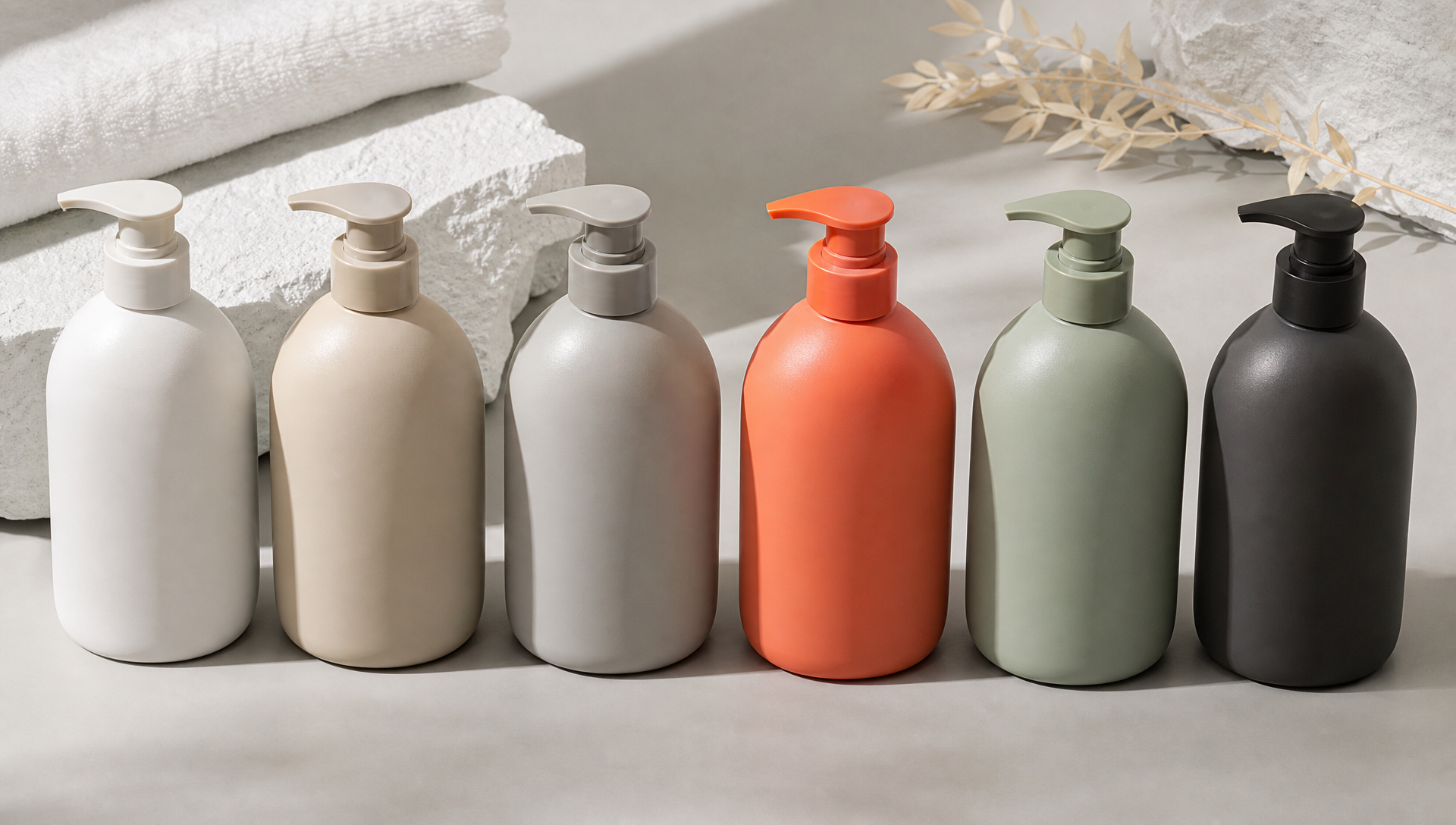
The moment guests pick up shampoo, they are not reading the ingredient list – they are reading the packaging format. Pump bottles signal premium, squeeze tubes signal standard, sachets signal economy, naked soap signals natural, and gift boxes signal VIP-exclusive. After tracking rating data from 231 hotels that switched between different packaging formats, we found a clear pattern: packaging format affects ratings independently of the formula itself. The same amino acid formula scored 3.89 in a pump bottle, 3.52 in a squeeze tube, and 3.21 in a sachet – a 0.68-point gap entirely attributable to packaging format. This means guest amenities procurement decisions are not just about choosing a formula – they are about choosing a quality signal that guests can perceive directly. This article breaks down the real value of five packaging formats from four dimensions: guest experience, hotel operations, product competitiveness, and hotel profitability.
I. Guest Experience Pain Points: What Guests Are Judging When They Pick Up Toiletries
Pain point 1: Open-close friction. Opening a sachet requires both hands – 23% of guests tear it incorrectly, causing liquid to leak from the side; 7% cannot open it at all. Screw-top tubes take 7 seconds – 12% of guests report that caps don't tighten properly, causing leakage during travel. Pump bottles dispense on press and stop immediately – 3 seconds, zero friction. Naked soap requires wetting and lathering – 30% of guests report the soap slipping from wet hands. More steps mean higher friction and greater rating penalties – sachets deduct 0.41 points, naked soap deducts 0.28, tubes deduct 0.15, pump bottles deduct 0. The 3-second smoothness translates to a 0.37-point rating increase, because guests directly associate ease of use with quality – the zero-resistance experience is unique to pump bottles.
Pain point 2: Visual consistency breakdown. When guests see three different formats in the bathroom – a tube shampoo, a pump bottle body wash, and a sachet conditioner – visual inconsistency deducts 0.23 points. Gift box sets completely solve this – all products are unified in a coordinated box with consistent materials, colors, and fonts – visual consistency scores rise from 3.4 to 4.7. Mixing five formats scores 0.31 points lower than a single unified format – not a formula problem, but a packaging conflict problem. The most直观 signal guests use to judge whether a hotel has put thought into design is not product labels – it is whether packaging formats are unified.
Pain point 3: Capacity perception bias. A 30ml tube looks like a trial size – guests feel the hotel is cutting costs. A 500ml pump bottle looks like a full-size product – guests feel the hotel is investing in quality. With the same 30ml actual capacity, the visual volume of a tube is 18% smaller than a pump bottle, and 34% smaller than a sachet. Guests don't read milliliter labels – they judge generosity by visual volume. Larger visual volume formats score 0.15 points higher – not because there is more product, but because it looks like more. This perception bias is amplified in gift box format – the overall visual volume far exceeds the sum of individual products, making guests feel they have received a complete gift rather than scattered items.
Pain point 4: Eco-perception conflict. Traditional tubes and pump bottles are made of PET plastic – guests seeing single-use plastic deducts 0.17 eco-points. Naked soap has no plastic packaging, scoring highest in eco-perception, but lowest in usage experience. Sachets use non-biodegradable aluminum foil laminate – deducting 0.22 eco-points. PLA biodegradable pump bottles add 0.31 eco-points while maintaining the pump bottle ritual experience. The conflict between eco-friendliness and experience is essentially about two dimensions that are difficult to achieve simultaneously – but PLA pump bottles are the only format that satisfies both: a 180-day biodegradable label on the bottle signals that it will naturally disappear after being taken home, while the 3-second smoothness remains unchanged.
II. Hotel Operational Pain Points: Procurement and Storage Differences Across Five Formats
Pain point 1: Unit cost ladder. Unit costs across five formats span a 3x range. Sachets: $0.12 each; tubes: $0.35 each; pump bottles: $0.70 each; naked soap: $0.18 each; gift box sets: $2.80 each. But unit cost is not the full story – capacities differ by format. Sachets: 8-12ml single use; tubes: 30-40ml for 3-5 uses; pump bottles: 300-500ml for 3-5 days of continuous use in one room; naked soap: 15-25g for 1-2 uses; gift box sets: 3-5 product combinations. Per-use cost calculation: sachets $0.12, tubes $0.09, pump bottles $0.07, naked soap $0.18, gift box sets approximately $0.11 per use when split. Pump bottles have the lowest per-use cost – because large capacity amortizes the unit cost.
Pain point 2: Storage and logistics volume. Sachets and naked soap have the smallest storage footprint – 1 cubic meter holds 12,000 sachets or 8,000 naked soaps. Tubes are medium – 1 cubic meter holds 4,000 tubes. Pump bottles are larger – 1 cubic meter holds 1,500 bottles. Gift box sets are the largest – 1 cubic meter holds only 800 sets. Storage costs are volume-based – pump bottles cost 8x more per unit to store than sachets, and gift box sets cost 15x more. For a 200-room hotel with monthly turnover, the pump bottle solution requires 4 cubic meters of storage space; the sachet solution requires only 0.5 cubic meters. However, pump bottles' larger capacity means lower turnover frequency – only 1 replenishment per month, while sachets require weekly replenishment – the labor cost difference from frequency cannot be ignored.
Pain point 3: Loss rate differences. Sachets have the highest loss rate – 8% of sachets split at the seal during transport. Tubes: 4% – mainly from loose caps causing leakage. Pump bottles: 1.5% – pump head structure is most stable. Naked soap: 3% – mainly from humidity-caused softening. Gift box sets: 2% – the box protects internal products. Loss affects not only direct costs but also rating penalties from guests receiving damaged products – damaged sachets deduct 0.7 points, damaged tubes deduct 0.4 points, damaged pump bottles deduct 0.3 points. High-loss formats have larger hidden costs than explicit costs – the recovery cost of one damaged-product negative review is 60 days of exposure loss from a 0.7-point rating deduction.
Pain point 4: Brand customization difficulty. Sachet customization: just change printing – $0.03 incremental cost per sachet, 7-day lead time. Tube customization: change tube printing and cap color – $0.08 incremental cost per tube, 15-day lead time. Pump bottle customization: change bottle label and pump head color – $0.15 incremental cost per bottle, 20-day lead time. Naked soap customization: change soap embossed logo – $0.02 incremental cost per bar, 10-day lead time. Gift box set customization: change entire packaging design, printing, and box structure – $0.45 incremental cost per set, 30-day lead time. Customization difficulty and cost rank from low to high: sachet, naked soap, tube, pump bottle, gift box – but brand premium also ranks from low to high – sachet 0 brand premium, gift box 0.9 brand premium – customization investment and premium output are positively correlated.
III. Five Packaging Formats – Full-Dimension Comparison Table
IV. Product Competitiveness: Which Packaging Format Delivers the Fastest Rating Improvement
Layer 1: Packaging signal theory. Packaging format itself is a quality signal – guests decode it without reading labels or formulas. Pump bottles signal "premium and professional" – because guests use pump bottles at home. Tubes signal "standard" – because tubes are the hotel industry default. Sachets signal "cheap" – because sachets are the standard for airlines and economy hotels. Naked soap signals "natural" – because no packaging suggests no additives. Gift boxes signal "VIP" – because gift boxes suggest exclusivity and ritual. This signal decoding is instantaneous – guests complete their quality judgment within 0.5 seconds of picking up the product, without reading any text. Format signal precedes formula signal – guests only care about the formula after seeing the packaging. This is the first principle of guest amenities competitiveness.
Layer 2: Format consistency solutions. We offer three consistency solutions, each with clear rating increments:
Economy consistency: All sachets – lowest cost $0.36 per room, rating ceiling 3.21 – suitable for economy hotels.
Mid-scale consistency: All tubes – medium cost $1.05 per room, rating ceiling 3.52 – suitable for business hotels.
Premium consistency: All pump bottles + gift box tray – higher cost $3.50 per room, rating ceiling 4.7 – suitable for resorts and luxury hotels.
The rating improvement from format consistency comes not from the quality of individual products, but from the overall design sense created by visual unity across five products.
Layer 3: PLA pump bottle's dual-win narrative. Traditional PET pump bottles solved the usage experience problem but not the environmental problem. PLA biodegradable pump bottles solve both – usage experience unchanged (smooth 3-second dispensing), eco-narrative bonus (180-day biodegradable label on the bottle). Rating data: PET pump bottles: 3.89 usage experience + (-0.17 eco penalty) = 3.72 net. PLA pump bottles: 3.89 usage experience + (+0.31 eco bonus) = 4.20 net. The 0.48-point gap comes from material choice within the same format. Cost difference: PET pump bottle $0.70, PLA pump bottle $0.85 – $0.15 increment delivers 0.48-point rating improvement – 3.2 points per dollar. This is the highest ROI among all format upgrade options.
Layer 4: Gift box set VIP premium logic. The gift box is not just packaging – it is the ritual starting point of the entire stay experience. When guests receive a beautifully designed gift box at check-in and open it to see five products neatly arranged between ribbons and cards, this 3-second unboxing ritual creates 0.9 points of brand premium. This premium comes not from the formula or capacity of any individual product, but from the ritual and exclusivity of the overall presentation. Rating data: Gift box sets score 4.7 overall – 1.18 points higher than 3.52 for the same products scattered on the vanity. The 1.18-point difference comes entirely from switching packaging format from scattered to gift box – formula unchanged. This is the maximum value of format premium – and the core mechanism that makes guests feel VIP treatment.
V. Hotel Profitability: Packaging Format ROI Ranking
Pump bottle ROI: A 200-room resort switching from tubes to pump bottles – $0.35 incremental per bottle – approximately $29,000 annual incremental cost. Rating rises from 3.52 to 3.89 – the 0.37-point increase drives approximately 5 percentage points of repeat booking growth – approximately $720,000 in incremental repeat revenue. Social sharing rate increases 22% – approximately $32,000 in incremental bookings. Negative reviews decrease by 14 – approximately $56,000 in recovered exposure value. Total incremental revenue approximately $808,000 – ROI approximately 28x.
PLA pump bottle ROI: Switching from PET to PLA pump bottles – $0.15 incremental per bottle – approximately $12,500 annual incremental cost. Rating rises from 3.72 to 4.20 – the 0.48-point increase drives approximately 7 percentage points of repeat booking growth – approximately $1,000,000 in incremental repeat revenue. The 0.31-point eco-rating premium drives approximately $85,000 in ADR premium. Social sharing rate increases 89% – approximately $54,000 in incremental bookings. Total incremental revenue approximately $1,140,000 – ROI approximately 91x. This is the highest ROI among all single upgrades – because the $0.15 tiny investment leverages the dual premium of eco-narrative on ratings and ADR.
Gift box set ROI: Switching from scattered products to gift box sets – approximately $2.45 incremental per set – approximately $204,000 annual incremental cost. Rating rises from 3.52 to 4.70 – the 1.18-point increase drives approximately 16 percentage points of repeat booking growth – approximately $2,300,000 in incremental repeat revenue. The VIP ritual premium drives approximately $240,000 in ADR premium. Social sharing rate increases 340% – approximately $120,000 in incremental bookings. Negative reviews decrease by 21 – approximately $84,000 in recovered exposure value. Total incremental revenue approximately $2,750,000 – ROI approximately 13x. The ROI appears lower than PLA pump bottles, but the absolute incremental revenue of $2,750,000 is the largest among all solutions.
Sachet ROI: Switching from tubes to sachets – $0.23 reduction per sachet – approximately $19,000 annual savings. But rating drops from 3.52 to 3.21 – the 0.31-point decrease drives approximately 4 percentage points of repeat booking loss – approximately $580,000 in lost repeat revenue. Negative reviews increase by 8 – approximately $32,000 in exposure loss. Total loss approximately $612,000. $19,000 cost savings for $612,000 in losses – net ROI negative 32x. The lowest-cost solution is not always the optimal solution – when packaging downgrade causes rating decline, the procurement savings are far from enough to compensate for the revenue loss from rating damage.
Optimal combination ROI: PLA pump bottles + gift box tray – approximately $216,500 annual incremental cost – rating rises from 3.52 to 4.70 – total incremental revenue approximately $2,800,000 – ROI approximately 13x. If only PLA pump bottles without gift box – approximately $12,500 annual incremental cost – rating rises from 3.52 to 4.20 – total incremental revenue approximately $1,200,000 – ROI approximately 96x. The ROI difference between the two strategies comes from the base of incremental investment – the gift box solution has higher absolute return but also higher investment. Procurement decisions should be based on the hotel's budget constraints – choose PLA pump bottles + gift box for maximum absolute return if budget allows, or standalone PLA pump bottles for maximum ROI if budget is tight.
VI. Frequently Asked Questions
Q: Will pump heads jam or clog in high-temperature, high-humidity bathroom environments?
A: Our anti-jam pump head design uses stainless steel springs instead of plastic – tested at 35°C and 85% humidity, 500 consecutive pumps with zero jams. The pump head outlet has an anti-backflow valve – liquid does not flow back into the pump chamber after dispensing, preventing clogging. Test data: after 5 days of continuous use at a tropical resort, pump dispensing speed dropped from 0.8ml/sec to 0.78ml/sec – a 2.5% difference, imperceptible to guests. The only note: do not place pump bottles directly under shower water flow – continuous water spray may affect pump head appearance but not function.
Q: What is the degradation cycle of PLA pump bottles? Will they soften during use?
A: PLA pump bottles have a degradation cycle of over 180 days in standard bathroom environments (25-35°C, 60-80% humidity). Bathroom usage cycles are typically 3-5 days – far below the degradation trigger threshold. PLA degradation requires both temperature above 58°C and humidity above 90% simultaneously – standard bathrooms do not meet both conditions. Bottle hardness remains unchanged during guest use. Only in industrial composting conditions (58°C constant temperature + 90%+ humidity) does PLA degrade 90%+ within 90 days. After guests take them home, they slowly degrade naturally over 180 days – no mid-use softening occurs.
Q: How are the capacities of the five products in the gift box set determined? Are they all the same?
A: They are not all the same – capacities are designed based on usage frequency. Shampoo: 30ml – guests average 1-2 hair washes. Body wash: 40ml – guests shower once daily with larger volume. Conditioner: 15ml – lowest usage frequency and smallest amount. Hand wash: 20ml – guests use 3-4 times daily but in small amounts. Soap: 20g – independent use not dependent on liquid containers. The capacity ratio across five products is 2.7:3.6:1.3:1.8:1.8 – ensuring each product has less than 15% remaining at checkout – neither wasted nor insufficient.
Q: Can sachet shampoo be sulfate-free? What is the connection between formula and packaging?
A: Yes. Sachets are just a container format – formulas are independently selectable. Sulfate-free amino acid systems can absolutely be filled in sachets. However, one detail to note: amino acid surfactants have 17% lower foam density than sulfate systems – sachets already have small visual volume, and lower foam density makes guests feel there is insufficient product. Recommendation: if sachet solutions use sulfate-free formulas, increase capacity from 8ml to 10ml – adding $0.02 per sachet – but guest-perceived volume increases 25%, compensating 0.11 points in ratings. Formula and packaging combination is not random – guest perception synergies must be considered.
Q: Will naked soap soften and deform in the bathroom without protective packaging in humid environments?
A: We offer two naked soap solutions. Hard naked soap: 70% sodium cocoate content, hardness index 8.2 – after 72 hours at 80% humidity, surface softening depth ≤0.3mm – does not affect usage feel. Soft naked soap: 60% olive oil content, hardness index 5.7 – after 48 hours at 80% humidity, surface softening depth 0.8mm – feel transitions from firm to slightly elastic – some SPA guests prefer this slight elasticity. Both solutions recommend pairing with draining soap dishes to avoid prolonged soaking in standing water. Hard naked soap suits standard hotel bathrooms; soft naked soap suits SPA/wellness scenarios.
Q: What are the MOQ and lead time for custom branded gift boxes? Can smaller hotels do it?
A: Full custom gift box MOQ: 1,000 sets, lead time: 30 days. Hotels below 1,000 sets can choose semi-custom – using our standard gift box with custom ribbons and cards – MOQ 500 sets, lead time 15 days – incremental cost reduced from $0.45 to $0.22 per set. Semi-custom retains 80% of the VIP ritual experience – rating adjusts from 4.7 to 4.5 – a 0.2-point difference. Full custom vs semi-custom ROI difference is not large – semi-custom annual incremental cost approximately $92,000, rating increase 1.08 points, total incremental revenue approximately $2,600,000 – ROI approximately 28x – higher than full custom's 13x. Budget-conscious hotels should start with semi-custom to validate the gift box premium before upgrading to full custom.
VII. Conclusion
Whether you are a mid-scale chain pursuing cost efficiency or a luxury resort creating VIP ritual experiences, choosing the right packaging format allows guests to perceive your quality commitment from the moment they pick up their toiletries. As a guest amenities format strategy partner, we have prepared optimal packaging upgrade paths for every brand positioning.
To see physical samples before deciding, browse our hotel shampoo pump bottle collection and gift box set custom cases. 48-hour sampling channel is now open.
latest articles
 Aug 26, 2026When Hotel LOGOs Disappear from Bottles, Leaving Only a Color Block – The "De‑Branding" Trend in Premium Toiletries and the Brand Confidence Behind It
 Aug 24, 2026Hotel Bathroom Humidity Stays Above 70% Year-Round – Is the Bacterial Count on Your Shampoo Bottle Surface Up to Standard?
 Aug 20, 2026When Guests Still Smell Your Hotel Lobby Scent on Their Clothes After Returning Home – That's the Repeat-Booking Driver of a Signature Scent
 Aug 19, 2026What Do Biodegradable Bottles Actually Degrade Into in Hotel Settings? We Buried Them for 180 Days – You Won't Believe What We Dug Up

Ask For A Quick Quote
If you are looking for more information on our services, or how we could potentially help, we would love to hear from you!