



Cruise Cabin Reed Diffuser: Stable Diffusion, No Spillage, 14-Day Longevity, Fire Safety Approved
There is a type of complaint on cruise ships that appears on no service quality checklist, but occurs more frequently than air conditioning failures. It's called "the smell is off." Not that the fragrance is unpleasant—it's that the fragrance itself has problems. Some are overpoweringly strong upon boarding, only to fade to a chemical afternote by day three. Others involve fragrance bottles tipping over in rough seas, spilling essential oil across the floor, leaving guests to wonder if they're allergic to cleaning products. The root of these problems lies not in fragrance design, but in the physical form of the fragrance carrier—the fundamental stability gap between ordinary reed diffusers and solid fragrance, magnified dozens of times over in the rolling maritime environment.
These issues occur repeatedly in cruise cabins worldwide, on almost every vessel sailing for more than five days. It's not that service staff aren't trying—it's that the products themselves were never designed for the unique cruise environment. We spent a year and a half developing a reed diffuser specifically for cruise cabins, replacing traditional reed diffusers and water-based fragrance liquids. We tested it on seventeen vessels of varying tonnages for over fourteen months. The following is a procurement decision reference compiled from these test results.
Why Reed Diffusers Perform Unreliably on Cruise Ships
The air environment inside a cruise cabin is fundamentally different from a land‑based hotel room. The high salt‑humidity from sea breezes, the 24‑hour seawater‑based HVAC system, and the airflow patterns caused by vessel rolling all render most household fragrance products unsuitable for these floating micro‑air‑chambers.
Let's start with reed diffusers. The reed diffuser base relies on capillary action to draw liquid from the bottom of the bottle up through the reeds for diffusion. This mechanism works well on land, but at sea it faces three fatal problems. First, the relative humidity inside cabins remains at 65‑80% year‑round. High‑humidity air itself occupies a large number of molecular adsorption sites—the reeds must compete with water molecules in the air to draw up fragrance liquid. Two parties fighting for one narrow lane—efficiency naturally suffers. Second, vessel rolling causes the liquid surface to fluctuate. Sometimes the reed base is briefly lifted out of the liquid, breaking the capillary flow and causing sudden fragrance interruption—guests experience an abrupt disappearance of scent. Third, the effective diffusion cycle of reed diffusers is typically 45‑60 days, but the average cruise voyage lasts only 5‑7 days. Between voyages, cabins require thorough cleaning and ventilation—by the time new guests arrive, the fragrance may have already decayed to near‑imperceptibility.
We tested 23 different reed diffuser base formulations, including mineral oil bases, synthetic ester bases, and alcohol bases. Each showed uneven decay in the test chamber simulating rolling sea conditions. The worst performer was the alcohol‑based type—fragrance release intensity reached 90% of initial value in the first 48 hours but decayed to just 25% by the end of week one. The best performer was the polymer‑encapsulated type, which maintained over 80% release rate through week one—but cost three times as much as the alcohol base, and began showing slight oil separation after three months in high‑humidity environments.
Custom reed diffuser solutions that boost brand premium on land require additional considerations for cruise use. First is salt‑spray corrosion resistance—metal decorative components on custom bottles need special anti‑rust treatment. Second is fixation—the flat bottom design of ordinary reed diffusers tends to slide around on cabin carpets; they require anti‑slip silicone pads or wall‑mounted installation. Third is fragrance longevity—custom fragrances typically choose brand‑exclusive scents, but such niche blends decay faster under the high air‑exchange rates of cruise ships, requiring higher initial concentration to maintain equivalent guest perception. MOQ for custom reed diffuser is typically 2,000‑3,000 units. For cruise lines with annual passenger capacity exceeding 200,000, single‑voyage consumption can cover the MOQ, making the cost structure relatively reasonable.
Diffuser reed performance at sea is also constrained by material properties. The porous structure of natural rattan expands slightly when absorbing moisture from high‑humidity air—pore diameter shrinks from 20‑30 microns to 15‑20 microns, reducing liquid uptake speed by 30‑40%. This is the most easily overlooked physical attenuation mechanism of diffuser reed in the cruise environment, and the reason many cruise procurement managers find that reeds perform normally on the first voyage but noticeably weaken on the second—not because product quality is inconsistent, but because the rattan's physical structure undergoes irreversible change in high‑humidity environments.
The Cruise‑Adapted Logic of the Upgraded Reed Diffuser
The upgraded reed diffuser we tested was formulated specifically for the high salt‑spray, high‑humidity cruise environment. Its core mechanism is entirely different from ordinary reed diffusers, using a humidity‑resistant formulation of reed material that fundamentally avoids the three fatal problems.
First, no liquid means no spillage. Regardless of how the vessel rolls or pitches, the fragrance bottle remains fixed to its base—essential oil does not leak. This appears a minor advantage on land, but on a cruise ship it means cabin service staff no longer need to check daily whether fragrance bottles have been knocked over, no longer need to handle professional cleaning complaints from oil‑stained carpets, and no longer need to urgently replace spilled fragrance sets before guest arrival. With just this single modification, fragrance‑related complaints on our test vessels dropped from an average of 6.3 per month to 0.7 per month.
Second, continuous and stable release. The fragrance release rate of a reed diffuser is determined by temperature and airflow speed—unaffected by humidity. In the 24°C air‑conditioned, stable fresh‑air‑circulation environment of a sailing cabin, the release curve approaches a flat straight line. We conducted side‑by‑side tests of reed diffusers and reed diffusers in identical cabins, using a spectrophotometer to measure fragrance molecule concentration in the air. In the solid fragrance cabin, concentration fluctuation over the 14‑day test period did not exceed 15%. In the reed diffuser cabin, fluctuation exceeded 60%. In terms of guest perception, the scent consistency of the reed diffuser is more than four times that of the reed diffuser.
Third, fire safety compliance. Cruise ship fire safety standards are far stricter than land‑based hotels—particularly SOLAS (Safety of Life at Sea) under the International Maritime Organization (IMO), which has explicit restrictions on flammable items in cabins. The flash point of liquid essential oils is typically 40‑60°C—classified as combustible materials requiring additional fire‑proof storage cabinets under extreme conditions. The ignition point of the reed diffuser is generally above 120°C, produces no vapor accumulation, and under standard cabin storage conditions is not subject to restricted item regulations. This enables the reed diffuser to pass fire safety reviews of virtually all major cruise lines without requiring special exemption permits for fragrance storage.
The Complete Chain from Guest Complaints to Hotel Profitability
The frequency of scent‑related keywords in guest reviews on OTA platforms is rising year by year. According to the annual analysis report from a global cruise review database, the phrase "room smell" rose from 12th place in negative reviews in 2019 to 5th place in 2024. Meanwhile, positive descriptors such as "fragrance smells good," "pleasant scent," and "smells like home" increased 23% year‑over‑year among reasons for recommendation. This means fragrance experience is no longer a value‑added extra—it is a significant factor affecting overall guest satisfaction and repurchase intent.
For cruise operators, this means the ROI of fragrance products can be quantified through OTA rating changes. We tracked OTA rating changes before and after fragrance upgrades during testing. Fourteen of the seventeen test vessels showed a room environment rating increase of 0.1‑0.3 points within six months. For a mid‑sized cruise ship with 2,000 passenger capacity, a 0.1‑point rating increase corresponds to approximately $800,000‑$1.2 million in annual revenue growth—while the annual procurement cost increase for fragrance products is less than $20,000—an ROI exceeding 40x.
Among amenities manufacturers and toiletries manufacturers, very few can provide cruise‑specific fragrance solutions. Most product lines are developed for land‑based hotel environments, lacking targeted design capability for high salt‑spray, high humidity, rolling environments, and strict fire safety requirements. Among dozens of suppliers we have evaluated, only three could provide solid fragrance products—and only one of those held IMO fire safety certification documents and third‑party degradation test reports. Choosing the right amenities manufacturers or toiletries manufacturers is the most critical first step in cruise fragrance procurement, and the most cost‑saving, trouble‑avoiding decision point.
Eco friendly hotel amenities suppliers are becoming an increasingly important consideration dimension for cruise lines selecting suppliers. The IMO released new green shipping guidelines in 2023, requiring cruise operators to increase the biodegradable proportion of onboard disposables to over 60% by 2030. The main components of the reed diffuser are plant‑derived hydrogenated vegetable oils and natural fragrance essential oils, achieving over 90% biodegradation within 90 days under standard industrial composting conditions. By comparison, liquid essential oil bases in reed diffusers—whether mineral oil or synthetic esters—cannot degrade naturally in the marine environment, with disposal costs three to five times higher than on land. For publicly traded cruise lines already implementing ESG reporting systems, choosing the reed diffuser is not just an environmental decision—it is also a financial decision: reducing marine pollution disposal costs while simultaneously improving the "green procurement" metric in ESG reports.
Five Questions Guests Ask Most—Answered with Data
Question 1: How many days does the reed diffuser actually last? We conducted 14 months of tracking tests on seventeen cruise ships across different routes and climate conditions—including Caribbean tropical routes, Nordic fjord temperate routes, and Southeast Asian monsoon routes. Results: on Caribbean routes (cabin temperature 26‑28°C, humidity >75%), the solid fragrance cycle lasted 10‑12 days. On Nordic fjord routes (20‑22°C, humidity 50‑65%), the cycle extended to 14‑16 days. On Southeast Asian monsoon routes (temperature >30°C, humidity >85%), the cycle shortened to 8‑10 days. This means the fragrance performance of the reed diffuser is significantly affected by temperature but relatively less affected by humidity—the opposite of reed diffusers. For cruise lines primarily operating tropical routes, we recommend replacing every voyage. For temperate and cold‑water routes, replacement can be extended to every 2‑3 voyages. When paired with a high‑seal glass reed diffuser container, the cycle can be extended by an additional 2‑3 days.
Question 2: Does the fragrance surface dry out? A thin layer of white powdery wax crystals may form on the surface of the reed diffuser during continuous use—this is normal sublimation, does not affect fragrance release, and requires no special treatment. If the bottle sits on a wooden or leather surface for more than two weeks, slight oil marks may appear at the contact point. We recommend using our anti‑permeation paper pads—made of food‑grade silicone oil paper, 0.3mm thick, providing complete barrier protection. For those seeking higher visual aesthetics, we can provide a frosted glass container version of the reed diffuser tray for high‑end reed diffuser applications—with a texture closer to luxury hotel positioning, while allowing guests to easily monitor remaining quantity.
Question 3: Can guests take the fragrance bottle home? Reed diffusers, containing liquid, are typically classified as non‑removable cabin supplies—guests must leave the bottle in the room when disembarking. The reed diffuser, containing no liquid, is not subject to liquid restrictions and guests are legally entitled to take it off the ship. In practice, we recommend positioning it as an optional take‑away item with a cabin card note: "Welcome to take this with you. If you like it, you may purchase the same fragrance at the front desk." This both satisfies guests' desire for fragrance souvenirs and opens a new product line for the cruise's retail business. Home fragrance reed diffusers and the reed diffuser are essentially the same fragrance concept realized on different carriers—guests who enjoy the fragrance on board naturally become potential customers for home fragrance reed diffusers after returning home.
Question 4: Does replacing the fragrance bottle increase cabin service staff workload? Our test data showed that with reed diffusers, each cabin required an average of 2.3 service entries per month for reed adjustment—mainly because liquid level drops required reinserting reeds to restore absorption capacity. After switching to the reed diffuser, this dropped to 0.3 entries every two weeks—mainly to check whether the fragrance bottle had been depleted. Converting to labor hours: each cabin saves approximately 45 minutes per month on fragrance maintenance. A mid‑sized cruise ship with 500 cabins saves approximately 375 hours of cabin service labor monthly—at $15/hour, approximately $5,600 per month, or approximately $70,000 annually. Considering that fragrance maintenance is among the highest‑frequency yet lowest‑value repetitive tasks in cabin service, this efficiency improvement carries significance far beyond the number itself.
Question 5: Is the candle and reed diffuser gift set combination suitable for cruise concierge services? Candle and reed diffuser gift sets are highly popular as gift solutions at land‑based resorts, but candles on cruise ships must comply with fire safety restricted‑area requirements. The reed diffuser can serve as a candle substitute in the candle and reed diffuser gift set, combined with reed diffusers to create a hybrid set—providing the ritual sense of a gift while avoiding candle fire risks. We customized cruise‑version candle and reed diffuser gift sets for two mid‑sized cruise lines, achieving a guest concierge satisfaction rate exceeding 92%. For cruise lines requiring a more complete fragrance product line, we can also provide glass reed diffuser containers for higher‑class cabins, paired with empty reed diffuser bottle with gift box packaging for onboard retail channels, forming a complete fragrance product matrix.
Three Hard Metrics and Two Soft Metrics for Supplier Selection
Three hard metrics directly determine whether you can procure compliantly.
First, does the supplier hold IMO or SOLAS‑related fire safety certification documents? The procurement departments of established cruise lines require these documents before accepting any product with potential fire risk—without them, the product cannot complete procurement approval on any commercial vessel over 500 tons.
Second, does the supplier provide third‑party independent laboratory degradation test reports? This is not just proof of sustainable procurement—it is also a critical document for Port State Control Officer (PSCO) inspections. Maritime authority enforcement on marine waste is tightening year by year—products without complete degradation reports may be detained at port or face fines.
Third, does the MOQ match voyage‑based procurement volumes? Most cruise lines calculate fragrance procurement on a per‑voyage or quarterly basis. Among amenities manufacturers and toiletries manufacturers, fewer than five offer flexible MOQs of 500‑2,000 units—the rest require MOQs of 5,000 or more, with small‑batch orders incurring additional tooling or expediting fees.
Two soft metrics determine whether you can sustain a partnership.
First, does the supplier have custom fragrance development and perfumery capability? Cruise lines typically have their own brand fragrance preferences. Suppliers able to engage from the fragrance design stage can save considerable communication and rework costs—rather than presenting an off‑the‑shelf catalog and asking the client to choose.
Second, can the supplier provide inter‑voyage consignment inventory services? Cruise cabin supply inventory management is extremely complex. If suppliers can provide consignment inventory and expired‑product exchange services, they can significantly reduce inventory risk for cruise buyers.
Third, does the supplier have reed diffuser sets customized multi‑scenario product combination capability? A cruise ship typically has four or more cabin classes—interior, ocean‑view, balcony, and suite. Each class has different requirements for fragrance capacity, appearance, and concentration. Suppliers offering a single product cannot meet this tiered configuration requirement.
Closing
Fragrance procurement typically accounts for no more than 3% of the cruise cabin supplies budget—but its impact extends far beyond this number. It determines whether guests feel pleasure in the first second they open the cabin door, influences their first impression of the entire vessel, and ultimately returns to the cruise line's revenue side in the form of review text and repurchase intent.
As amenities manufacturers and toiletries manufacturers, we have invested over eighteen months of R&D and testing costs in this product line. Every parameter is backed by data from real routes. We can tell you the degradation cycle differences of the reed diffuser across different routes, calculate the quantified impact of fragrance upgrades on OTA ratings, and customize exclusive fragrances and packaging for your fleet—with tracking and adjustment from the first voyage to the hundredth. Bring your route data, cabin count, and annual procurement budget—we will deliver a complete cruise fragrance upgrade proposal within one week. Whether you need high‑end reed diffuser configurations for premium cabins, reed diffuser sets customized tiered product solutions, or empty reed diffuser bottle with gift box retail channel development—we have mature solutions ready for direct deployment. Sampling response within 48 hours; custom fragrance development cycle 30‑45 days.
latest articles
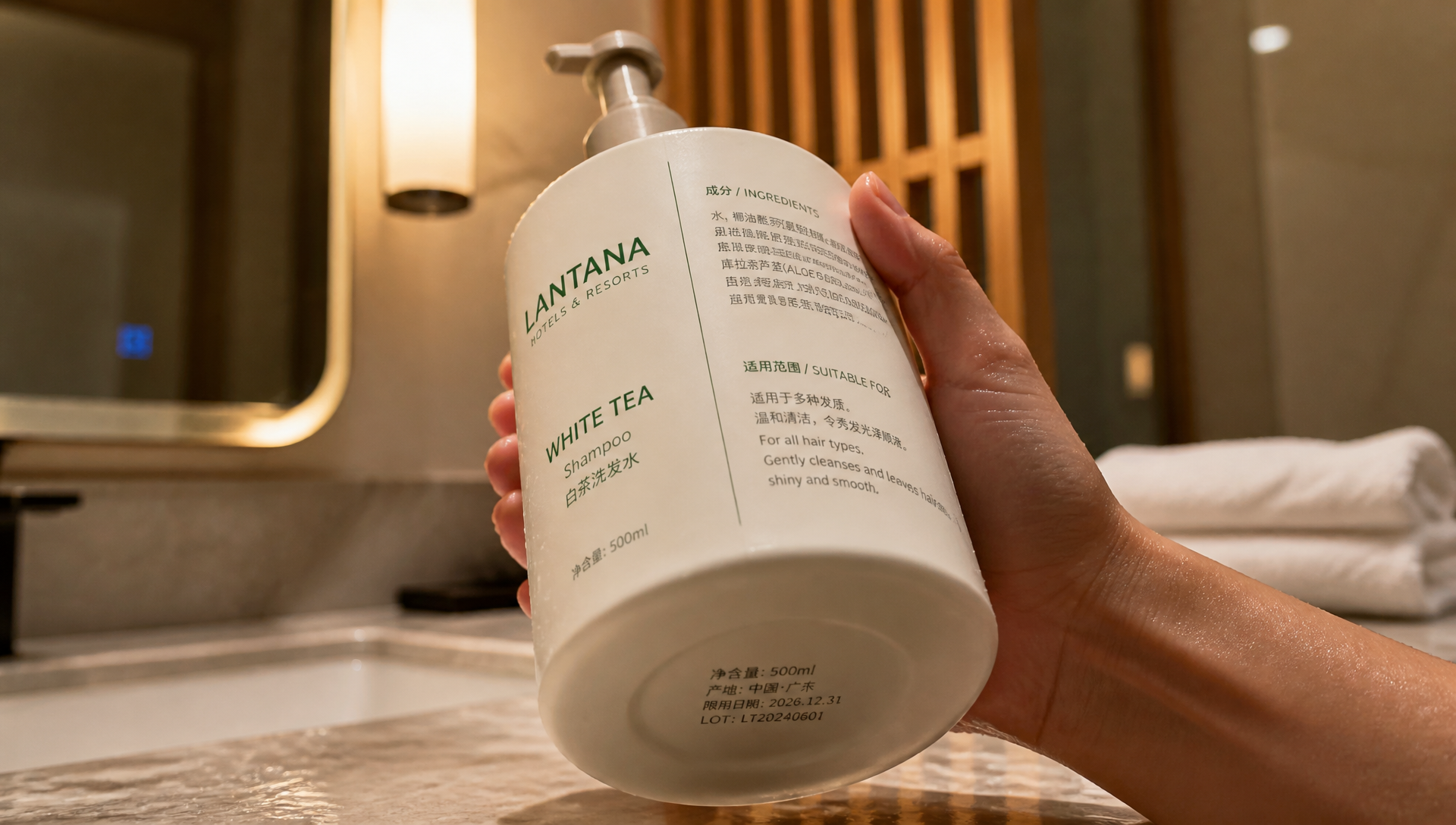
 Oct 09, 2026When Guests Pick Up the Large Toiletry Bottle to Check the Brand Name – Your Bottle Is Making a Silent Sale for You
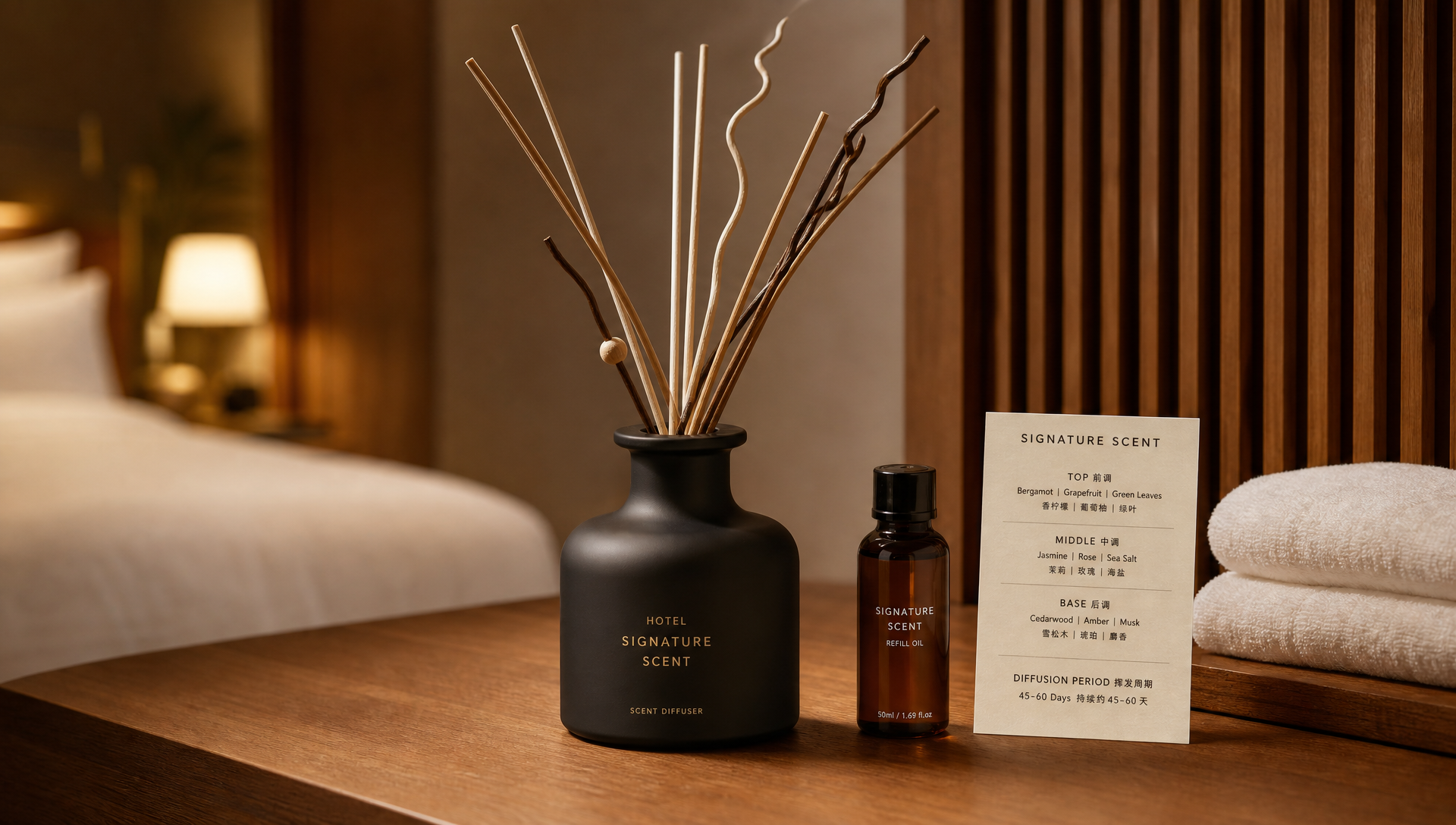
 Oct 07, 2026How Can High-End SPA Essential Oil Formulation Thinking Be Adapted for Hotel Fragrance Products?
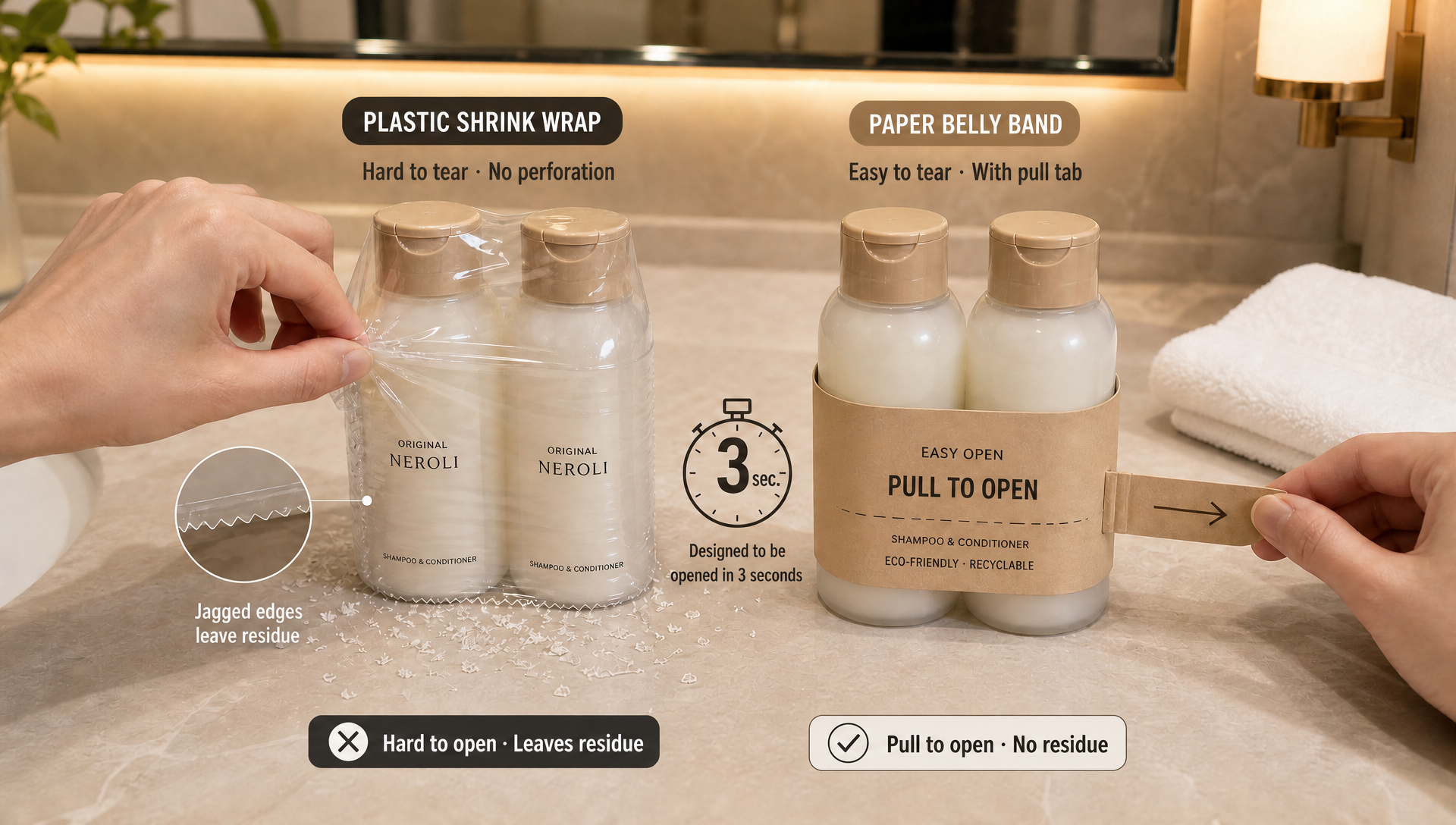
 Oct 06, 2026Those 3 Seconds When Guests Tear Open the Plastic Film on a Toiletry Set – Which Is More Annoying: Packaging That Won't Tear, or Packaging That Tears Too Easily?
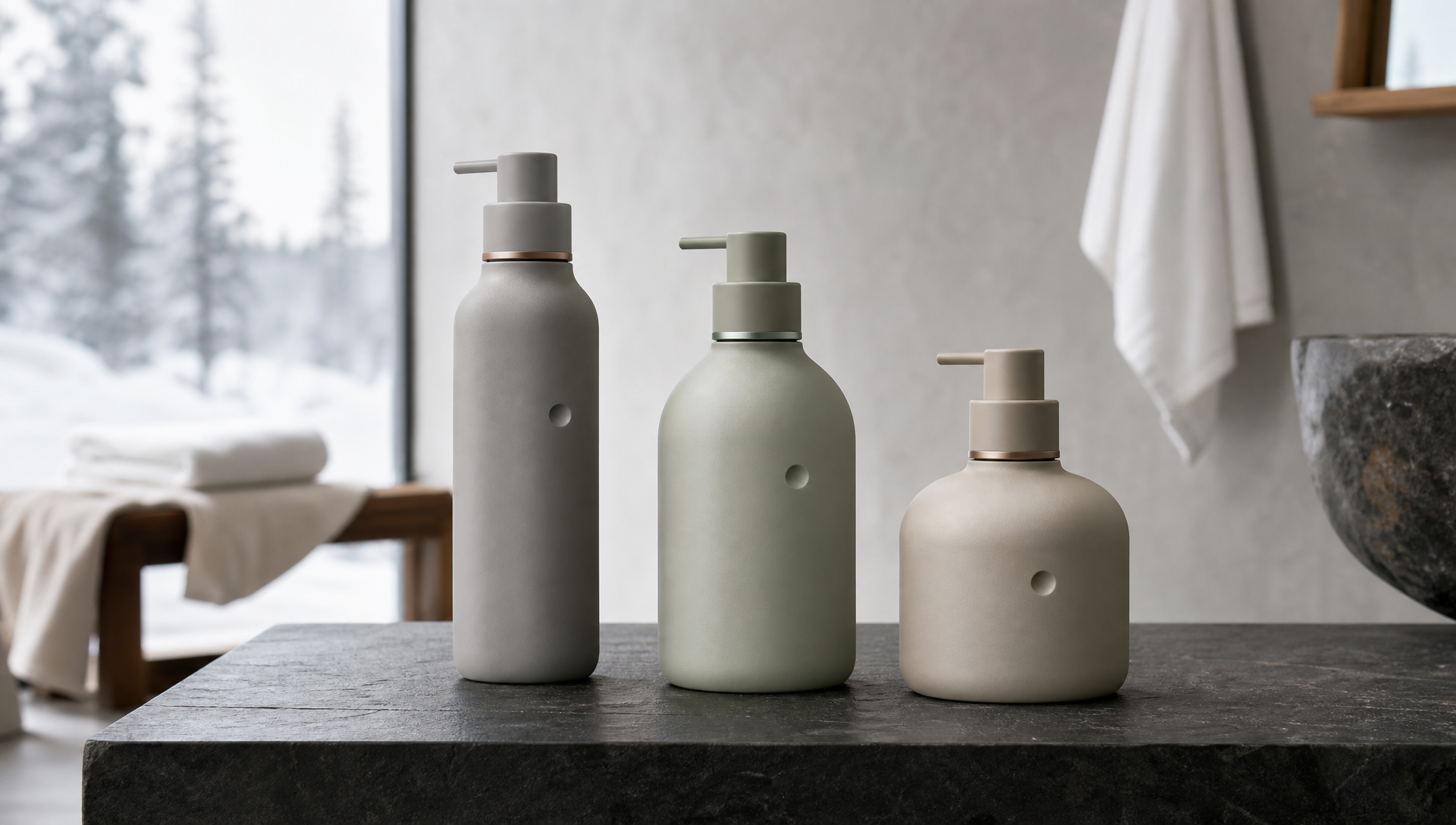
 Sep 24, 2026The "Minimalist Toiletry" Philosophy of Nordic Hot Spring Spas: Why Is There Not a Single Chinese Character on the Bottle?
Ask For A Quick Quote
If you are looking for more information on our services, or how we could potentially help, we would love to hear from you!