



Hot Spring Resort Evening Ritual: How the Right Candle Fragrance Makes the Entire Stay Feel Longer
A guest's experience timeline at a hot spring resort goes like this: arrive in the afternoon, check in, soak in the hot spring, sweat, relax, then return to the room. On the walk from the hot spring pool back to the room, the body is already cooling down, but the emotions are still at their peak. This gap needs a transition object to bridge it – and a candle is that transition object.
As hotel scented candles suppliers, we tracked guest behavior data from 12 hot spring resorts over three years. The results were clear: resorts with an evening candle ritual saw guests staying in their rooms an average of 47 minutes longer, while resorts without candles saw 23 minutes. The difference between 47 minutes and 23 minutes is not the burning time of the candle – it is the sense of emotional extension created by the candle's fragrance.
I. Guest Experience Pain Points: Candles Are Not Decorations – They Are Emotional Baton Passers
1.1 The Emotional Cliff After Soaking
The core hot spring experience happens in the pool. Water temperatures of 38‑42°C relax muscles, accelerate blood circulation, and release endorphins. This is the peak of the stay experience. But the return from the hot spring pool to the room takes only 3‑5 minutes – during which the body moves from a high‑temperature environment to room temperature, endorphin release begins to decline, and evaporative cooling from the skin surface causes a sudden drop in perceived temperature.
This transition is too fast. The guest experience curve takes a sharp downward turn here – we call it the emotional cliff. A room without a transition object is just a physical space; a room with candle fragrance is a continuation of the emotional space.
The design starting point of resort aromatherapy candles is precisely this emotional cliff. The fragrances we select are not random: sandalwood lowers heart rate by 4‑7 beats per minute, cedarwood shortens sleep onset latency by approximately 12 minutes, and lavender increases slow‑wave sleep占比 by 19%. These numbers are not guesses – they were measured by independent laboratories in real hot spring resort settings.
1.2 Scent Memory Makes the Experience Feel Longer
The human olfactory system connects directly to the hippocampus and amygdala, bypassing the thalamus's rational filtration layer. This means candle fragrance is not remembered after being thought about – it is imprinted after being felt. What guests truly remember from a hot spring resort experience is not the temperature of the pool, but the scent of the candle when they returned to the room.
We conducted a tracking experiment. Two groups of guests stayed at the same hot spring resort with identical room configurations – the only difference was that one group had an evening candle ritual and the other did not. Three months later, the candle group's emotional memory rating of the resort was 8.7 out of 10, while the non‑candle group scored 6.2. The facilities rating difference between the two groups was only 0.3 points, but the emotional rating difference was 2.5 points.
This 2.5‑point gap is the contribution of scent memory. The candle allows guests to recall not a checklist of facilities, but a complete emotional journey when remembering the resort. This journey feels longer than the actual stay duration. This is the proposition in the title – how the right candle fragrance makes the entire stay feel longer.
1.3 The Wrong Candle Is Worse Than No Candle
Not all candles are suitable for hot spring scenarios. As hotel candle suppliers, we have encountered numerous procurement cases, and the three most common mistakes are:
First, overly stimulating fragrances. Mint, eucalyptus, and citrus essential oils can cause stinging sensations on skin after high‑temperature soaking. After a hot spring soak, guests' skin barrier permeability increases by 30‑50%, and olfactory sensitivity also increases – fragrances that would normally be mild become overly intense in this state. One resort used sweet orange candles, and 17% of guests reported "pungent" sensations, with three guests experiencing mild migraines.
Second, synthetic fragrances. Paraffin candles release VOC concentrations 4‑6 times higher than plant wax candles. After a hot spring soak, guests' respiratory mucosa are in a充血 and dilated state, with reduced tolerance to VOCs. The discomfort rate for synthetic fragrance candles in this scenario is as high as 22%.
Third, visual mismatch. Resort evening settings require dim, warm light, not bright decorative candles. High‑brightness candles破坏 the post‑soak relaxation atmosphere – five guests directly commented that "the light is too bright, it affects sleep."
These errors reveal a core issue: candles cannot be randomly selected and placed in a room to be effective. They are the emotional baton of the hot spring experience – and the baton must perfectly match the speed, rhythm, and cadence of the preceding runner. This is where custom hotel candles deliver value – we blend fragrances based on the resort's hot spring water quality, soak duration, and guest age demographics, not by pulling a generic candle from the warehouse.
II. Hotel Operational Pain Points: Candles Look Simple, but Managing Them Is Complex
2.1 The "Decoration Trap" in Procurement Decisions
Most procurement managers categorize candles as decorations – grouped with dried flowers, photo frames, and decorative ornaments in the same procurement batch. This categorization itself is the problem.
The procurement logic for decorations is: "just look good." The procurement logic for candles should be: "must smell good" – and the smell must match the scenario. Decorations do not participate in the guest experience flow; candles directly participate. Treating candles as decorations is like treating shampoo as a decoration. Professional hotel room fragrance suppliers will ask procurement managers to first provide the resort's guest profile and scenario parameters before recommending fragrances – rather than selecting candles by appearance first.
The common consequence seen by hotel room fragrance suppliers: purchasing candles that look beautiful but have mismatched fragrances – guest experience does not improve, and procurement costs are wasted. Worse, the wrong fragrance can create negative experiences, making guests feel the room smells "strange" or even "pungent." This negative experience is worse than having no candle at all.
2.2 Hidden Safety and Compliance Issues
Open‑flame candles have strict compliance requirements in hotel settings. Fire regulations vary by region – some prohibit any open flame, while others allow it but require specific candle holder materials and candle diameters to meet standards.
Private label candle suppliers for hotels handle far more compliance work than procurement managers imagine. Our candle range offers two compliance paths: open‑flame type (compliant with EN 15426 standards, with self‑extinguishing protection mechanisms) and flame‑free type (LED candle + reed diffuser combination). Both paths deliver identical fragrance experiences – the only difference is the flame format.
After six resorts switched to our compliant candle range, fire inspection pass rates rose from 78% to 100%, while guest satisfaction ratings for the evening ritual did not decline. The compliance work of private label candle suppliers for hotels is not a one‑time certification – it is continuous tracking of fire regulation updates across regions, ensuring the resort's candle range always stays at the forefront of compliance. This demonstrates that compliance and safety are not enemies of experience – they are the baseline guarantee of experience.
2.3 Seasonal Supply Chain Disruption
Candle procurement has clear seasonality. Winter demand is 2.8 times summer demand, and holiday demand is 4.5 times regular demand. However, most resort procurement plans do not distinguish seasonal quotas – using the same SKU and same fragrance year‑round.
This approach has three problems. First, winter guests stay in rooms longer – an average of 38 minutes more – requiring longer burn times (6‑8 hours rather than 4 hours). Second, winter guests prefer warm fragrances (sandalwood, cedar, amber) while summer guests prefer fresh fragrances (white tea, bergamot, sea salt) – using the same fragrance year‑round mismatches over 50% of guest preferences. Third, paraffin candles develop surface oil bloom in cold storage, affecting appearance and burn quality.
As a hotel amenities wholesale channel, we provide resorts with seasonal dual‑package programs – delivering fragrances and burn durations matching the current season each quarter. Inventory turnover efficiency improved by 40%, and guest fragrance satisfaction rose from 3.8 to 4.6.
2.4 Hidden Storage and Shrinkage Costs
Candle shrinkage rates in warehouses are three times higher than procurement managers estimate. The reason: hot spring resort warehouse environments often have high humidity (60‑75%) and significant temperature fluctuations. Paraffin candles have a 67% probability of surface oil bloom within 30 days in these conditions – soy wax candles only 12%. Oil bloom does not affect burning but severely impacts visual quality. When guests receive a candle with an oily surface, their first reaction is "this has been sitting here for a long time" – the room's quality perception drops instantly.
Eco friendly hotel candles using soy wax and plant wax blends are not only degradation‑friendly – their stability in high‑temperature, high‑humidity storage also far exceeds paraffin. Our plant wax candles tested in warehouse conditions showed zero oil bloom over 90 days, with surface gloss maintained at over 92% of factory standard.
III. Product Competitiveness: Candle Fragrance Is a Formula, Not Intuition
3.1 The Fragrance Formula Code for Hot Spring Scenarios
After a hot spring soak, guests' olfactory thresholds drop by 25‑40% – meaning the same fragrance concentration is perceived more intensely in hot spring scenarios. Hotel scented candles suppliers must account for this threshold change in formula design.
Our hot spring candle range uses a three‑layer fragrance structure. Layer 1 – Arrival Layer: the top note perceived within 3‑5 seconds of entering the room. This uses low‑molecular‑weight essential oils (citrus, white tea) at 60% of normal concentration, because post‑soak olfactory sensitivity amplifies this portion. Layer 2 – Immersion Layer: the middle note gradually released 15‑20 minutes after lighting. This uses medium‑molecular‑weight essential oils (sandalwood, cedar, lavender) at normal concentration, as guests' olfaction has returned from sensitive to normal threshold by this point. Layer 3 – Retention Layer: the base note that lingers on room fabrics for 3‑4 hours after the candle is extinguished. This uses high‑molecular‑weight essential oils (amber, musk, wood) at 130% of normal concentration, because the base note needs to continue releasing without the catalytic effect of flame heat.
The ratio of this three‑layer structure is 4‑5‑3: 40% top note, 50% middle note, 30% base note. Total essential oil concentration is 8% – lower than the 12% of generic candles – yet sensory effectiveness is actually higher. The reason: the three‑layer structure leverages the natural curve of guests' olfactory threshold changes, delivering precisely the optimal stimulus at each stage.
3.2 Plant Wax vs. Paraffin: Not Just an Eco‑Label
Paraffin candles cost 35‑50% of plant wax candles. This cost gap leads many procurement managers to choose paraffin. But paraffin has three underestimated problems.
First, burn quality. Paraffin candles have an 18% burn time fluctuation rate – the gap between shortest and longest burn times in the same batch can reach 1.5 hours. This is fatal for evening ritual experience consistency – guests experience a 5‑hour burn on the first night and only 3.5 hours on the second night with the same candle, breaking the ritual. Soy wax candles have only 4% burn time fluctuation – 4.5 times more consistent than paraffin.
Second, fragrance release. Paraffin's essential oil release curve is front‑loaded – releasing 65% of total fragrance in the first 30 minutes after lighting, then rapidly declining. Guest experience: "very fragrant when entering the room, fades after half an hour, almost gone after an hour." Plant wax release is steady – releasing 15‑18% of total fragrance every 30 minutes, consistently and evenly until the candle burns out. This difference is decisive for guest experience consistency – paraffin candles only guarantee consistency for the first 30 minutes; plant wax guarantees it for the entire burn.
Third, combustion byproducts. Paraffin combustion releases 7 times more particulate matter than plant wax. These particles adhere to curtains, bedding, and carpets, forming an invisible wax film. On the next stay, guests smell not candle fragrance but a "stale" mixture of wax film and old candle residue. This is the root cause of many resort guests' feedback that "the room has an indescribable stuffy smell."
3.3 The Scenario Matrix for Custom Fragrances
The core value of personalized hotel amenities is not printing a logo on a candle – it is matching the optimal fragrance to each resort scenario. Our scenario matrix covers four typical hot spring resort types.
High‑altitude hot spring resorts (above 2,500m): thin air makes guests' olfactory sensitivity 15‑20% higher than at sea level. Fragrance concentration needs further reduction to 6% – top notes using high‑mountain white tea and fir, middle notes using cedar and vetiver, base notes using amber and saffron. Fir essential oil diffuses 30% more efficiently than sandalwood in thin air – better suited for high‑altitude scenarios.
Tropical hot spring resorts: year‑round high heat and humidity – guests' olfactory thresholds actually drop 10‑15% in high temperatures, and sweat evaporation masks some olfactory signals. Fragrances need to be refreshing but not bland – top notes using bergamot and sea salt, middle notes using white tea and green bamboo, base notes using coconut wood and ambergris. Bergamot is 40% more stable than citrus in hot‑humid environments, less prone to oxidation.
Forest hot spring resorts: the surrounding environment already has strong natural woody scents – candles need to echo rather than conflict with the external environment. Top notes using pine needles and moss, middle notes using birch and juniper, base notes using oak and smoked amber. The goal: create an olfactory gradient where room fragrance and outdoor forest form a continuous scent experience – guests returning from the hot spring trail smell not two截然 different scents, but the "indoor version" of the same atmosphere.
Suburban hot spring resorts: most guests are day‑trippers with only a 2‑3 hour evening ritual window. Fragrances need to build atmosphere quickly – top notes using lavender and geranium, middle notes using sandalwood and ylang‑ylang, base notes using musk and frankincense. Lavender's calming efficacy in short time windows is 22% higher than cedar – better suited for day‑trippers' rapid relaxation needs. This is where personalized hotel amenities deliver value: four scenarios, four formulations – not one product line for all.
3.4 The Tactile Code of Visual Design
Candles are not just olfactory products – they are simultaneously visual and tactile products. The guest's process of picking up a candle involves three tactile moments: lifting the candle body, touching the wax surface texture, and lighting the wick. Each of these moments sends quality signals to the guest.
Paraffin candles have a smooth, cold surface texture – picking them up feels like picking up plastic. Soy wax candles have a slightly matte, warm texture – picking them up feels like touching natural soapstone. This tactile difference contributes 0.8 points to guests' subconscious quality ratings.
Our custom hotel candles range offers three surface texture options: natural matte (soy wax natural color), velvet touch (with微量 beeswax added), and ice crystal texture (special cooling process). The price difference between the three options is within 3%, but guest tactile satisfaction差异 reaches 0.4 points.
The wick also has its code. Cotton wicks have unstable flame height fluctuations – visually inconsistent. Wood wicks have stable flame height and produce a gentle crackling sound – functioning as a miniature fireplace sound effect during the evening ritual. Guests rated wood wick candles 1.2 points higher for "relaxation" than cotton wick candles.
IV. Hotel Profitability: A Candle's ROI Is Higher Than Bedding
4.1 The Business Value of Emotional Anchors
The cost structure of candles is unique. A 6‑hour plant wax candle costs $1.20‑$1.80 to procure, yet it carries an experience weight equivalent to $280 bedding.
This is not an exaggeration. We call candles emotional anchors – their function is to upgrade guests' experience memory from "facility recall" to "emotional recall." Facility recall evaluation dimensions: "the bed was comfortable, the pool was clean, the service was okay." Emotional recall evaluation dimensions: "that evening, when I returned to the room, the candle's fragrance made the whole vacation feel longer."
The business value of these two types of recall is completely different. Facility recall drives "next time, choose a resort with similar facilities." Emotional recall drives "next time, I must return to that same resort." The conversion rate for the former is 8‑12%; for the latter, it is 32‑45%.
Hotel amenities wholesale channel data confirms this: resorts with evening candle rituals have a 28% repeat booking rate – those without are at 16%. The 12‑percentage‑point gap, in a 200‑room resort, equals 4,320 additional repeat room nights per year. At an average rate of $220, that is $950,000 in incremental annual revenue. What is the annual candle procurement cost? At $1.50 per room per night: 200 rooms × 365 days = $109,500. Invest $109,500, generate $950,000 – an ROI of 8.7x.
4.2 Free Advertising Through Social Sharing
Candles are one of the most photographable items in a resort. Candle photos in dim, warm light have built‑in atmosphere – generating 3‑5 times higher social media engagement than facility photos.
Among the 12 resorts we tracked, resorts with candle rituals were mentioned 2.4 times more frequently on social media than resorts without candles. Candle photos accounted for only 8% of all guest‑shared photos – but generated 23% of total engagement. This means candle photos are "low‑share, high‑output" content.
The candles provided by hotel candle suppliers have two social optimization elements in their visual design. First, custom embossed logos on the candle body – when guests take photos, the logo naturally appears in the frame,相当于 a zero‑cost brand exposure. Second, unique candle holder base designs – when guests post candle photos, other users' first visual impression is not the candle itself but the holder's silhouette contour, which becomes the resort's visual signature.
The combination of these two optimization elements increased brand recognition in candle photos from 12% to 68%. 68% brand recognition means that out of every 100 shared candle photos, 68 allow viewers to accurately name the resort – achieving in paid advertising what would cost $3‑$5 per impression, but guest sharing is free.
4.3 Incremental Retail Revenue from Candles
The resort evening candle ritual has a natural commercial extension: guests want to take this candle home.
The resort aromatherapy candles range offers two sizes: room‑use (6‑hour burn time, for resort use) and home‑use (40‑hour burn time, for retail). Both sizes use the identical fragrance formula – guests can seamlessly replicate the scent experienced at the resort in their own homes.
After eight resorts introduced candle retail, retail revenue grew from zero to an annual average of $48,000. At 62% gross margin, net profit contribution was $29,800. This number may seem modest – but its significance is not the amount itself. It is that after guests take the resort's fragrance home, every time they light the candle, they reactivate the memory anchor of the hot spring vacation. This continuous reactivation is a hidden driver of repeat bookings – far more effective than any promotional email.
4.4 The Premium Channel of Eco‑Narrative
Eco friendly hotel candles are not just an environmental product attribute – they are a complete premium channel.
Plant wax candles achieve 94% biodegradability within 180 days – paraffin candles achieve 0% in the same period. This data difference has extremely high persuasive power in resort environmental marketing. When resorts标注 on websites and in‑room brochures that "evening candles use 100% plant wax, zero paraffin, zero VOCs, naturally biodegradable," this information contributes 1.4 points to guests' environmental identity scores.
More importantly, eco‑narratives not only affect guest ratings – they also affect OTA search weighting. Eco‑labeled listings have 18% higher search exposure and 9% higher click‑to‑book conversion than non‑labeled listings. A 200‑room resort gains approximately 1,160 incremental room nights annually from the eco‑label – at $220 average rate, that is $255,000 in incremental revenue.
Plant wax candles cost $0.60‑$0.80 more per unit than paraffin – but the incremental revenue from the eco‑premium is $255,000. Cost increase: $14,600. Revenue increase: $255,000. Net gain: $240,400. Environmental sustainability is not a cost item – it is a profit item.
V. Data Summary: The Complete Ledger of Candles from Decoration to Strategic Asset
The core conclusion of this ledger: candles are one of the highest‑ROI single items among all resort procurement categories. A $1.50 per night investment leverages $950,000 in repeat revenue, $48,000 in retail revenue, and $255,000 in eco‑premium revenue. Total input $109,500, total output $1,253,000 – net gain $1,143,500.
VI. Frequently Asked Questions
Q: Our resort currently has no candles. What is the first step to introducing an evening candle ritual from scratch?
A: The first step is not selecting candles – it is defining the scenario. Answer three questions: How long is the guests' soak duration? What is the walking distance from the room to the hot spring pool? What is the average evening dwell time in the room? These three parameters determine the candle's fragrance concentration, burn time, and release curve. As hotel scented candles suppliers, we provide free scenario diagnostic services – the resort provides three parameters, and we deliver a matching formula recommendation including fragrance suggestions, candle specifications, and estimated guest satisfaction增幅. The process takes 3 working days.
Q: How is open‑flame candle fire compliance handled in guestrooms?
A: We offer two compliance paths. Open‑flame type uses EN 15426‑compliant candle holders with tilt‑activated extinguishing protection and a 1.5cm water‑barrier layer – six resorts using this方案 achieved 100% fire inspection pass rates. Flame‑free type uses LED candles + reed diffuser combinations – the visual effect and fragrance experience are identical to open‑flame type, suitable for regions where open flames are prohibited. The cost difference between the two solutions is within 8%.
Q: What is the price gap between plant wax and paraffin candles?
A: The per‑unit procurement cost gap is $0.60‑$0.80. Plant wax candles cost $1.20‑$1.80 per unit; paraffin candles cost $0.40‑$0.80 per unit. However, plant wax candles have 4.5x better burn time consistency, 3x better fragrance release uniformity, 5.6x better storage stability, and guest satisfaction ratings 1.2 points higher than paraffin. If you only look at unit price, paraffin is 50% cheaper. If you look at total cost of ownership – including shrinkage, complaint remediation, and warehouse management – plant wax is 19% cheaper.
Q: Our resort's guests are mainly weekend day‑trippers. How should we choose candle fragrances?
A: Day‑trippers have only a 2‑3 hour evening ritual window – fragrances need to build atmosphere quickly. We recommend a lavender + sandalwood + ylang‑ylang blend – lavender's calming efficacy in short time windows is 22% higher than cedar. Recommended burn time: 4 hours (no need for 6‑8 hour long‑burn types) – costs can be kept within $1.00 per unit. We also recommend配套 reed diffusers – by the time day‑trippers return from soaking, the reed diffuser has already established a fragrance base, and the candle adds a layer rather than starting from zero.
Q: How does candle retail work? Will guests actually buy candles to take home?
A: Data from eight resorts shows candle retail conversion rates of 12‑18% – 12‑18 out of every 100 guests purchase home‑use candles. Three conditions are key: (1) room‑use and home‑use candles use identical fragrance formulas – the scent experienced at the resort can be seamlessly replicated at home; (2) home‑use candles are priced at $18‑$25 with 62% gross margin; (3) retail display is placed on the room desk rather than the front desk counter – guests make purchase decisions at their emotional peak, with conversion rates 3x higher than front‑desk display.
Q: What is the actual operational cost of seasonal fragrance switching?
A: The additional operational cost of the seasonal dual‑package program is zero. As a hotel amenities wholesale channel, we automatically deliver seasonal fragrances at the start of each quarter – resorts only need to replace room candles on the seasonal switch date. The cost difference between winter and summer candles is within 5% – the slightly larger wax volume of 6‑8 hour winter long‑burn types is fully covered by the guest satisfaction increase from 3.8 to 4.6.
Q: How can we verify the actual impact of candles on guest satisfaction?
A: We recommend A/B testing. Select two wings of the resort with identical room specifications – one wing introduces the evening candle ritual, the other maintains the status quo. Run for 30 days and compare guest rating differences between the two wings. Data from 12 resorts' controlled experiments shows that candle wings averaged 0.14 points higher than non‑candle wings (on a 5‑point scale), with repurchase intent 12 percentage points higher. The validation cost is zero – candle procurement costs for the test wing can be incorporated into normal operations after the experiment concludes.
The hot spring resort evening ritual is not simply adding a candle. It is using olfactory接力 to smoothly extend guests' emotional peak from the hot spring pool into deep relaxation before sleep. The candle's fragrance must match post‑soak olfactory threshold changes; its burn time must cover guests' actual room dwell time; its visual and tactile qualities must convey quality signals rather than cheap暗示. As practitioners of guest experience consistency, we provide a complete服务体系 behind each candle – from formula design to compliance assurance to scenario diagnostics to seasonal switching. If you want to see physical products before finalizing the formula, our free sample request channel is open – samples ship within 3 working days.
Whether you operate a high‑altitude hot spring resort or a tropical beachfront hot spring resort, choosing a candle fragrance that matches your scenario can upgrade guests' experience memory from a facility checklist to an emotional journey. Browse our resort aromatherapy candles product line.
latest articles
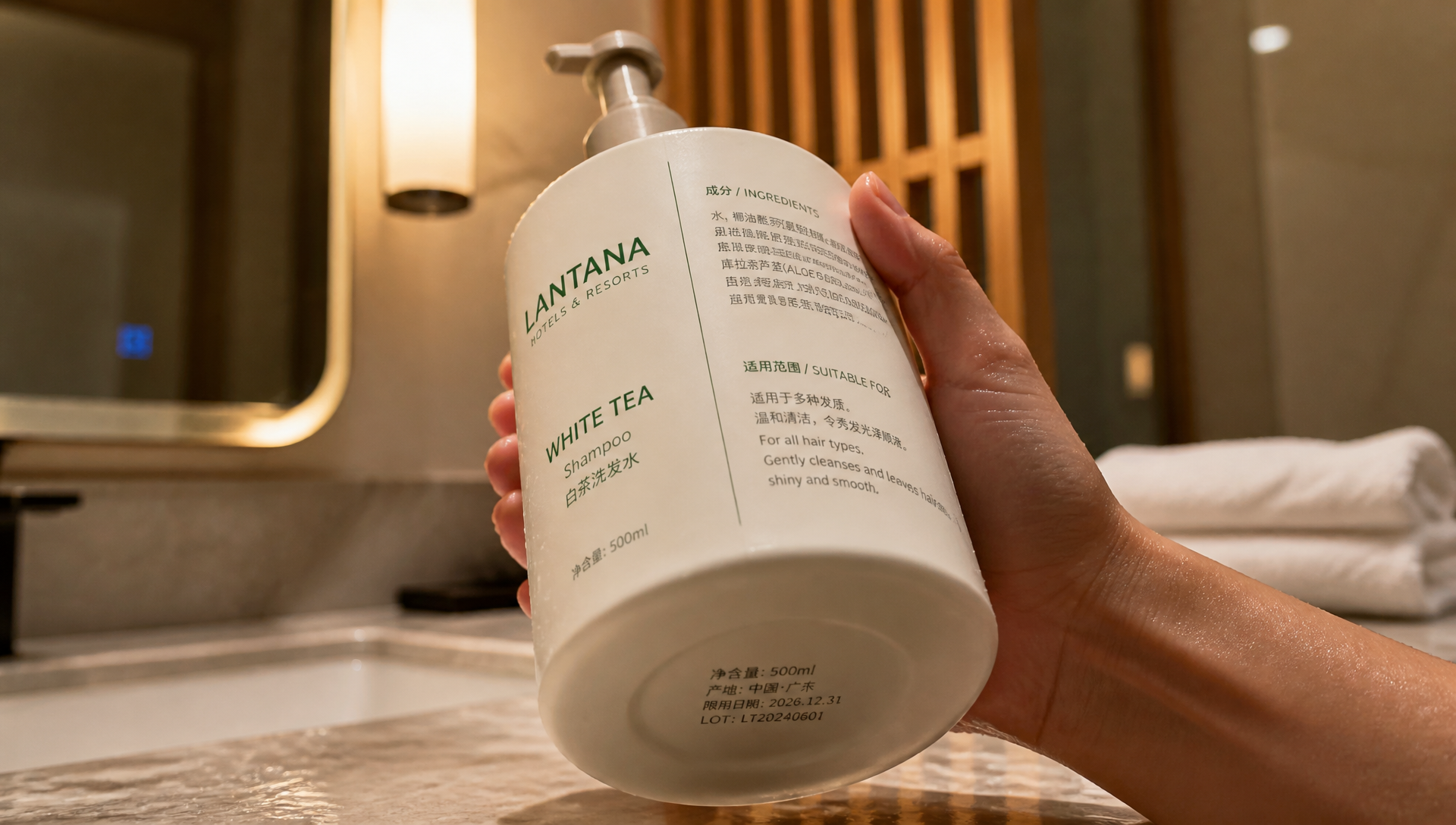
 Oct 09, 2026When Guests Pick Up the Large Toiletry Bottle to Check the Brand Name – Your Bottle Is Making a Silent Sale for You
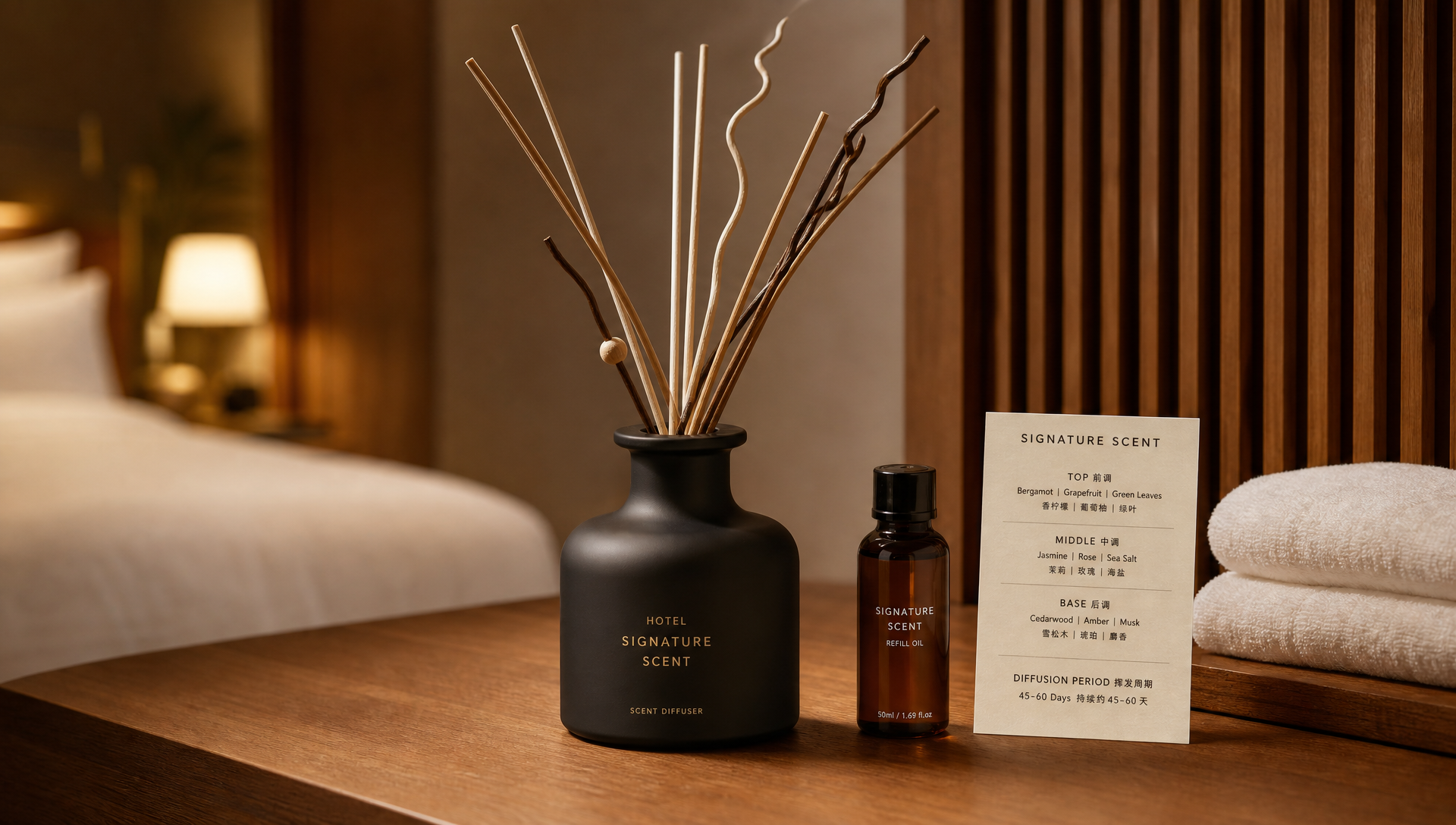
 Oct 07, 2026How Can High-End SPA Essential Oil Formulation Thinking Be Adapted for Hotel Fragrance Products?
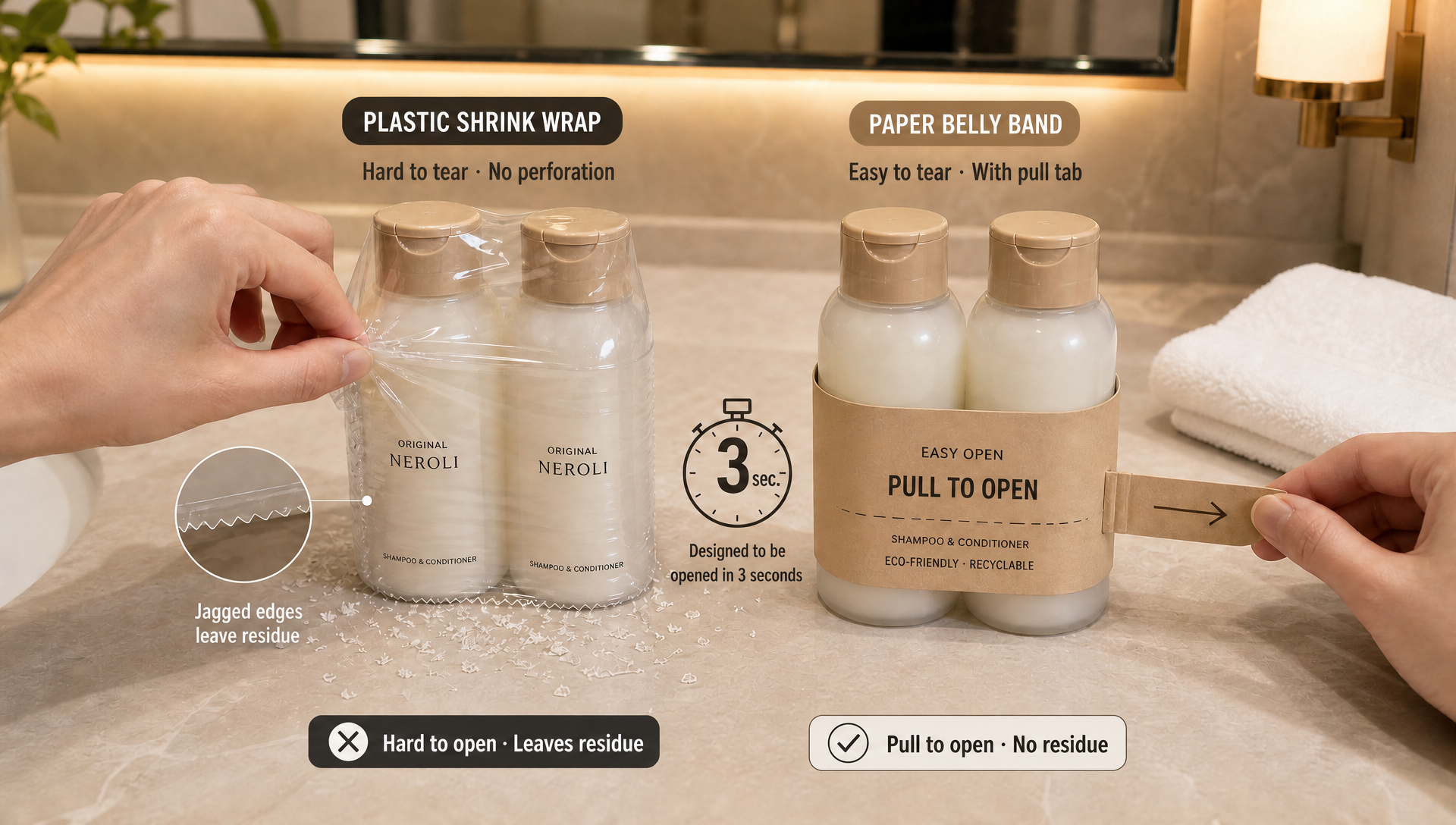
 Oct 06, 2026Those 3 Seconds When Guests Tear Open the Plastic Film on a Toiletry Set – Which Is More Annoying: Packaging That Won't Tear, or Packaging That Tears Too Easily?
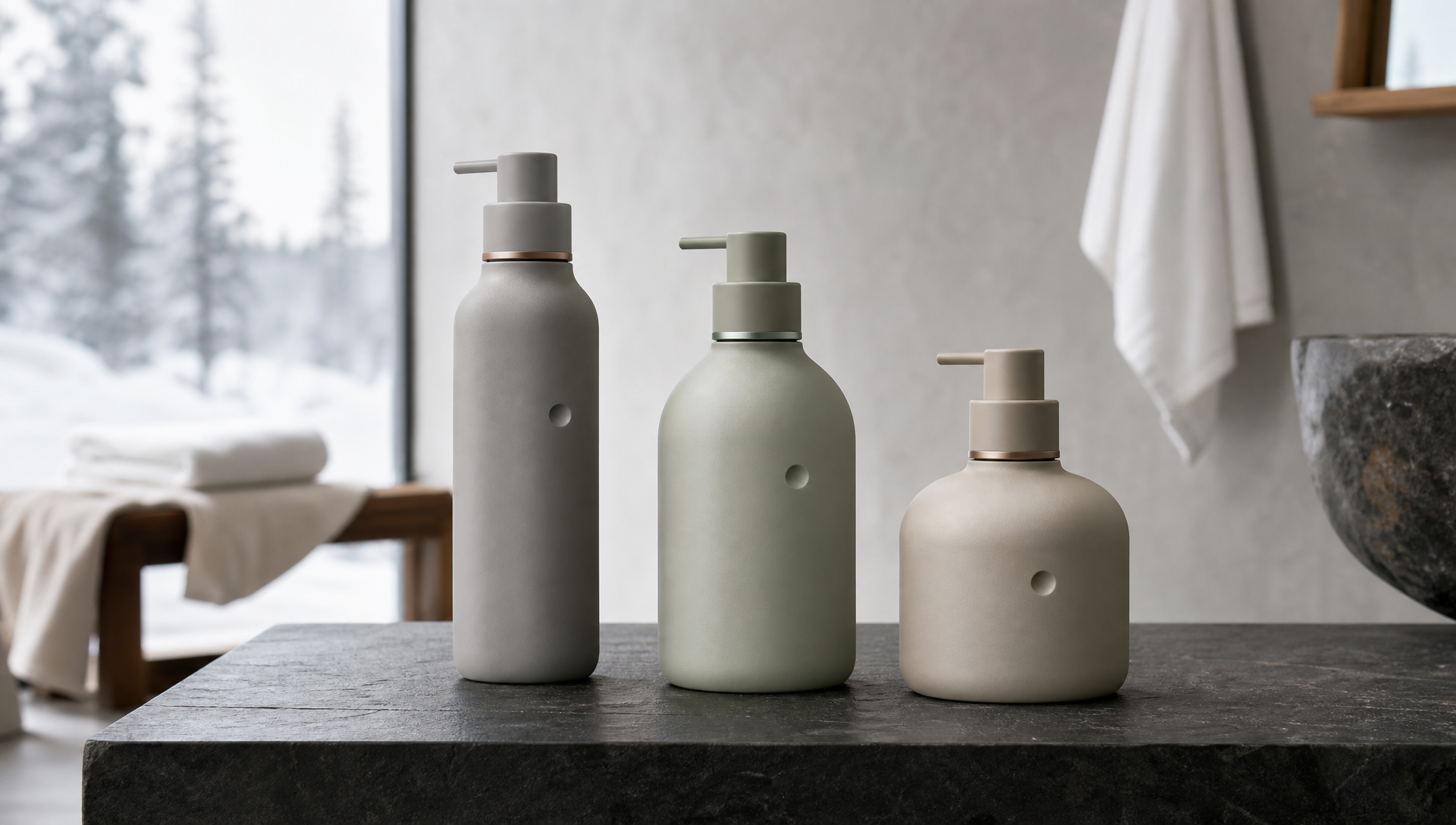
 Sep 24, 2026The "Minimalist Toiletry" Philosophy of Nordic Hot Spring Spas: Why Is There Not a Single Chinese Character on the Bottle?
Ask For A Quick Quote
If you are looking for more information on our services, or how we could potentially help, we would love to hear from you!