



Same Formula, Different Packaging, 3x the Price? – The Mismatch Between Formulation and Tier Perception
The sampling room ran a small test. The same base liquid was filled into three containers – a frosted pump bottle, a tube, and a sealed pouch. Placed on a table for visiting hotel professionals to guess the price, the ranking was always consistent: bottled was the most expensive, pouched was the cheapest – yet the liquid inside was identical. Guests read tier not from the ingredient list, but from the packaging. Cognitive mismatch begins here. This article explains the value of packaging as a translation layer from four perspectives: guest experience, hotel operations, product competitiveness, and profitability.
Guest Experience: Guests Do Not Understand Formulations – They Only See Packaging
Guests judge the tier of an amenity set in under three seconds.
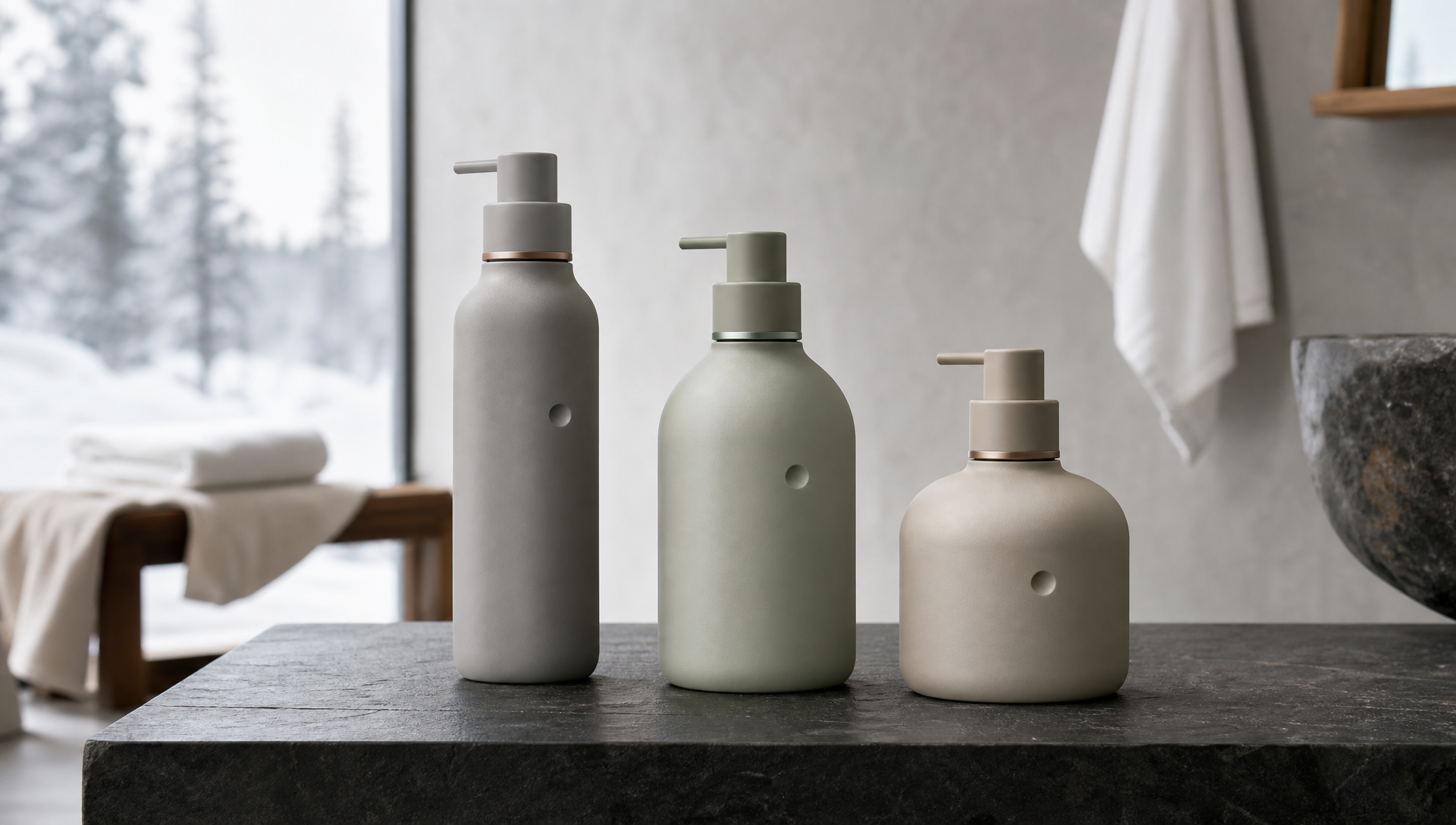
Touch. A frosted bottle and a thin-wall plastic bottle placed together – the difference is immediate.
Sound. Whether the pump head rebounds crisply is another signal.
Sight. How much white space the label has, whether the typography has a sense of order.
Weight. The same half-bottle of liquid – the difference in heft in the hand is perceptible.
The tier perception of hotel guest amenities is completed in these three seconds. The formulation has not yet had a chance to perform – the judgment is already written. Those who make hotel amenities know clearly: the real watershed is not in the raw material tank – it is in the container.
Hotel Operations: Two Types of Mismatch, Both Harmful
One is a good formula paired with cheap packaging. Guests use it, find it acceptable, but assume it is merely a basic configuration – the hotel wastes its formulation advantage for nothing. The other is an ordinary formula paired with luxury packaging. Guests use it with high expectations, and the gap turns directly into complaints. The tier of a hotel product is always a combination of formula and packaging – either side walking on one leg will fall. Hotel bathroom amenity suppliers ask about room type tier before proposing solutions – precisely to avoid the second type of mismatch.
Product Competitiveness: Formula Is the Core, Packaging Is the Translation
The work of packaging is to translate the formula into a language guests understand. Abstract claims like "silicone-free," "gentle," and "long-lasting" cannot be perceived by guests – but the bottle in their hand gives an immediate conclusion. The individual sealed packaging of disposable hotel amenities communicates cleanliness. The frosted bottle with embossing of custom hotel amenities communicates refinement. The same liquid, translated differently, can shift a guest's rating by an entire tier.
Product Competitiveness: Tiers Must Be Complete, Recognition Must Be Stable
When the same brand creates several packaging tiers across room types, recognition elements must remain stable.
The colour family remains unchanged – only materials and processes are upgraded.
The label layout skeleton remains unchanged – information hierarchy is added upward.
Pump heads and accessories maintain the same language – no mixing that creates a generic feel.
This way, when guests move from a standard room to a suite, they recognise it as the same hotel – just more refined. Hotel accessories play a more important role here than imagined. A unified accessory system saves significant communication costs.
Product Competitiveness: The Manufacturing Reality – Packaging Iterates Faster Than Formulation
When the formula changes, compatibility, stability, and batch retention samples must all be rerun – the cycle is measured in months. When packaging changes, most cases require only a few rounds of sampling – the two stages are inherently out of sync. Hotel amenity manufacturers know this best. That is why mature hotel amenity solutions always use packaging to carry tier differentiation – the formula only makes necessary deepening. The common practice of branded hotel amenities is the same: packaging updates quickly, the formula skeleton remains stable for years.
Hotel Operations: The Mismatch Checklist for Room Types and Packaging
Operational mismatches often occur at the warehousing and issuance stage.
A suite with economy-feel packaging is the most direct downgrade in the guest's eyes.
A standard room mistakenly receiving suite packaging – tier inversion – suite guests see the difference immediately.
Inconsistent replenishment specifications – the same room type mixed with two packaging types – visual chaos first.
Housekeeping can create a packaging comparison table by room type. Hotel guest amenity inventory is also zoned by tier. When replenishing at checkout, follow the table – and hotel products always match the room type.
Profitability: Cognitive Difference Is Pricing Space
Guests are willing to pay for perceived refinement. Cognitive difference is pricing space. When the same formula gets better packaging in suites, the extra portion of the room rate has a landing point – and guests feel it is justified. To walk this path steadily, three things must be checked at selection: whether the hotel bathroom amenity supplier can provide tiered solutions for the same formula, whether packaging upgrades land where guests actually notice, and whether the hotel amenity wholesale channel can supply separately by tier. The value of premium hotel amenity suppliers lies in clarifying these three things in one go – not just handing over a stack of attractive catalogues.
Product Competitiveness: Selection – How to Place Orders for Several Packaging Families
The order of placing orders should work backward from room type. First, finalise the specifications and packaging for disposable hotel amenities. Then complete the visual family for custom hotel amenities. Finally, confirm the separate ordering method through hotel amenity wholesale channels. Align item by item – and tier mismatch has no opportunity to strike.
Frequently Asked Questions
Q: If the same formula is used across tiers, will guests find out?
A: Guests rarely compare formulas – but they compare whether these things look worth it. Using the same formula with different packaging across room types is entirely feasible – provided the visual tier matches the room type. Hotel amenity manufacturers must have clear retention samples for formula consistency and packaging tiering.
Q: Will packaging upgrades make guests' expectations too high?
A: Yes – so the recognition line of branded hotel amenities must be maintained. What is upgraded is the presentation, not the promise. Formula parameters should not be hinted at through the luxury level of the packaging.
Q: How do I judge whether a certain packaging is worth investing in?
A: See whether guests notice it and talk about it. The experience of premium hotel amenity suppliers is that only details that get photographed and written into reviews are worth investing in.
Q: How should small hotels get started?
A: First, equip one to two packaging tiers for the same formula. Unify hotel accessories and labels. When replenishing through hotel amenity wholesale channels, order separately by room type – tier mismatch complaints will drop noticeably.
Browse our Hotel Amenity Tiered Packaging Wholesale Collection – from frosted bottle families to themed limited packaging, and full private-label solutions, all covered in one stop. Our flexible production line supports small-batch orders with flexible MOQs.
latest articles
 Oct 07, 2026How Can High-End SPA Essential Oil Formulation Thinking Be Adapted for Hotel Fragrance Products?
 Oct 06, 2026Those 3 Seconds When Guests Tear Open the Plastic Film on a Toiletry Set – Which Is More Annoying: Packaging That Won't Tear, or Packaging That Tears Too Easily?
 Sep 24, 2026The "Minimalist Toiletry" Philosophy of Nordic Hot Spring Spas: Why Is There Not a Single Chinese Character on the Bottle?
 Sep 22, 2026Same Formula, Different Packaging, 3x the Price? – The Mismatch Between Formulation and Tier Perception

Ask For A Quick Quote
If you are looking for more information on our services, or how we could potentially help, we would love to hear from you!