



When Guests Pick Up the Large Toiletry Bottle to Check the Brand Name – Your Bottle Is Making a Silent Sale for You
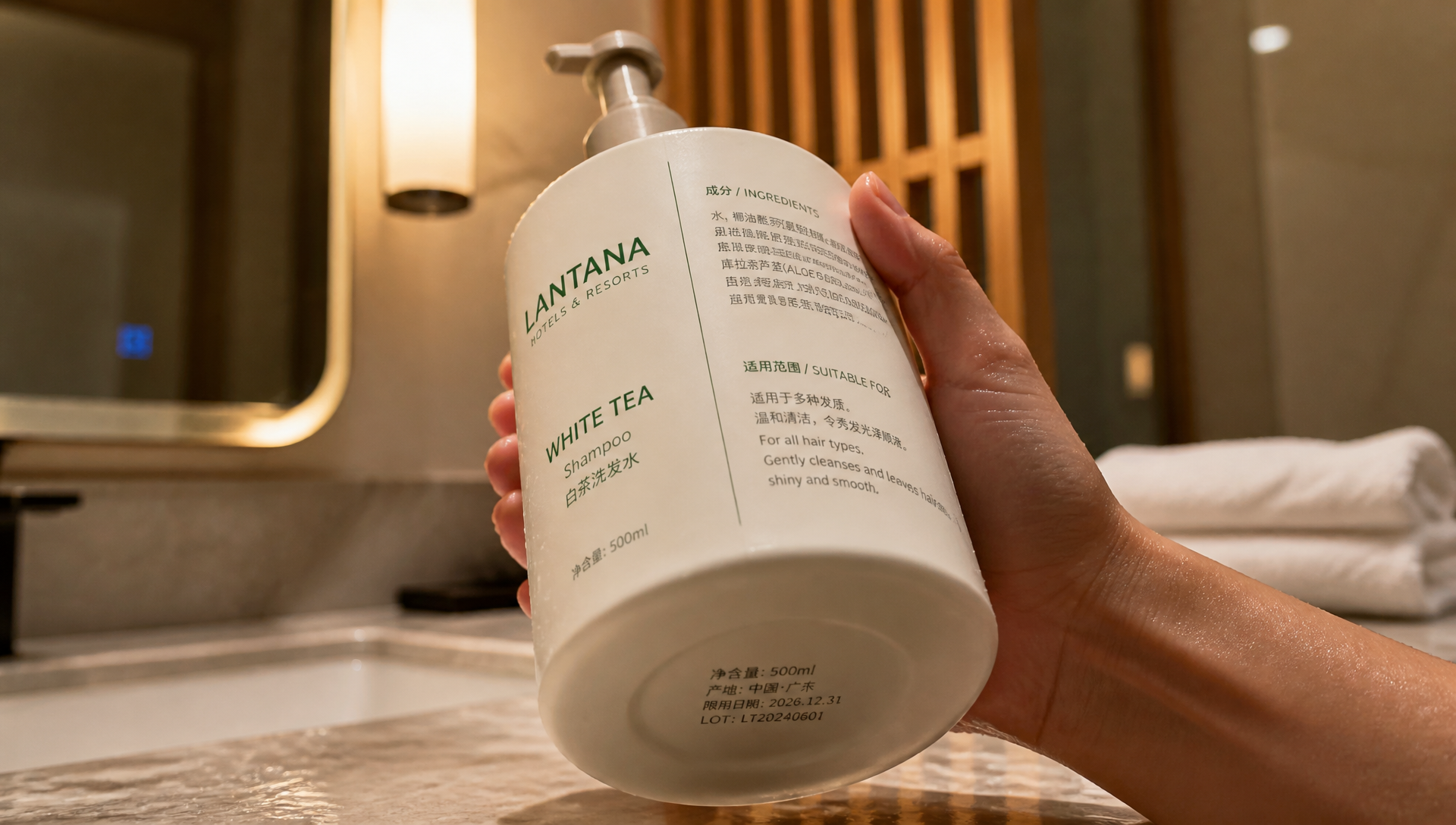
On the housekeeping inventory sheet, there is a note: the bottles in the bathroom are often turned around, bottom facing up. There is only one reason guests pick up a large bottle – they want to know what brand this is, or they want to confirm whether the ingredients suit them. This is one of the few proactive reading behaviours in the entire room – and a free advertising position being used. This article explains, from four perspectives – guest experience, hotel operations, product competitiveness, and profitability – what guests are actually looking at when they pick up the bottle, what should be written on the three readable surfaces, why the bathroom is a difficult reading environment, and why a silent sale gets wasted.
Guest Experience: The Two Reasons Guests Pick Up the Bottle
The first reason is to confirm the brand. She may have already grown to like this scent and wants to know if she can buy it after returning home.
The second reason is to confirm the ingredients – especially families travelling with children, who will check the ingredient list and usage recommendations.
Both reasons occur after bathing, when hands are wet, lighting is angled, and patience is limited.
When she cannot find an answer, her action is to put the bottle down – not to keep searching.
After putting it down, this exposure ends – and it will not come back.
A bottle is picked up a dozen times during an entire stay. The opportunity is greater than imagined.
Hotel Operations: She Is Actually Looking for Three Things
The first is the name. There should at least be a readable brand identity – not just a line with the hotel's name.
The second is the basis: ingredient list, suitable hair and skin types, and whether it is suitable for children.
The third is the exit – where to buy it after returning home. This is the most frequently omitted point.
If the bottle only carries the hotel logo, guests categorise it as a hotel-owned amenity and stop investigating.
If the logo becomes blurry after a few wet-hand contacts, her judgment becomes "this property is not very particular."
Conversely, a bottle with complete information shifts her goodwill from the scent to the brand.
This shift is a step rarely actively designed in the hospitality industry – yet it happens every day.
Hotel Operations: The Bathroom Is the Most Difficult Reading Environment
Steam causes paper labels to wrinkle. Over time, edges turn white and text fades.
Wet-hand contact plus fixed holders block part of the bottle front. The back is even harder to see.
Angled mirror light creates reflections on the curved bottle surface. If the logo uses light-on-light colours, it is difficult to read.
Fixed large bottles must address traceability. Refill interfaces and batch information must both be verifiable.
If housekeeping only wipes the exterior, grime accumulates between bottle and holder – visually undermining credibility first.
If refills lack anti-refill structures, operations must bear an extra verification step.
Once bottle information changes by batch, two versions may appear in the same room – guest confusion becomes complaints.
Product Competitiveness: What Should Be Written on the Three Readable Surfaces
Whether a toiletry bottle can be understood depends on the tasks each of the three surfaces undertakes.
The front's task is to make people remember the name at first glance. Font size must be legible when the bottle is raised with wet hands.
The back's task is to provide reassurance. Ingredient and suitability statements should be more restrained than advertising copy.
The bottom's task is to be verifiable. Net content and expiry date are both compliance requirements and trust foundations.
Beyond the three surfaces, leave one pointer – a card or a line of small text on the label – telling guests where to buy it.
Printing processes must withstand wet hands and steam. The durability difference between transfer printing and silk-screen becomes apparent within two weeks.
The relationship between pump head colour and bottle body also affects readability. Dark pump heads on dark bottles swallow the logo.
Product Competitiveness: Why Large Bottles Are Better Brand Carriers Than Single-Serve Sachets
Large bottles have the most contact frequency. They are picked up a dozen times during a single stay. Single-serve sachets are used only once.
Large bottles also have more printable surface area. Both back and bottom work. Sachets often only have room for one logo.
Dwell time is also longer. The bottle stays from the first day to the last. Single-serve sachets disappear after use.
But the two carriers have different tasks. Single-serve solves hygiene and exclusivity. Large bottles solve branding and continuity.
Therefore, double rooms and bulk bottle room types should be configured separately – do not use one logic to cover all room types.
Large bottles also have one easily overlooked advantage: the guest's last contact before checkout happens on them too.
Product Competitiveness: Three Prerequisites for a Silent Sale – Readable, Credible, Findable
Whether a toiletry bottle can complete a silent sale depends on three prerequisites. Missing one means all previous efforts are wasted.
Readable is the prerequisite. The logo must not be blocked by pump head, holder, or decorative parts – and must not fade within two weeks.
Credible is the prerequisite. Ingredient and qualification statements must be complete. Fragrance and efficacy claims must withstand scrutiny.
Findable is the prerequisite. At least one piece of information must point to a purchase path – otherwise goodwill cannot land.
Among the three, the third is the easiest to complete and requires the lowest investment – yet it is omitted most often.
Refills and fixed large bottles place different emphasis on these three prerequisites. The former prioritises interface and traceability. The latter prioritises logo durability.
Label material selection must match bathroom humidity. The performance difference between lamination and waterproof paper in long-term steam is noticeable.
Hotel Operations: What Is Most Easily Lost When Changing Suppliers
What is sacrificed first when changing suppliers is often logo continuity. The bottle shape changes, and the logo position shifts with it.
What guests remember is position and shape. Once these change, previous accumulation must start over.
Formula continuity and bottle shape continuity are equally important. If fragrance and texture change, even a remembered brand name cannot retain guests.
The weeks when old and new batches are mixed are most critical. Two label versions in the same room directly weaken trust.
We recommend ordering the two versions' specifications separately during the transition period. Separate inventory by floor or room type.
When switching seasons or suppliers, retain a standard sample. Compare it against every subsequent delivery.
None of these actions are complicated. What is difficult is making them a fixed process.
Profitability: Every Pickup Is an Exposure
The action of guests picking up the bottle happens daily. This is an exposure position with almost no marginal cost.
The brand information carried by the toiletry bottle follows guests home. Scent is the most enduring reminder.
If the toiletry line also has a retail version, this step can convert directly into repeat purchases – not just goodwill.
When a specific brand name appears in a review, its persuasiveness far exceeds a line saying "well-equipped."
Repeat purchases from a bottle often begin with the second bottle. The first bottle is experience. The second is choice.
When tiering room types, let the carrier task fall on the most frequently used carrier type. Investment is more concentrated.
The true return of a silent sale is not the immediate transaction – it is the priority order when guests make their next purchase.
Frequently Asked Questions
Q: Do guests really pick up large bottles to check the brand name?
A: Yes – and this is one of the few proactive reading behaviours in the entire room. There are usually only two reasons: wanting to know what brand it is and whether it can be bought, or wanting to confirm whether the ingredients suit them. When she cannot find an answer, she puts the bottle down – and this exposure ends.
Q: What should be written on the bottle?
A: The front should have brand logo and fragrance name. The back should have ingredients and suitable hair/skin types. The bottom should have net content, origin, and expiry date. Each surface carries one task. Then leave one pointer to a purchase path – and it is complete.
Q: Can small packaging serve the same purpose?
A: Different tasks. Single-serve solves hygiene and exclusivity – but it is used only once, and printable surface is small. Brand carrying is better entrusted to large bottles that are repeatedly picked up. The two can coexist.
Q: What should be noted when changing suppliers?
A: Note logo continuity. What guests remember is position and shape. Once bottle shape and logo position change, previous accumulation must start over. During the transition period, order the two versions separately – avoid mixing in the same room.
Browse our Custom Hotel Toiletry Set Wholesale Collection – from large bottle logo design to refill interface coordination, and full private-label solutions, all covered in one stop. Our flexible production line supports small-batch orders with flexible MOQs.
latest articles
 Oct 09, 2026When Guests Pick Up the Large Toiletry Bottle to Check the Brand Name – Your Bottle Is Making a Silent Sale for You
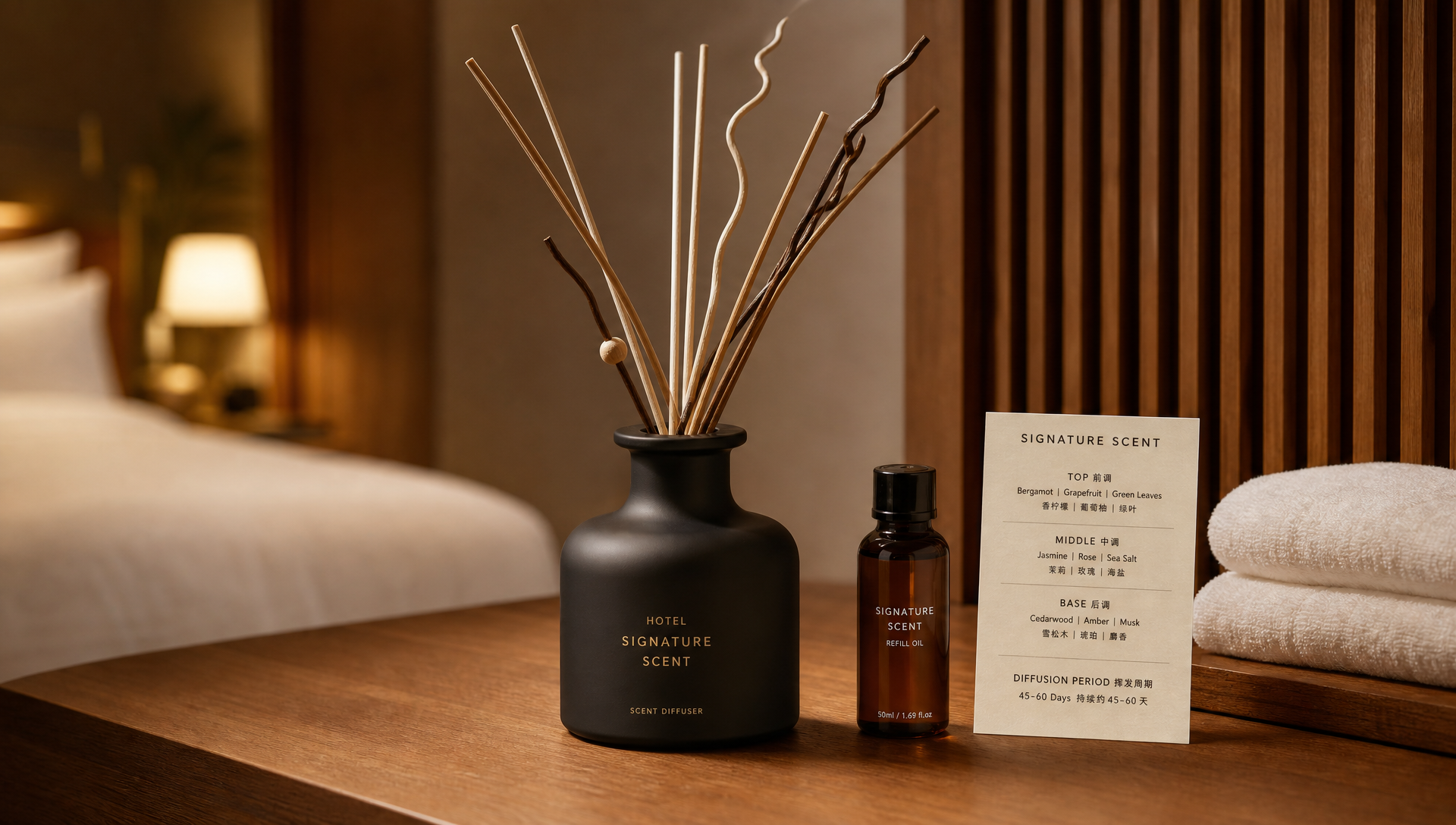
 Oct 07, 2026How Can High-End SPA Essential Oil Formulation Thinking Be Adapted for Hotel Fragrance Products?
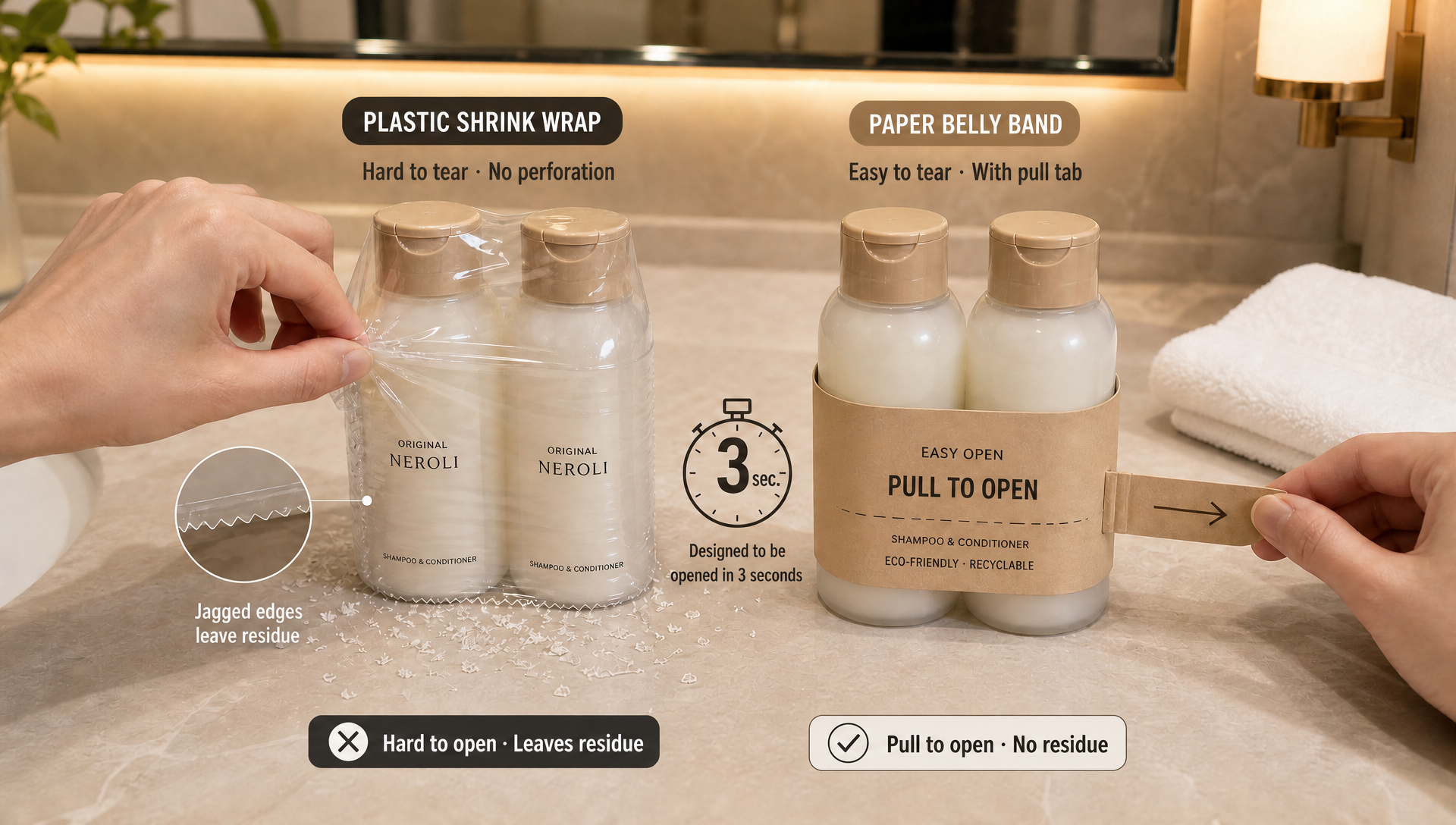
 Oct 06, 2026Those 3 Seconds When Guests Tear Open the Plastic Film on a Toiletry Set – Which Is More Annoying: Packaging That Won't Tear, or Packaging That Tears Too Easily?
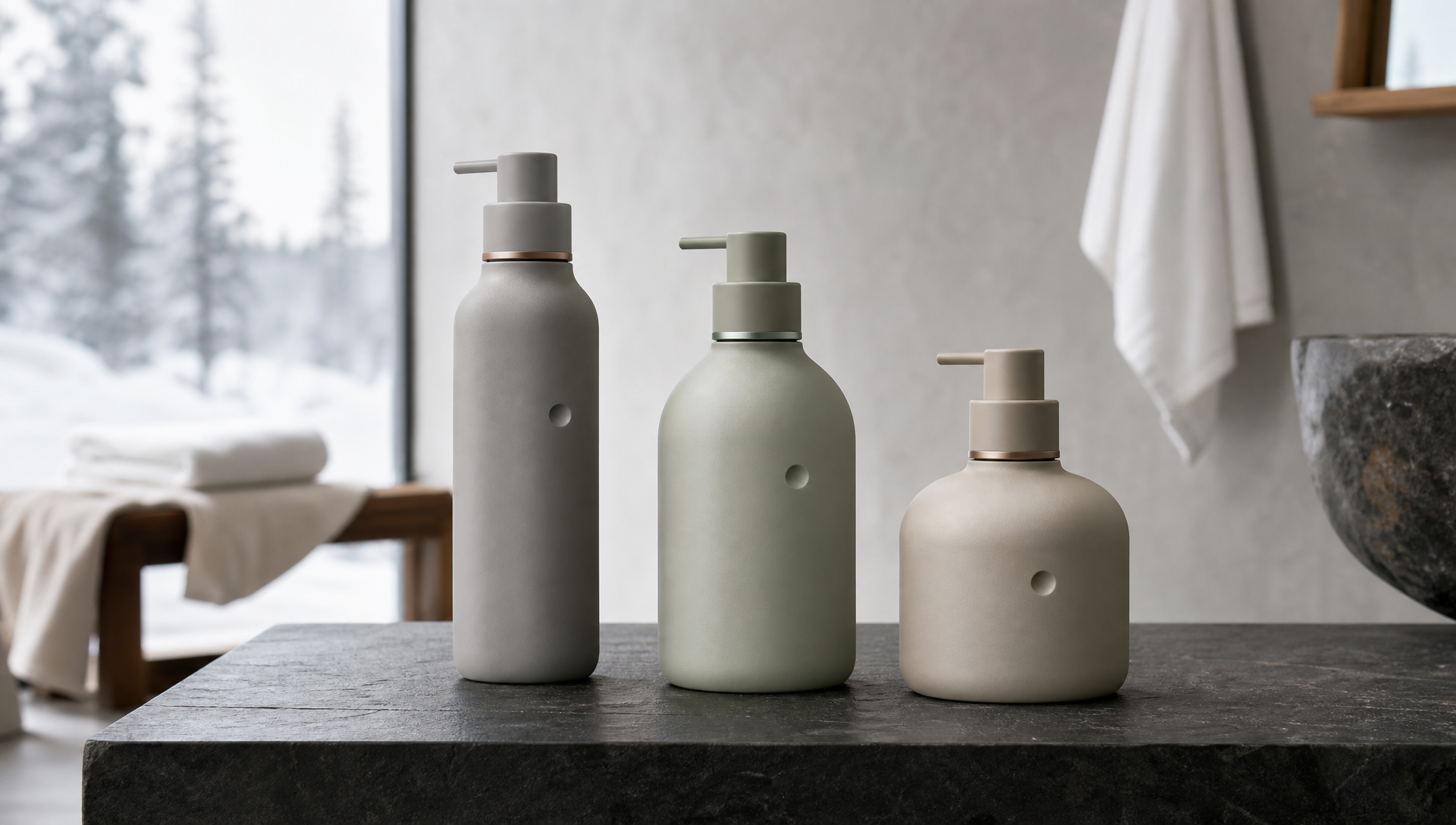
 Sep 24, 2026The "Minimalist Toiletry" Philosophy of Nordic Hot Spring Spas: Why Is There Not a Single Chinese Character on the Bottle?
Ask For A Quick Quote
If you are looking for more information on our services, or how we could potentially help, we would love to hear from you!