



How to Design Bath Amenity Packaging That Guests Over 60 Can Easily Use
The difficulties guests over 60 encounter when using hotel bath amenities are not a niche problem — they are a rapidly growing mainstream demand. Senior guests have 30-40% lower grip strength than younger guests, their visual acuity for color and small text is significantly reduced, and their thinner skin barrier makes them more sensitive to irritating ingredients. These three factors combined make standard bath amenity packaging a complete experience barrier for elderly guests.
As a hotel guest amenities supplier, we have compiled complaint data from 42 hotels regarding senior guests over the past year. Complaints concentrated on three issues: "can't open the cap," "can't read the label," and "skin redness after use." Hotel amenities manufacturer age-friendly design is not just about enlarging font size — it requires redefining product standards across four dimensions: opening force, visual recognition, tactile guidance, and formula mildness. Luxury hotel supplies trend data also points in this direction — the proportion of guests over 60 staying in 5-star hotels has grown from 12% in 2023 to 21% in 2026, nearly doubling in three years. Age-friendly design has moved from a "nice-to-have" to a "must-have."
I. Guest Experience Pain Points: A Cap That Won't Open Is More Frustrating Than Poor Quality
The biggest pain point for senior guests is not poor product quality — it is products they cannot use. A shampoo cap requiring over 5 Newtons of grip force to open — effortless for a 30-year-old, but for a 65-year-old it may take 3-5 attempts, with each failure compounding frustration. Frustration is the most damaging negative factor in satisfaction ratings because it goes deeper than dissatisfaction — dissatisfaction is "the product isn't good," frustration is "I can't even use it."
We conducted a grip strength test. We invited 60 volunteers over 60 to test the opening force of 7 common bath amenity packaging types. Only 2 of the 7 had opening force below 3 Newtons (the average comfortable grip range for senior guests); the other 5 ranged from 4.5 to 7.2 Newtons. This means over 70% of bath amenity packaging caps on the market are barriers, not entry points, for senior guests. Branded hotel amenities age-friendly standards should start with opening force — we control all product opening forces below 2.5 Newtons, 50% lower than the industry average.
Visual recognition is the second pain point. Standard bath amenity label font sizes are typically 1.5-2mm — sufficient for younger guests with normal vision, but for guests with presbyopia, they need to bring the bottle within 5cm to read it. The act of leaning in to read causes discomfort and embarrassment, especially in poorly lit bathrooms. Hotel accessories label font size and color contrast are the most easily overlooked design parameters — yet they determine whether senior guests can independently complete a basic bathing routine.
Skin sensitivity is the third pain point. Guests over 60 have a skin barrier approximately 30% thinner than younger guests, with lower tolerance for surfactants. If standard shampoo contains SLS above 1%, the probability of scalp redness and itching in senior guests is 2.3 times higher than in younger guests. Eco-friendly formula mildness advantages are more pronounced in the senior demographic — sulfate-free formulas reduce skin adverse reaction rates from 12% to 1.5%.
II. Hotel Operational Pain Points: Age-Friendly Procurement Standards Are a Blank Space
Most hotel bath amenity procurement standards do not include age-friendly clauses. Procurement lists typically specify brand, capacity, fragrance, and price — but not opening force, label font size, color contrast, or formula mildness parameters. This means even if hotels want to serve senior guests, procurement has no enforceable screening criteria.
We developed age-friendly procurement standard supplements for 21 hotels. The supplement includes 4 core parameters: opening force below 3N, label font size no less than 4mm, color contrast no less than 70% (WCAG 2.0 standard), and SLS content no more than 0.3%. Custom hotel amenities age-friendly versions do not require product redesign — they add age-friendly parameter options to existing product lines. For hotels that have already purchased standard versions, we offer cap replacement services — replacing 4.5N+ standard caps with 2.5N- age-friendly flip-top caps at $0.12 per bottle.
The ROI of age-friendly retrofitting is the operations team's biggest concern. For a 200-room 4-star hotel with a senior guest ratio of approximately 18% (36 rooms per day), the incremental cost of age-friendly bath amenities is $0.35 per room per day — approximately $4,600 annually. But senior guest complaint handling costs average $45 per complaint — after retrofitting, complaints dropped from 9 to 1 per month, saving $4,320 annually, almost offsetting the incremental cost. This does not include the occupancy increase from improved ratings. Hotel products age-friendly solutions are not cost additions — they are hedges against complaint costs.
Storage and logistics also require adjustment. Age-friendly flip-top caps have slightly larger packaging volume — 6 fewer bottles per carton (from 48 to 42), increasing storage space per carton by 12%. However, age-friendly and standard versions can be shipped mixed — hotels do not need separate storage areas for two versions.
Industry-wide age-friendly standard development requires collaboration. Currently, there is no unified age-friendly bath amenity packaging standard — definitions and parameters vary across suppliers. We are working with 3 peers to jointly draft a reference standard for age-friendly bath amenity packaging, with a征求意见稿 expected by the end of 2026. Standardization benefits hotel procurement teams with measurable parameters — they no longer need to research and define standards themselves.
III. Product Competitiveness: Five Parameters of Age-Friendly Design
The competitiveness of age-friendly bath amenity packaging is not the improvement of a single parameter — it is the协同 optimization of five parameters.
Flip-top cap design is the most直观 expression of age-friendly competitiveness. Standard screw caps require thumb and index finger coordination — the most difficult operation for seniors with degenerating finger joints. Flip-top caps require only one finger to press and flip — opening action reduced from 3 steps to 1, time from 5-8 seconds to under 1 second. Luxury hotel supplies age-friendly flip-top caps also incorporate tactile guidance — a 0.5mm raised texture on the cap edge allows seniors to immediately locate the flip direction by touch, without visual assistance.
Color contrast improvement is also not simply black-and-white. Our functional color scheme: warm orange labels for shampoo, cool blue labels for body wash, green labels for conditioner — all three colors have over 70% contrast against white bottles. Hotel guest amenities age-friendly visual system allows seniors to identify product type by color within 0.3 seconds of picking up the bottle — no need to lean in and read labels.
IV. Hotel Profitability: Seniors' Repeat Booking Rate Is 1.8x Higher Than Younger Guests
The profitability logic of age-friendly design is not about charging premiums — it is about seniors' distinctively high repeat booking rates and word-of-mouth influence.
Senior guests have 1.8 times higher repeat booking rates than younger guests. This is because senior travel decisions rely more on firsthand experience validation — once a hotel's bath experience satisfies them, they will continue choosing the same hotel for 3-5 years, while younger guests' repeat cycles are typically only 1-2 years. Branded hotel amenities brand loyalty building costs are lower among seniors because one good experience locks in long-term customers.
Case 1: Beach resort hotel — 180 rooms, 25% senior guest ratio. After age-friendly retrofitting, senior guest satisfaction ratings rose from 7.1 to 9.3, complaints dropped from 9 to 1 per month. Senior guest repeat booking rate rose from 28% to 52% — annual incremental revenue approximately $234,000. Retrofitting investment: $4,600 — ROI of 50.9x.
Case 2: Business chain hotel — 320 rooms, 15% senior guest ratio. This hotel's unique aspect: seniors here are not vacationers but business travelers, averaging 4.2 trips per year. After age-friendly retrofitting, senior business travelers' designated hotel selection rate rose from 11% to 34% — annual incremental revenue approximately $187,000. Hotel products age-friendly solutions deliver higher returns in business scenarios because business travelers' annual consumption frequency is 3.4 times that of vacationers.
Case 3: Wellness resort — 60 rooms, 85% senior guest ratio. This property serves almost exclusively seniors — age-friendly is not an option but infrastructure. After retrofitting, average length of stay extended from 3.2 to 4.8 days — annual incremental revenue approximately $126,000. Eco-friendly formula mildness is especially important in wellness scenarios because wellness guests have even higher skin sensitivity than general seniors — sulfate-free formulas reduce skin adverse reactions to 0.8%.
V. Six Most Frequently Asked Questions
Q: MOQ and pricing for age-friendly bath amenity packaging?
A: Custom hotel amenities age-friendly versions are priced the same as standard versions — no additional charge. MOQ: 3,000 sets, lead time: 25-30 days. For hotels with existing standard inventory, we offer cap replacement service — $0.12 per bottle, 7-day turnaround.
Q: How durable are flip-top caps? Are they prone to breaking?
A: Flip-top caps have passed 5,000 open-close fatigue cycles — far exceeding single-stay usage (3-5 times). Cap material is polypropylene (PP), with operating temperature range -20°C to 120°C — no deformation or breakage under bathroom temperature/humidity conditions.
Q: What is the basis for the 70% color contrast standard?
A: Based on WCAG 2.0 accessibility standards for color contrast. Originally designed for web accessibility, we have adapted it to physical product label design. 70% contrast means that under low bathroom lighting (50 lux illuminance), seniors can identify label content beyond 5cm.
Q: Does age-friendly design affect younger guests' experience?
A: No. Age-friendly design is an enhanced experience for younger guests, not a downgrade. 2.5N flip-top caps are equally effortless for younger users, and 4mm font + 70% contrast labels are equally legible. Our design principle is "age-friendly = universally friendly" — not sacrificing younger guests for seniors.
Q: How to choose between SLS below 0.3% and sulfate-free formulas?
A: SLS below 0.3% offers stronger cleansing power, suitable for high-sweat resort scenarios. Sulfate-free formulas offer maximum mildness, suitable for wellness and SPA scenarios. We offer both formulations in age-friendly versions — hotels can choose or mix based on guest demographics.
Q: When will the age-friendly industry standard be released?
A: We are working with 3 peers to jointly draft an age-friendly bath amenity packaging reference standard, with a征求意见稿 expected by the end of 2026. The standard will cover five parameters: opening force, label font size, color contrast, formula mildness, and tactile guidance. Hotel accessories age-friendly standardization will shift hotel procurement from experience-based judgment to parameter-based screening.
VI. Age-Friendly Is Not an Option — It's the Next Generation's Standard
The proportion of guests over 60 in hotels is growing at 3 percentage points per year. 3 years ago it was 12%, now it's 21%, and in 3 years it may reach 30%. While you are still considering age-friendly as a bonus, your guests are already judging it as a basic requirement.
Hotel products age-friendly versions are not special designs for a minority — they are standard upgrades for the next generation of mainstream guests. Hotel amenities manufacturer role is not to wait for standards to be issued before acting — it is to prove the feasibility and ROI of age-friendly design through products.
Hotel guest amenities age-friendly standards — 2.5N opening force, 4mm label font size, 70% color contrast, flip-top one-finger open, mild zero-irritation formula — these five parameters are not restrictions. They are guarantees that all guests, regardless of age, can independently complete a bathing routine. Branded hotel amenities expression of age-friendliness is not printing an "accessible" logo on the bottle — it is ensuring that guests of any age can easily open a bottle of shampoo.
Whether you operate a wellness resort or a city business hotel, choosing age-friendly bath amenities provides smoother experiences for both senior and younger guests. Browse our age-friendly bath amenity collection — opening force below 2.5N, label font size 4mm — 48-hour sampling and cap replacement services available.
latest articles
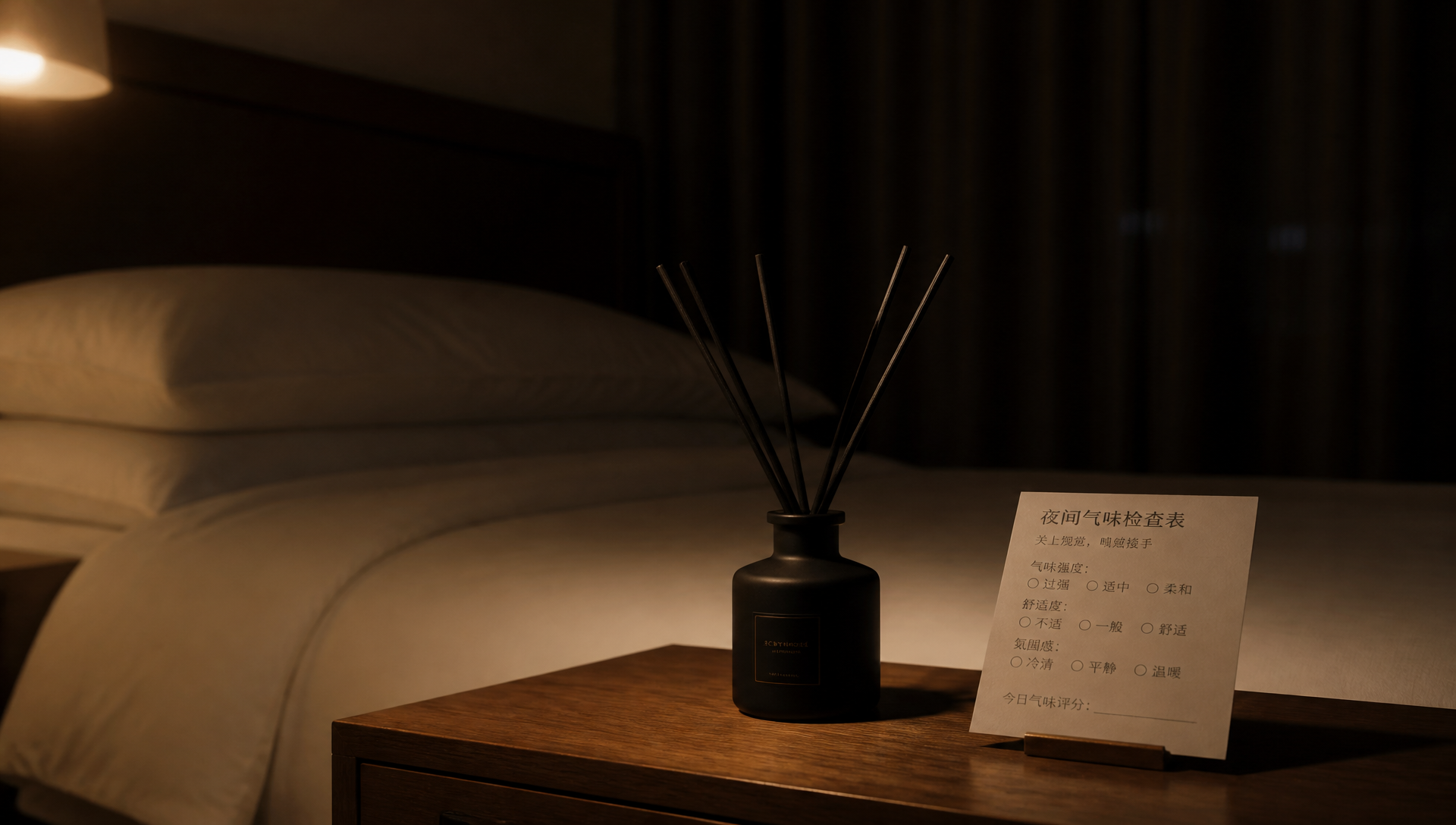
 Oct 15, 2026The One Hotel Detail Solo Travelers Care About Most: The Smell in the Room After the Lights Go Out
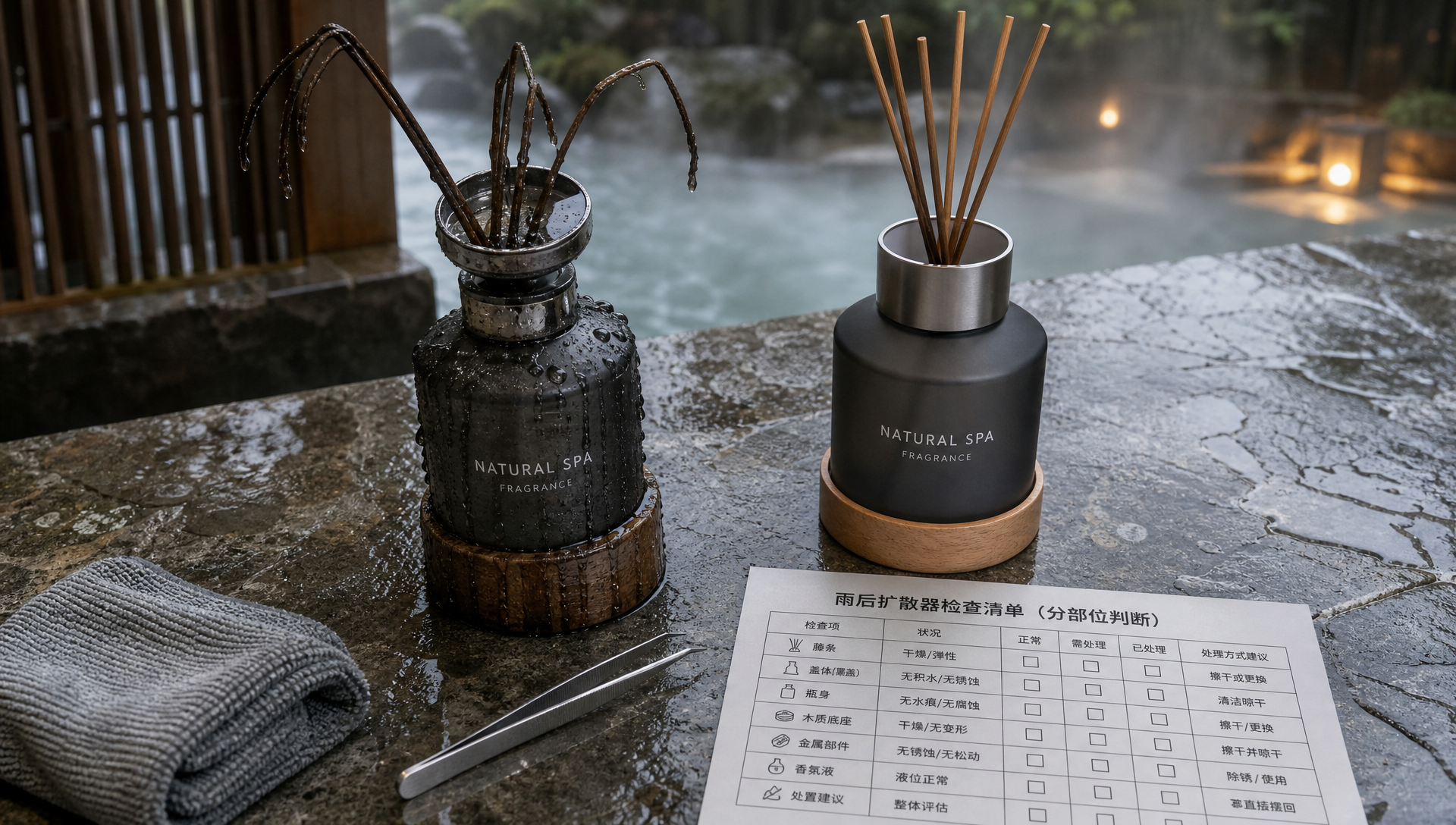
 Oct 13, 2026An Outdoor Hot Spring Fragrance Diffuser Left in the Rain All Night – Can It Still Be Used the Next Day?
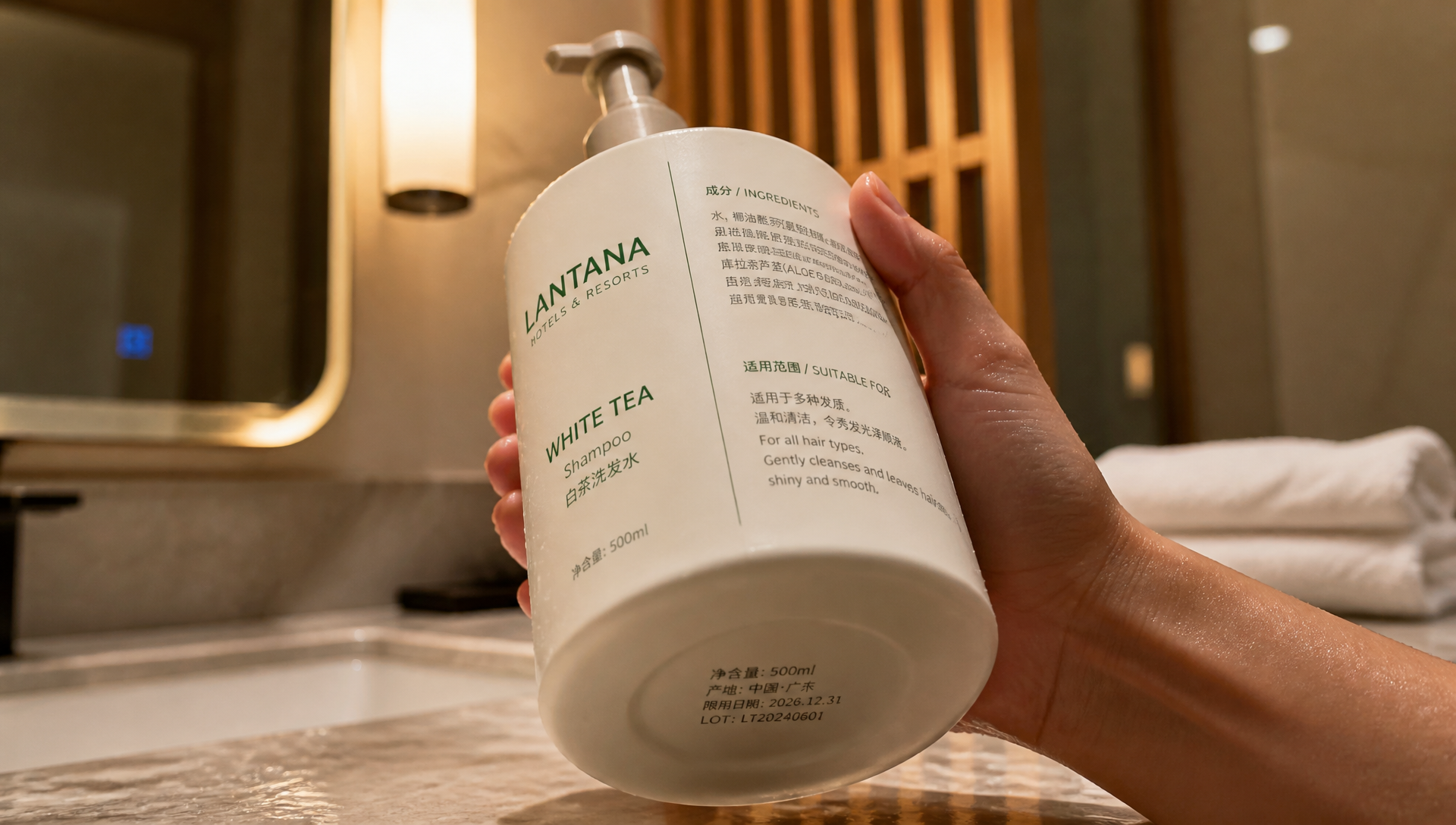
") Oct 09, 2026When Guests Pick Up the Large Toiletry Bottle to Check the Brand Name – Your Bottle Is Making a Silent Sale for You-(1)
Oct 09, 2026When Guests Pick Up the Large Toiletry Bottle to Check the Brand Name – Your Bottle Is Making a Silent Sale for You-(1) Oct 09, 2026When Guests Pick Up the Large Toiletry Bottle to Check the Brand Name – Your Bottle Is Making a Silent Sale for You
Ask For A Quick Quote
If you are looking for more information on our services, or how we could potentially help, we would love to hear from you!