



Procurement Q: The hotel toiletries market is getting bigger – which categories should I focus on?
A roadmap for the global market of $26.3 billion by 2032
As a hotel procurement professional, you are likely facing an increasingly complex situation.
On one hand, the hotel toiletries market is indeed expanding rapidly. The global hotel toiletries market is expected to reach 36.47 billion by 2031, growing at a CAGR of 6.7%.
On the other hand, there are more and more product categories: basic cleansing, oral care, hair and body care, personal care items – the number of SKUs is overwhelming.
So the question is: where is the money flowing? Where should you allocate your procurement budget?
The answer is clear: Sustainable / organic / natural‑ingredient products are the fastest‑growing segment with the strongest pricing power and the greatest ability to enhance guest satisfaction.
I. Why is sustainable toiletries a must‑focus track?
The shift in demand is irreversible. According to industry research, guest demand for organic, vegan, and biodegradable products is rising significantly, and preference for natural ingredients and cruelty‑free certifications is growing.
How strong is this trend? The global eco‑friendly hotel amenities market was about 7.9 billion by 2032, at a CAGR of 9.2% – far above the average growth rate of the overall hotel toiletries market.
Three forces are driving this growth:
First, consumer environmental awareness has entered the “voting with wallets” stage. More and more travelers consider whether a hotel uses eco‑friendly toiletries as a factor in their choice.
Second, regulations are changing. In early 2026, nine Chinese government departments jointly issued a notice clearly promoting “biodegradable items” and “providing large bottles or refillable bath products, not proactively offering single‑use plastics.” Environmental friendliness has moved from “optional” to “mandatory.”
Third, eco‑certifications are powerful brand endorsements. Globally, hotel toiletries that carry an Eco‑Label certification are becoming industry benchmarks. They not only enhance brand premiums but also help hotels avoid compliance risks related to single‑use plastics.
For procurement, this means: Sustainable toiletries are not only “the right thing to do” – they are increasingly a smart business decision.
II. Different guest segments need different product lines: your “dual‑tier strategy”
Hotels at different star levels have vastly different needs for toiletries – procurement cannot use a one‑size‑fits‑all approach.
Luxury hotels pursue co‑branding and unique experiences. In this segment, the logic is “we use custom toiletries from X luxury brand.” Pricing power comes from brand value and scarcity. A recent example: a hotel developed and obtained Eco‑Label certification for its own solid shampoo and conditioner – the first product to receive such certification in the industry. That is a clear signal that even high‑end hotels are racing to embrace sustainability.
Economy hotels – guests mainly care about “clean and sufficient.” They are indifferent to luxury co‑branding, but an “eco‑friendly” label can be a positive differentiator – after all, who doesn’t like staying at a responsible hotel?
Mid‑scale hotels – their guests are the largest “swing group.” They can perceive quality differences and will feel a bit more favorable toward a hotel that carries a “cruelty‑free” label. Mid‑scale hotels are precisely where the “basic + premium” dual‑tier strategy delivers the most value.
III. The golden rule of procurement: split your budget into three layers to unlock profit
Faced with an increasingly segmented market, the core procurement strategy should shift from “one‑size‑fits‑all” to “layered allocation.” Here is how:
1. Basic tier (60%‑70% of budget)
This covers the bulk of daily consumption. The core logic is: value for money first, but meeting basic environmental requirements. For example, choose ordinary toiletries with biodegradable packaging – make sure they are “no worse than competitors” without over‑investing in natural ingredients or high premiums for the basic tier.
Selection criteria: cost‑effective + packaging compliant + consistent batch quality.
2. Premium tier (20%‑30% of budget)
This is where you create differentiation and memorable experiences. Introduce high‑end product lines with organic certification, cruelty‑free certification, and plant‑based formulas. They do not need to be placed everywhere, but they should appear in – deluxe suites; frequent‑guest or member floors; public areas where eco‑labels can be showcased (e.g., near the minibar or towel racks).
Selection criteria: third‑party certification + a story worth sharing + distinctive packaging.
3. Optional / supplementary tier (5%‑10% of budget)
Smaller, trend‑following niche products. Examples: plant‑based toothpaste, solid shampoo, water‑soluble packaging trial sets. This tier is small in volume but can generate social media buzz and bring additional word‑of‑mouth promotion.
Selection criteria: innovative + conversation‑starting + easy to rotate.
IV. What returns can this bring?
▶ Cost control with perceived value uplift. By accurately layering, you strictly control the cost of the basic tier and reallocate those savings to the premium tier, making guests feel quality improvement where it matters most. You do not spend more, but the experience is enhanced.
▶ Cater to different guest segments and reduce waste. The existence of a premium tier makes high‑end and frequent business travelers feel valued, while sufficient coverage of the basic tier avoids the huge waste of a one‑size‑fits‑all premium approach. The result: differentiation without waste.
▶ Brand premium and online ratings both rise. More and more guests will voluntarily mention in reviews: “The toiletries here are eco‑certified,” “The soap packaging is biodegradable.” These details are seeds of word‑of‑mouth, eventually translating into pricing power.
V. Your product options – featured highlights
If your hotel is looking for a product line that meets both the high cost‑effectiveness of the “basic tier” and the environmental requirements of the “premium tier,” the following are worth considering:
🌿 Botanical Series – plant‑based eco performer
Core selling points: The Botanical Series uses plant extracts as its core ingredient. Shampoo, body wash, conditioner – the entire line is positioned as plant‑based, natural, gentle, and non‑irritating.
Coverage: Full range of hair and body care – shampoo, body wash, conditioner, lotion.
Application: Can be used as a “premium tier” product for mid‑scale to upscale suites and member floors, promoting the message “Our hotel uses natural botanical toiletries.” It can also cover most standard rooms where guests seek a gentle washing experience, balancing quality and cost.
Eco bonus: Full packaging uses recyclable materials, aligning with the 2026 green consumption policy direction.
🍃 Label‑Free Series – minimalist low‑carbon choice
Core selling points: An innovative label‑free design. The bottle eliminates traditional plastic labels, directly reducing plastic usage and carbon emissions from production.
Coverage: Liquid products such as body wash and shampoo.
Application: Particularly suitable for mid‑to‑high range boutique hotels and B&Bs with a “minimalist,” “low‑carbon,” or “less is more” brand identity. The clean bottle surface works especially well with wall‑mounted pump dispensers.
Eco bonus: Reduces plastic and emissions at the packaging stage. Some products can be used with large bottles or refill systems, further reducing single‑use packaging waste.
🌱 Biodegradable Packaging Series – full‑chain eco assurance
Core selling points: Made of industrially compostable materials that break down completely into water and carbon dioxide under professional composting conditions, leaving no microplastics. The eco concept runs from packaging to contents.
Coverage: Disposable amenities such as toothbrush kits, combs, shower caps, disposable slippers.
Application: Ideal for premium rooms with explicit environmental requirements, family/children’s rooms, and hotels seeking “Green Hotel” certification.
Eco bonus: Fully aligns with the nine‑department green consumption notice’s call to “promote biodegradable items,” helping you proactively avoid compliance risks from future stricter plastic bans.
VI. Conclusion: Money in the toiletries market is flowing toward sustainability
Back to the original question: with so many hotel toiletries categories, where should procurement focus?
The answer is – put your money where guests are willing to pay a premium. Guests are willing to pay a little more for natural ingredients, sustainable packaging, and environmental friendliness. That is the true engine of market growth.
The global hotel toiletries market is growing steadily at over 4% annually, but sustainable products are growing at more than twice that rate. If procurement captures this trend early – by investing in plant‑based formulas, biodegradable packaging, organic certifications, etc. – you can not only help the hotel control total costs but also achieve tangible improvements in brand image and online ratings.
A basic tier keeps costs under control; a premium tier lifts brand premiums – this dual‑tier strategy is your next procurement breakthrough.
Want to learn more about the Botanical Series, Label‑Free Series, Biodegradable Packaging Series, and request free samples? Contact us for free samples and custom solutions.
latest articles
 Oct 15, 2026The One Hotel Detail Solo Travelers Care About Most: The Smell in the Room After the Lights Go Out
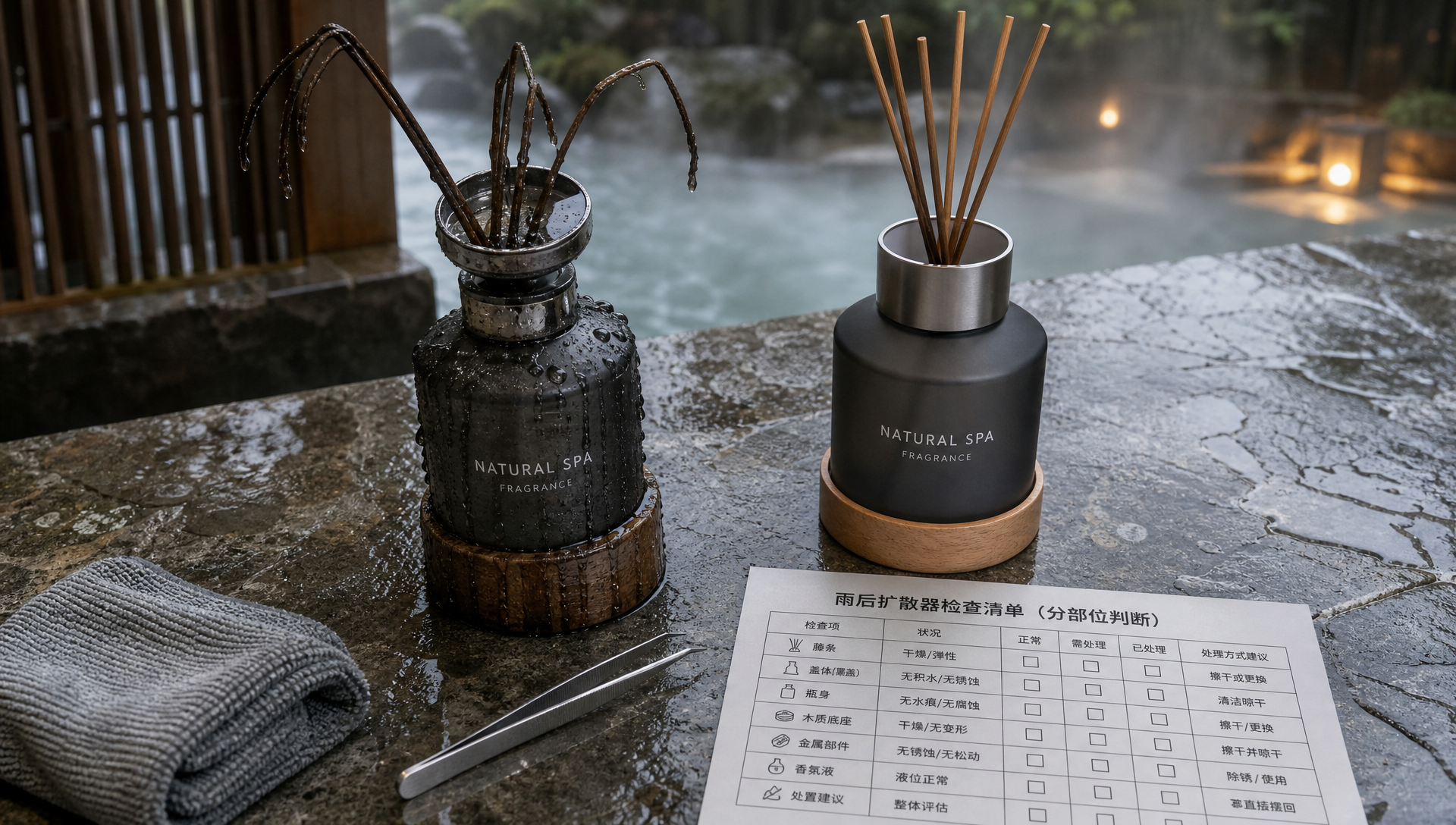
 Oct 13, 2026An Outdoor Hot Spring Fragrance Diffuser Left in the Rain All Night – Can It Still Be Used the Next Day?
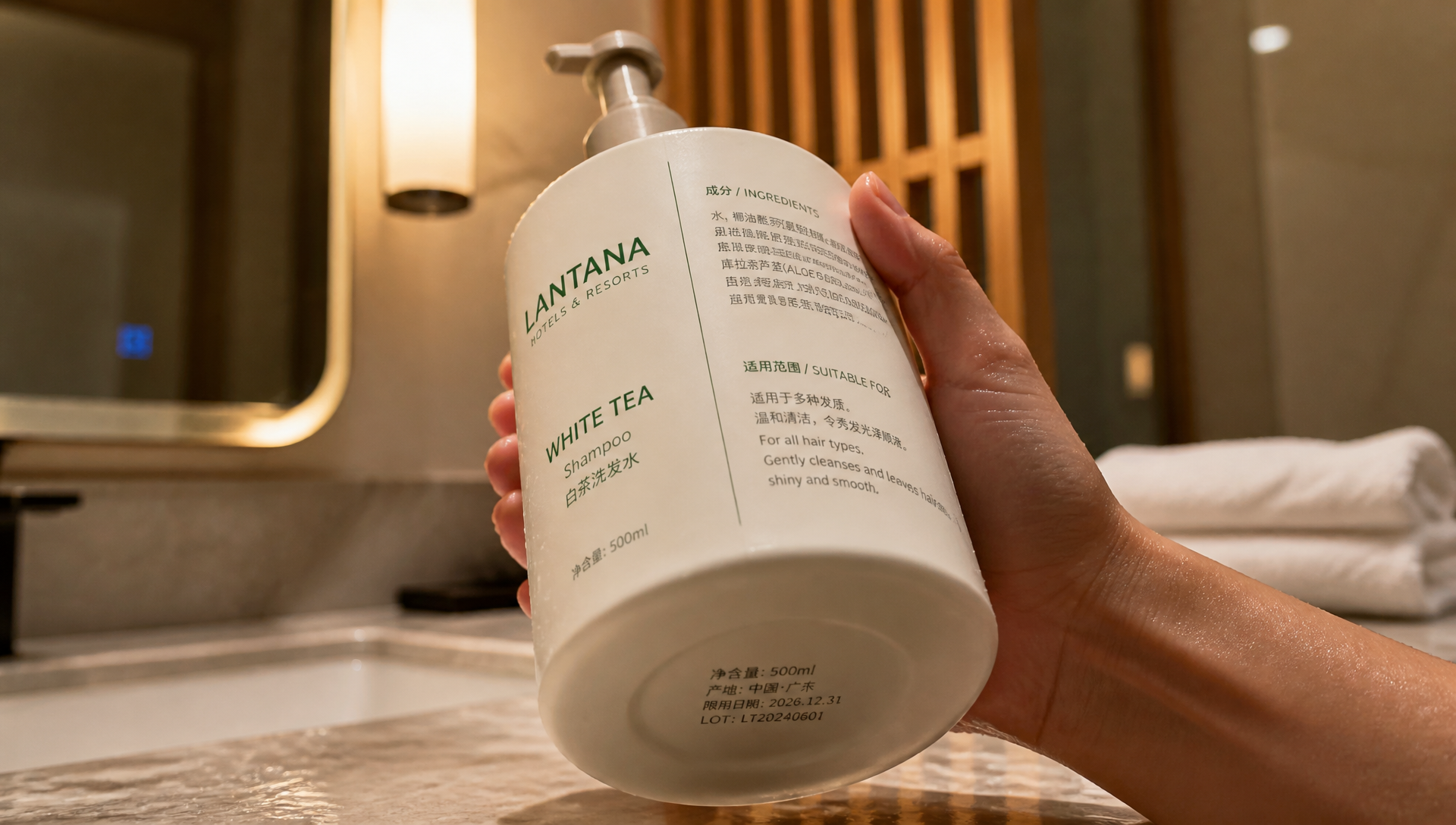
") Oct 09, 2026When Guests Pick Up the Large Toiletry Bottle to Check the Brand Name – Your Bottle Is Making a Silent Sale for You-(1)
Oct 09, 2026When Guests Pick Up the Large Toiletry Bottle to Check the Brand Name – Your Bottle Is Making a Silent Sale for You-(1) Oct 09, 2026When Guests Pick Up the Large Toiletry Bottle to Check the Brand Name – Your Bottle Is Making a Silent Sale for You

Ask For A Quick Quote
If you are looking for more information on our services, or how we could potentially help, we would love to hear from you!