



Procurement Q: Why do hotel guests keep complaining that shower gel makes their scalp itch? Avoid these 3 low‑price traps and make guests ask for the brand
Saving 30 cents on a bottle of shower gel costs a 3,000 RMB bad review – every hotel buyer has done the math, but still falls into the trap.
I. A late‑night call from a hotel front desk
Last November, at one in the morning, a friend who runs a homestay called me.
A couple had just taken a shower. The woman’s scalp turned red and itchy; the man broke out in a rash all over his arms. They went to the emergency room at midnight. The doctor diagnosed contact dermatitis, suspected to be related to the toiletries.
The next day, the guests demanded a full refund plus triple compensation, and posted a detailed bad review with photos on two travel platforms. The title: “Checked in, took a shower, ended up in the hospital.”
My friend pulled the shower gel bottle from a drawer. On the bottle was a line of English and some abbreviations he didn’t understand. No Chinese label, no ingredient list, no production date, no registration number. He recalled: the wholesaler told him it was “export quality”, costing only 80 cents a bottle. He thought it was a big‑brand OEM product, so it must be fine.
I asked him: now that the cheap shower gel has cost you, how much have you spent on damage control? He said refunds and compensation totaled 4,200 RMB – not counting the lost future bookings from those two bad reviews.
This story is not an isolated case. The hotel industry sees tens of thousands of guest complaints every year caused by allergic reactions to toiletries. Most of the time, the procurement staff don’t even know where the problem is – because they don’t stay in their own hotels.
II. Three deadly traps of cheap shower gel – each one crosses a legal red line
Trap 1: Missing labels – no ingredient list means no safety proof
The most common problem with shower gel in hotel guest rooms is incomplete or completely missing label information.
Under international cosmetic regulations (and equivalent local laws), a compliant product’s package should at least show:
Product name
Full ingredient list (in descending order of concentration)
Manufacturer’s name and address
Production date and expiry date
Manufacturing license number or registration number
Net content
Instructions for use and warnings
But a huge number of cheap shower gels sold into the hotel channel only have the hotel logo on the bottle and three or four lines of vaguely written English. Even the procurement staff don’t understand what’s written. This is not minimalist design – it is opaque information. When a guest has an allergic reaction, the doctor cannot determine the allergen from the ingredient list, and the hotel cannot hold the supplier accountable – because without a label, there is no chain of evidence.
A bottle of shower gel without an ingredient list is essentially an undocumented black‑market product.
Trap 2: Poor‑quality surfactants – saving money at the cost of your guests’ skin
In the cost structure of shower gel, surfactants account for the largest share – and they are also the easiest place to cut corners.
Compliant products usually use amino‑acid‑based surfactants, such as sodium lauroyl glutamate and sodium cocoyl glycinate. These have a pH close to human skin, are mild and non‑irritating, but cost more – raw material prices range from 40‑80 RMB per kilogram.
Cheap products use large amounts of SLS (sodium lauryl sulfate) or SLES (sodium laureth sulfate). These are powerful degreasers, produce a lot of foam, and are cheap – only 5‑8 RMB per kilogram. But they damage the skin barrier, leaving it tight and itchy after washing – especially bad for people with sensitive skin.
Even worse, some unregulated factories use industrial‑grade rather than cosmetic‑grade surfactants, which may contain harmful residues such as dioxane and heavy metals. Typical signs of such products:
Abnormally rich foam that lasts too long
Obvious tightness and itching after washing
Strong, unnatural fragrance – smells like dish soap
Unnaturally bright liquid color
If a shower gel meets two of the above criteria, throw it away.
Trap 3: No registration – incomplete paperwork makes the hotel jointly liable
In all major markets, skin‑care products must complete a registration or filing process before they can be sold. The core purpose of registration is that the product formula and ingredients have been reviewed by regulators, providing a baseline safety guarantee.
But a large number of bulk filling products sold specifically to hotels take a completely different path: buy in large barrels, fill into small bottles, stick on a hotel logo, and put them in guest rooms – all with zero compliance procedures.
If a guest suffers health problems as a result, under the product liability laws of most countries, the hotel – as the provider of the product – bears joint liability. It’s not that the supplier pays first; the hotel pays first, then tries to recover from the supplier. And if the supplier doesn’t even have an address, who are you going to chase?
That means when a hotel buys cheap shower gel, it’s not saving money for itself – it’s buying risk for itself.
III. Five hard indicators of compliant toiletries – check them one by one
As a responsible buyer, you don’t need a chemistry degree to judge whether a bottle of shower gel is compliant. Just look at these five points.
1. Check the full ingredient list
Legal cosmetic products must list all ingredients in descending order of concentration. Water is usually highest and appears first.
Key things to check among the top five ingredients:
If SLS or SLES appears in the top five – avoid.
If “fragrance” (parfum) appears in third place or higher – avoid (means active ingredients are too low).
If MIT (methylisothiazolinone) – a highly allergenic preservative – appears – avoid.
A good shower gel’s top five usually reads: water, amino‑acid surfactant, glycerin, cocamidopropyl betaine, plant extract.
2. Check the registration certificate
In markets with cosmetic regulatory systems, each product has a unique registration number. You can verify it on the official cosmetic database.
Three simple steps:
Ask the supplier for the registration number.
Log in to the local cosmetic database and enter the number.
Verify that the product name and manufacturer shown match the physical product.
If you can’t find it – reject. If the name or manufacturer doesn’t match – reject.
3. Check the manufacturing license
Ask the supplier for the manufacturer’s cosmetic production license. Without a production license, there is no basis for product compliance.
A simple logic: a licensed factory keeps records of every batch of raw materials, every batch formula, and every finished batch’s quality test report. An unlicensed factory has none of that.
4. Check third‑party test reports
Regular manufacturers will commission third‑party labs to test their products. Focus on these indicators:
Microbiology: total bacterial count, mold & yeast, heat‑resistant E. coli, staph aureus, pseudomonas aeruginosa
Heavy metals: mercury, lead, arsenic, cadmium
Acute skin irritation test
Repeat skin irritation test (especially important for hotels – guests may use the product daily)
The test report must have a CMA or CNAS accreditation mark – otherwise the lab itself may not be qualified.
5. Keep retained samples for comparison
Each time you receive a shipment, randomly take 3‑5 bottles as retained samples and store them sealed. If a complaint arises later, the retained sample is the most direct evidence.
Also, after a new batch arrives, open one bottle and compare it with the retained sample. Look at color, smell, and skin feel. If any of these three is significantly different, stop using the batch and investigate.
IV. Our toiletries standard – compliance is the baseline, not the ceiling
The five points above are exactly what we do for every bottle of shower gel and shampoo before it leaves our facility.
Transparent ingredients – full label on every bottle
Every bottle we supply to hotels has a complete ingredient list in both English and Chinese, following the INCI (International Nomenclature of Cosmetic Ingredients) standard. Ingredients are listed in descending order of concentration. If a guest likes the product and wants to buy it, they can turn the bottle over and see exactly what’s in it. And when procurement staff inspect the goods, they can complete an ingredient review in ten minutes.
Amino‑acid formula – mild enough to wash your face with
All our shower gels use an amino‑acid surfactant system:
Primary surfactants: potassium cocoyl glycinate, sodium lauroyl glutamate
Secondary surfactants: cocamidopropyl betaine, decyl glucoside
No SLS, SLES, MIT, or parabens
pH controlled between 5.5 and 6.5 – close to human skin’s natural mild acidity
This formula provides cleaning power comparable to SLS‑based products, but reduces irritation by more than 70%. It is suitable for the broadest range of guest skin types, including sensitive skin and children.
Full documentation – every batch traceable
Each shipment comes with the following documents:
Third‑party test report (microbiology + heavy metals + skin irritation)
Copy of the manufacturer’s cosmetic production license
Copy of the product registration certificate
Factory release test report for the batch
When procurement receives the goods, check the paperwork before putting them into inventory. If any document is missing – reject.
Cost calculation – compliant products are only a few cents more expensive
The key numbers:
A compliant 30ml amino‑acid shower gel costs about 1.2‑1.8 RMB per bottle
A cheap 30ml SLS shower gel costs about 0.6‑0.9 RMB per bottle
The difference is less than 1 RMB per bottle
For a 200‑room hotel using one bottle per room per day, the additional monthly cost is about 6,000 RMB
Now compare that to the average cost of handling one allergy complaint: medical expenses + compensation + reputation repair – typically 3,000‑10,000 RMB or more, not even counting lost bookings from bad reviews.
Spending 6,000 RMB per month to buy safety is far cheaper than spending an uncertain tens of thousands to buy a lesson – you don’t need a calculator for that math.
V. Three compliant toiletries solutions for different hotel tiers
Economy hotels – basic amino‑acid formula
Amino‑acid primary surfactant with a small amount of amphoteric surfactant
Fresh citrus or white tea fragrance – broadly appealing
Clean white bottle with full ingredient label
30ml bottle – cost ~1.2‑1.5 RMB per bottle
Mid‑scale business hotels – amino‑acid plus plant extracts
Amino‑acid base with added witch hazel, chamomile or aloe extracts
Professionally blended fragrance with some nuance
Frosted bottle with hot‑stamped logo
30ml bottle – cost ~1.8‑2.5 RMB per bottle
High‑end boutique hotels – fully “green label” custom formula
Full amino‑acid system with organic plant extracts
Custom signature fragrance – collaborate with a professional fragrance house
Glass or recyclable eco‑friendly bottle material
Includes brand story card and fragrance inspiration note
30ml bottle – cost ~3.0‑6.0 RMB per bottle
VI. From a bottle of shower gel to guests asking for the brand – just three details
After working in hotel toiletries for years, I’ve noticed a pattern: when do guests spontaneously ask the front desk what brand of shower gel the hotel uses?
Not when the bottle looks pretty. Not when the fragrance is strong. It happens at these three moments:
The skin feels neither dry nor itchy after washing – this is the baseline, but most hotels fail to achieve it.
No slippery residue when rinsing off – cheap products add silicone to create a false sense of smoothness, but it doesn’t rinse clean and clogs pores. A good amino‑acid shower gel leaves the skin feeling clean, soft, not artificially slippery.
The skin still feels comfortable the next morning – this is the real test of quality. A good product keeps the skin feeling good into the next day. When the guest looks in the mirror before going out and thinks “I look good this morning”, half of that feeling comes from last night’s shower.
Achieve these three things, and guests will start turning the bottle around to read the ingredients, take photos to save for later, and – when checking out – can’t help but ask: “Can I buy this shower gel somewhere?”
VII. Final words
What hotel procurement fears most is never the price – it’s the unknown.
You don’t know where the raw materials in this batch came from. You don’t know whether a guest will break out in a rash today. You don’t know whether you’ll get a complaint call tomorrow. That’s what really keeps buyers awake at night.
Compliant products turn every “unknown” into a “known”. You know the ingredients. You know the source. You know the test results. You know that someone is responsible for the safety of that bottle of shower gel.
The math is simple:
Spending a few more cents to buy certainty is a hundred times better than saving a few cents and gambling on uncertainty.
If you are considering upgrading your hotel’s toiletries, or if you’re tired of complaints and want to switch to a reliable supplier, please contact us for samples. Ingredient list, test reports, registration certificate – all included with the samples. Only when you are satisfied do we talk about working together.
latest articles
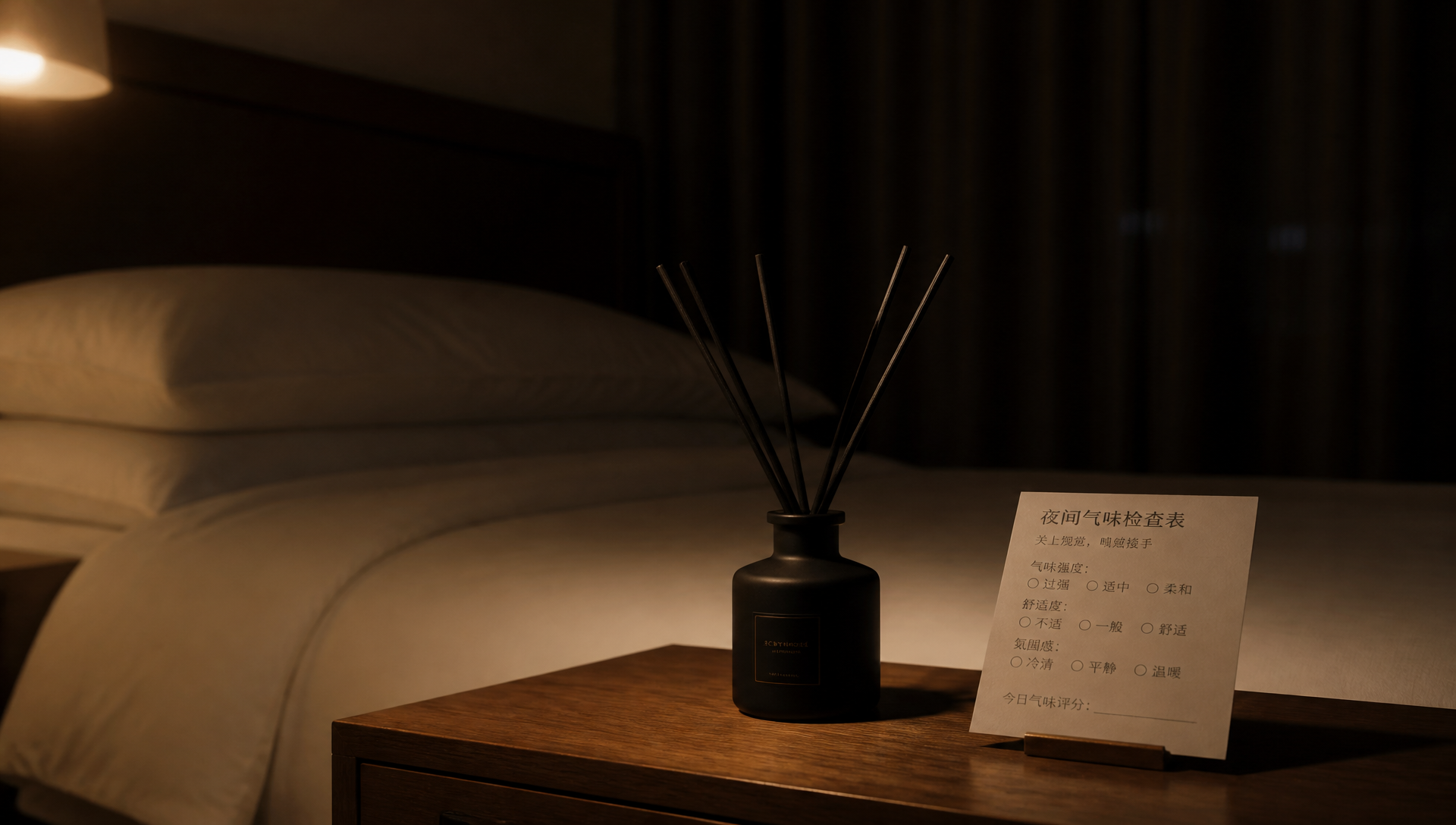
 Oct 15, 2026The One Hotel Detail Solo Travelers Care About Most: The Smell in the Room After the Lights Go Out
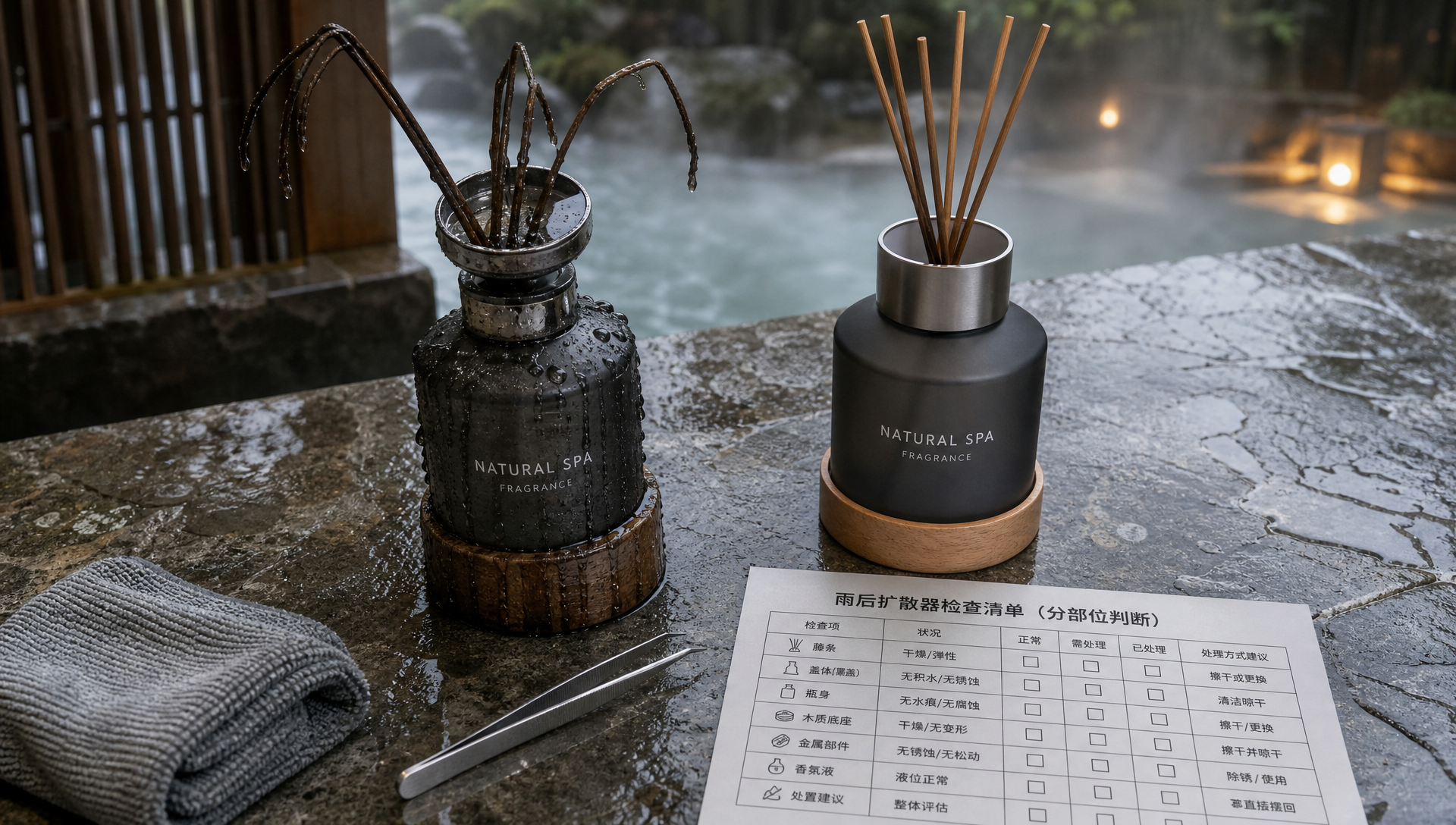
 Oct 13, 2026An Outdoor Hot Spring Fragrance Diffuser Left in the Rain All Night – Can It Still Be Used the Next Day?
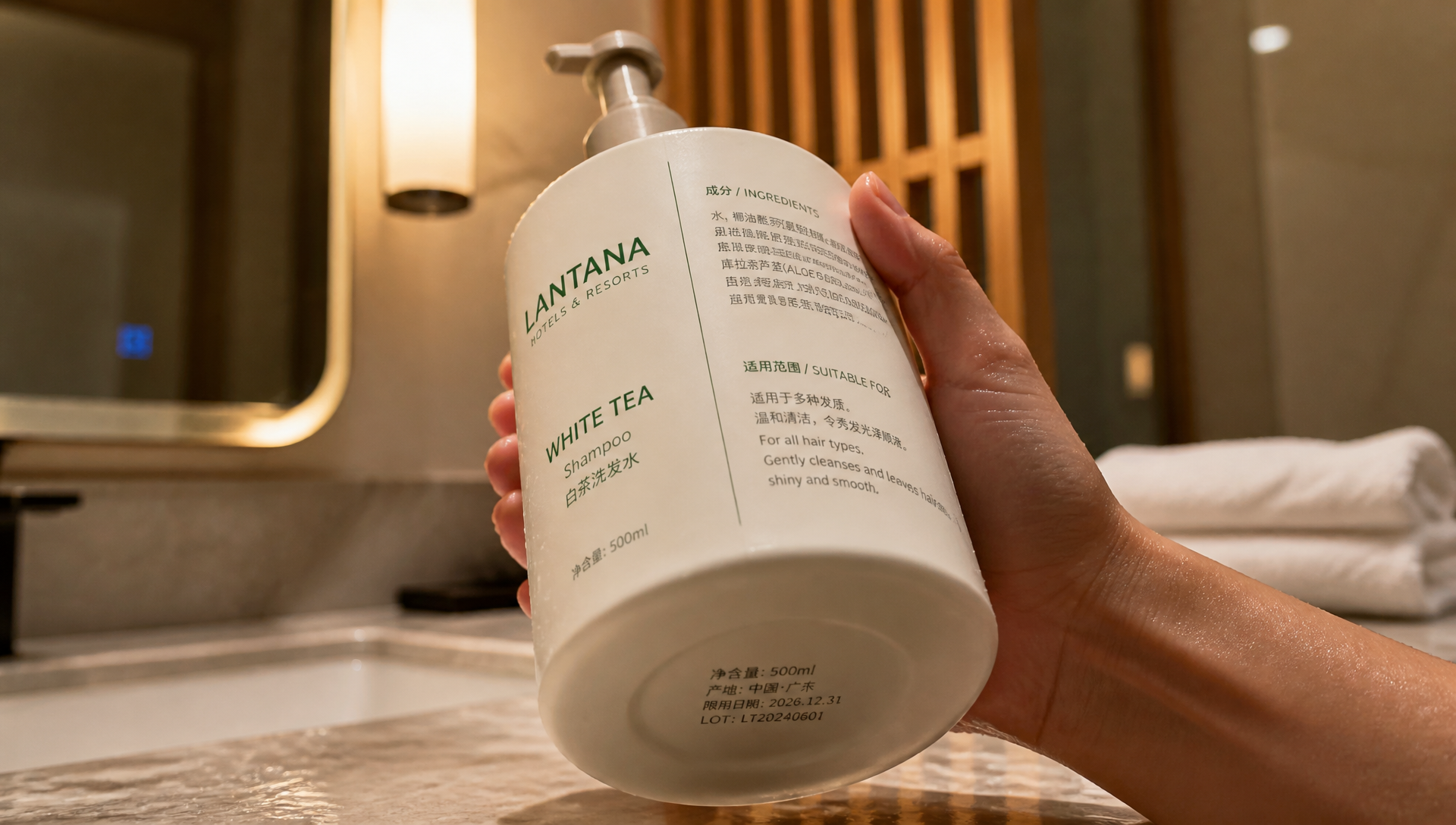
") Oct 09, 2026When Guests Pick Up the Large Toiletry Bottle to Check the Brand Name – Your Bottle Is Making a Silent Sale for You-(1)
Oct 09, 2026When Guests Pick Up the Large Toiletry Bottle to Check the Brand Name – Your Bottle Is Making a Silent Sale for You-(1) Oct 09, 2026When Guests Pick Up the Large Toiletry Bottle to Check the Brand Name – Your Bottle Is Making a Silent Sale for You
Ask For A Quick Quote
If you are looking for more information on our services, or how we could potentially help, we would love to hear from you!