



Resort Fragrance Solution Design: A Full-Scenario Olfactory Experience from Lobby to Spa
The most common mistake in fragrance design is copying one scent across an entire resort. The one that smells great in the lobby will press down on guests in the guest room until they can't sleep – and will compete with the food in the restaurant.
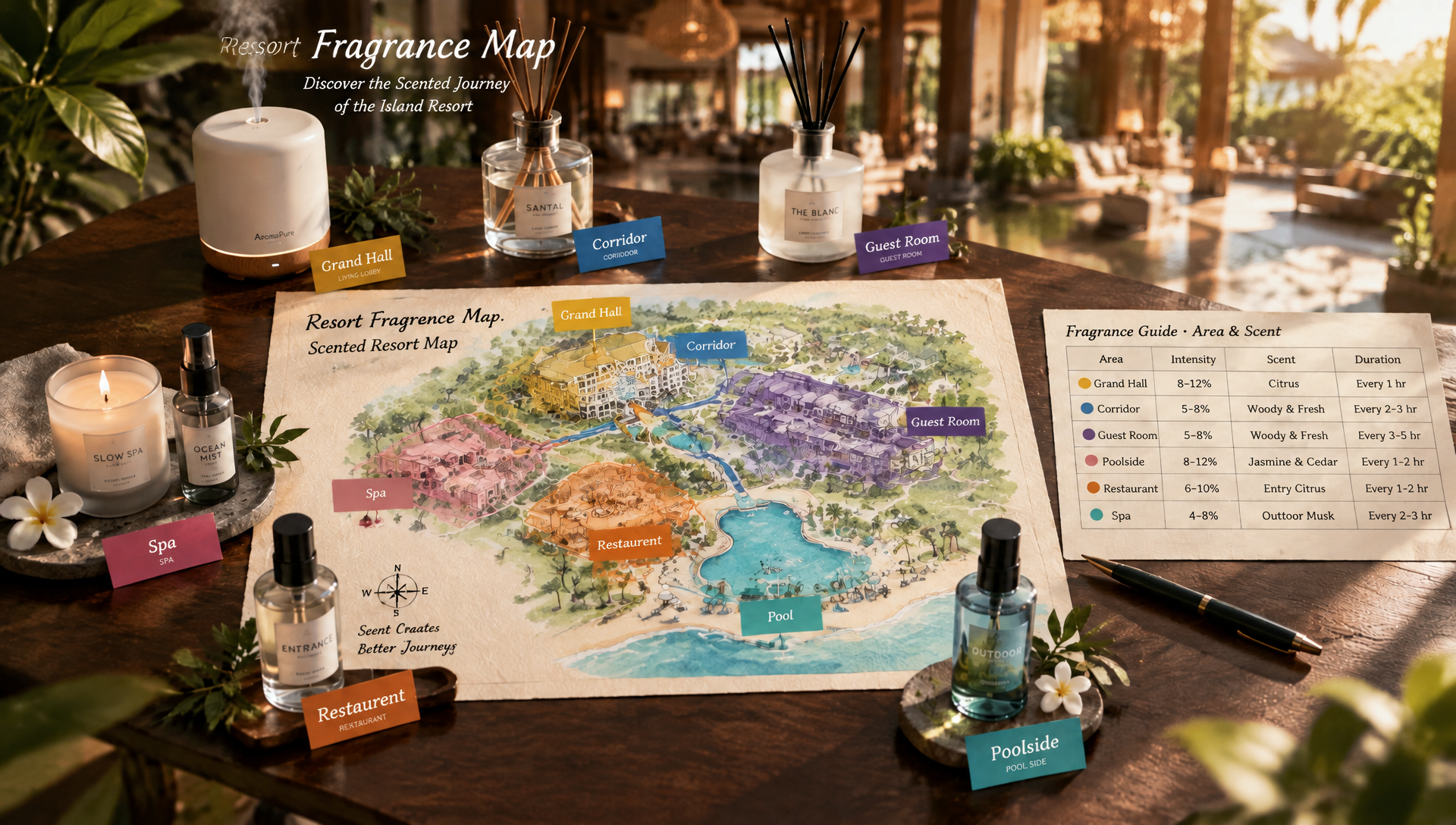
Guests' noses work by zone. At the entrance, they want welcome. Walking down the corridor, they want transition. Entering the spa, they want to settle down. The truly professional approach is to draw a scent map – writing out each zone's role, concentration, and delivery method separately, letting scent be controlled by zone like lighting. Get this map right, and non-fire carriers like reed diffusers fall into place – and the solution holds up when guests walk the full circle.
Draw the Circulation Route First, Then Choose the Scent
The first step in fragrance design isn't smelling – it's walking the guest's route.
From the drop-off area through the entrance, to the front desk, to the elevator lobby, to the corridor, to the guest room, then to the spa and restaurant – this route has several turning points. Each turning point is a scent handover. Done well, guests feel the entire resort is one world. Done poorly, two things happen: either the previous scent suddenly cuts off – like walking into a different hotel – or two scents collide into an indescribable mixture.
So mark three things on the map first: zone, dwell time, air circulation pattern. The lobby is high-ceilinged with strong airflow – scent won't linger. Corridors are long and narrow with stable airflow – scent accumulates easily. Guest rooms are enclosed, ventilation relies on AC – scent is hardest to disperse. Once these three are marked, concentration and carrier basically have their answers.
Six Zones, Six Roles
Break the resort into six blocks – give each one a clear task.
Drop-off area and lobby. Task: welcome and set the tone. Scent should be immediately memorable but not oppressive. Medium concentration, large diffusion range – suitable for diffuser machines providing continuous output.
Elevator lobby and corridors. Task: transition. Concentration about 30% lower than the lobby. Scent direction in the same family as the lobby – avoid gaps.
Guest rooms. Task: soothe. Lowest concentration. Scent should lean woody and clean – absolutely not sweet. Guests need to sleep here for eight hours.
Spa area. Task: immersion. Deeper herbal and resinous notes can be used. Concentration can be slightly higher – but avoid fragrance types that conflict with massage oils.
Restaurant and bar. Task: appetize and complement drinks. Scent should be extremely light – or appear only at the entrance. Too high a concentration will overpower the food.
Poolside and outdoor. Task: fill gaps. Outdoor diffusion is fast – rely on fragrance sprays or planted borders as accents, not primary output.
Write one line for each of the six zones – and the solution transforms from an abstract concept into an executable table.
How to Pair Carriers Without Them Fighting Each Other
The same fragrance type, delivered through different carriers, produces completely different results – this is also why many solutions lose shape during implementation.
Diffuser machines suit the lobby – stable output, large coverage area. Downside: needs power, maintenance must keep up. Reed diffusers suit guest rooms and corridors – no fire, quiet, no electricity. Downside: can't self-adjust – concentration depends entirely on reed count and placement. Fragrance sprays suit outdoor and temporary enhancement – flexible, but no persistence. Scented candles suit the spa and intimate spaces – ritual feel, but involve open flame – check fire safety conditions.
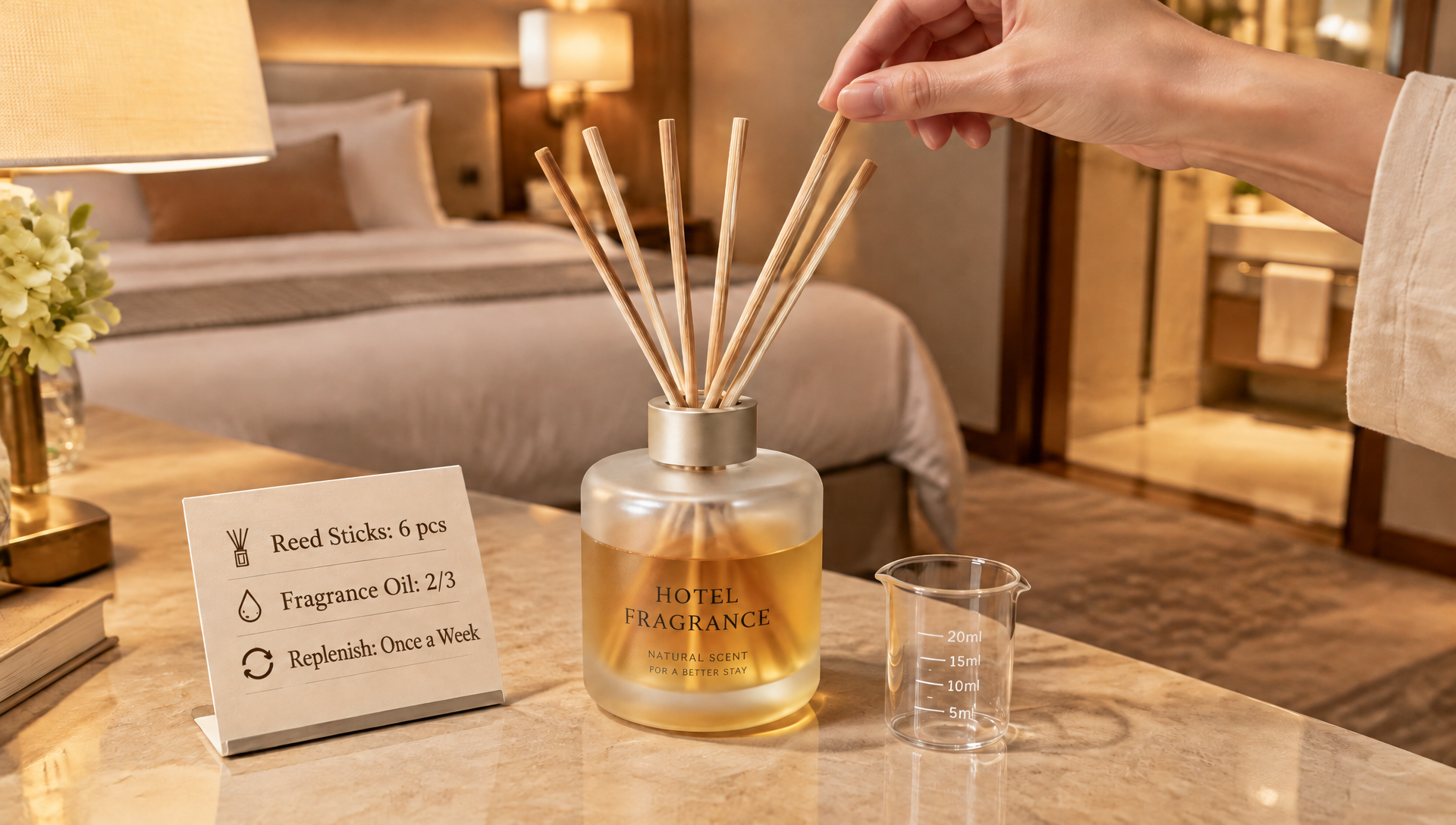
For guest rooms, non-fire reed diffusers are the most stable choice. No electricity, won't stop during a power trip, guests won't accidentally touch it. Placement matters: put it on a side table outside the entrance sightline – let the scent be carried as guests move, more comfortable than facing the bed head-on.
Concentration Isn't Perfumery – It's Arithmetic
Many solutions fail on concentration, not on scent type.
Room volume multiplied by air exchange rate roughly calculates the fragrance volume needed per hour – then match it against the carrier's output capacity. The lobby is eight meters high – volume is over ten times a standard guest room – one small machine is nowhere near enough. A guest room of twenty-some square meters – six reeds is already sufficient; twelve is overload.
Overload symptoms are typical: guests think it smells nice in the first minute, start looking for a window after half an hour, and leave the next day with the impression that "this hotel's scent gave me a headache." This feedback won't make it into reviews – but it stays in memory.
Replenishment rhythm must also be written into the solution. Guest rooms: replenish with housekeeping. Corridors: weekly patrol. Lobby: daily liquid level check. A solution without rhythm loses shape within two weeks – because nobody knows when to replenish.
What a Scent Map Looks Like
The value of this table isn't in filling it out – it's that every cell has an owner. No matter how beautifully written the solution is, without maintenance rhythm, three weeks later it becomes: lobby too strong, corridors empty, guest rooms random.
Scent Types Must Form a Family, Not a Pile
The six zones don't need identical scents – but they must be the same family.
The approach: define a base note first – something like cedar and vetiver, a woody foundation – then make each zone a variation on that base. Lobby: base plus a touch of citrus for brightness. Corridors: diluted. Guest rooms: only the woody notes plus a hint of clean white florals. Spa: shift toward herbs and resins. Restaurant: retreat until almost undetectable.
Walk the full circle this way, and what guests experience isn't six different scents – it's one scent at six different volumes across different spaces. The "pile" approach is each zone picking its own bestseller – each smells fine alone, but together it's a mixed platter.
One practical question to clarify upfront when selecting scents: can the supply side guarantee cross-batch consistency? Fragrance batch differences aren't obvious at six months – but after six months, returning guests will smell it immediately.
How Fragrance Becomes a Profit Item
Fragrance has three revenue paths in a resort – all should be considered during solution design.
First: review keywords. Guests can't write top-middle-base notes – but they will write "the lobby smelled wonderful" or "the room had a subtle woody scent." These sentences are high-frequency bonus points on review platforms – and差异化 tags in search.
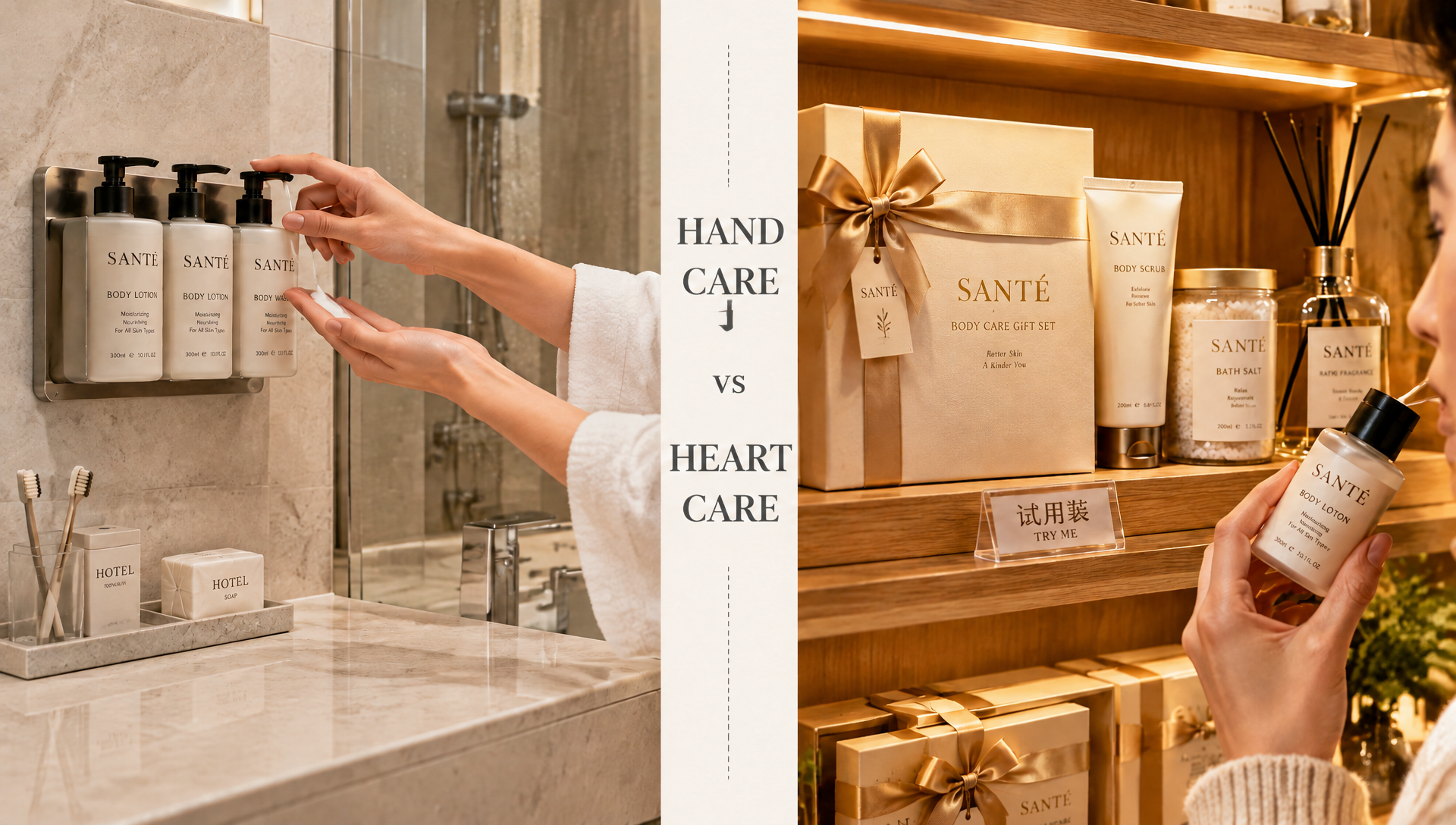
Second: retail. If the guest room diffuser is made in a take-home small size, with the full-size version placed at the concierge – guests will naturally feel a purchase impulse before checkout. The key to this path isn't displaying products – it's letting the one in the guest room be loved first.
Third: reuse and repeat stays. Guests who have smelled it, loved it, and taken a bottle home will think of this resort first when choosing their next vacation. Fragrance is one of the few experiences that continues to exist after guests leave – it goes home with the bottle.
None of these three paths requires extra investment. What's needed is reserving retail specifications and replenishment interfaces in the solution – don't wait until it sells well to discover there's no smaller bottle size.
Three Things Most Easily Missed During Implementation
First: staff olfactory fatigue. Stay in the same space long enough and you can't smell it. Staff think it's just right – guests already find it too strong. The solution must include external olfactory calibration – once a week, judged by someone who doesn't regularly work in that zone.
Second: seasonal changes. Summer temperatures are higher – fragrance volatilizes faster – concentration must be reduced. Winter is the opposite. Using the same parameters year-round guarantees overload in summer.
Third: cleaning product odors. Cleaning agents, laundry, kitchen smells penetrate the fragrance layer – no matter how refined the solution, it can't hold up. Before doing fragrance, eliminate the odor sources first – this is the prerequisite for all solutions.
FAQ
Q: Will concentration be unstable with non-fire carriers in guest rooms?
A: There will be fluctuations – controlled by reed count and placement. For guest rooms, we recommend fixing the reed count and placing the bottle on a side table in the airflow path. Flipping the reeds once during housekeeping is sufficient.
Q: Wouldn't using the same scent across all six zones save money?
A: Cost is indeed lower – but experience suffers. Guest rooms and restaurants have completely different tolerance for concentration. Same scent, same concentration – there will inevitably be one zone overloaded.
Q: How do you control fragrance batch differences?
A: Require the supply side to retain samples and lock fragrance sources. Conduct blind smell comparison between each incoming batch and the retained sample. If the difference exceeds the perceptible range – return the entire batch.
Q: Can open-flame fragrance be used in the spa area?
A: Depends on fire safety conditions and space ventilation. If conditions don't allow, switch to non-fire carriers or sprays. The ritual feel can be compensated for through vessel design and placement.
Browse our reed diffuser wholesale collection – from custom fragrance types to zone-specific concentration solutions to full resort fragrance configuration, all covered in one stop. Our flexible customization production line supports small-batch flexible MOQs.
latest articles
 Nov 04, 2026Resort Fragrance Solution Design: A Full-Scenario Olfactory Experience from Lobby to Spa
 Nov 02, 2026Retail Corner Display Logic and Guest Room Placement Logic Are Two Different Systems
 Oct 30, 2026Reed Count, Liquid Level and Diffusion Power: How to Tune a Reed Diffuser
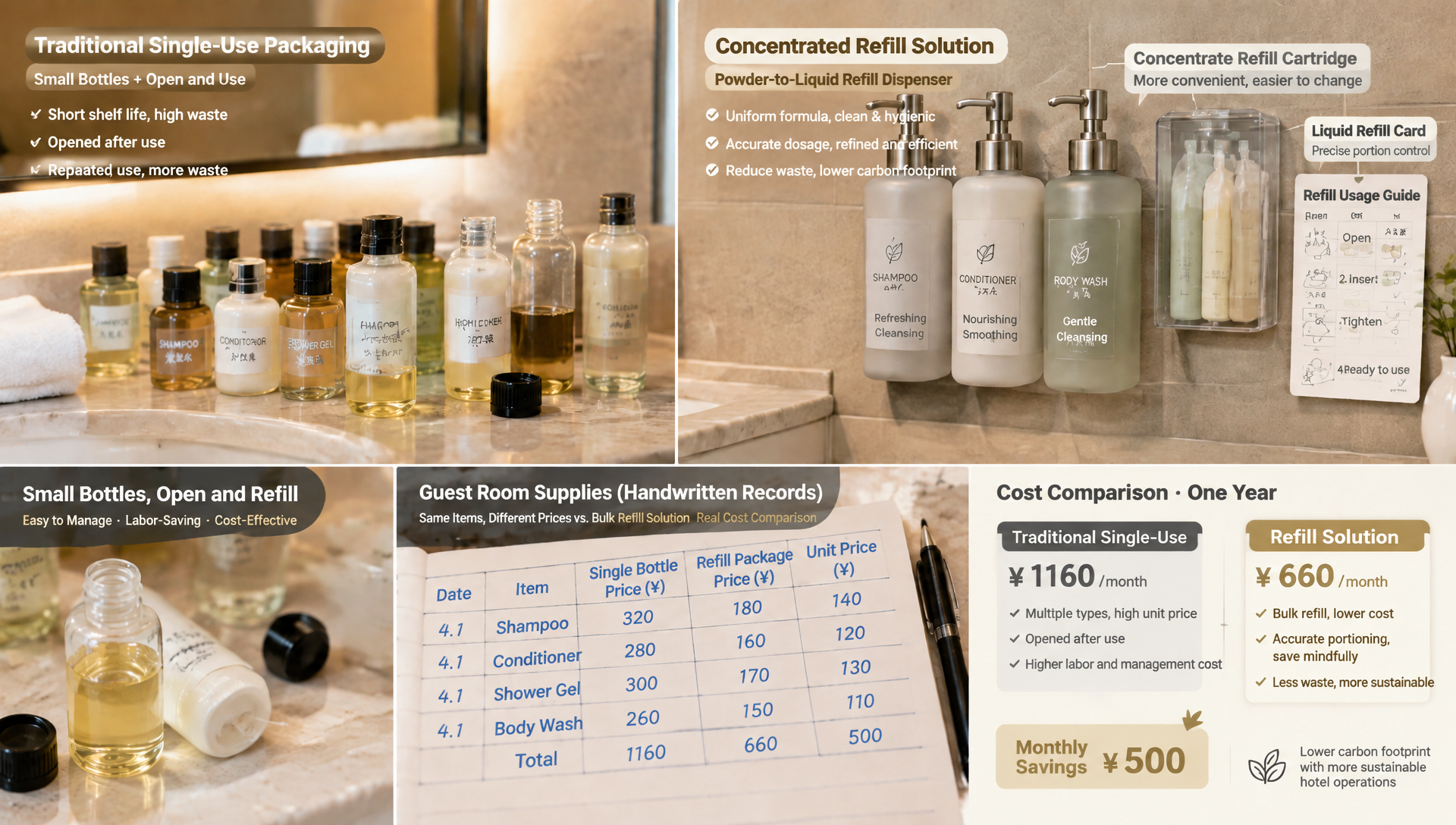
 Oct 28, 2026Bulk Miniatures vs Refillable Dispensers: The Real Cost per Room
Ask For A Quick Quote
If you are looking for more information on our services, or how we could potentially help, we would love to hear from you!