



Room toiletries cost breakdown per room – from 0.3 RMB to 3 RMB, where does the money go? 90% of hotels get this math wrong
For a 50‑room hotel, spending an extra 1 RMB per room on toiletries adds 18,250 RMB a year. But saving 1 RMB per room and getting one bad review in return? That bad review will cost you at least 30 future bookings. Do the math – which side wins?
I. What is the average cost of hotel toiletries per room? What happens between 0.3 RMB and 3 RMB?
Let’s start with the conclusion: the total cost of toiletries per room (including shampoo, body wash, toothbrush, toothpaste, comb, shower cap, disposable slippers, and sanitary pouch) varies widely – from economy to high‑end hotels.
0.3 – 0.6 RMB range
This is the rock‑bottom price for economy hotel chains. Typical configuration: 7g bag‑packed 2‑in‑1 shampoo & body wash, toothbrush with relatively hard bristles, thin non‑woven slippers, comb without individual packaging, all plastic wrapping.
Products at this level are usable, but guests won’t remember them – and sometimes they’ll complain. This price range has the highest risk of problems, because costs have been squeezed to the limit. Any corner‑cutting directly shows up in the guest experience.
0.8 – 1.5 RMB range
This is the mainstream price for mid‑scale hotels and boutique homestays. Typical configuration: 10‑15ml bottled or tube‑packed shampoo/body wash, medium‑soft toothbrush bristles, thick‑soled terry or velour slippers, individual packaging, packaging with some texture.
The core logic at this level: guests may not post on social media, but they probably won’t complain.
2.0 – 3.0 RMB range
The configuration level of high‑end five‑star hotels. 30ml+ larger‑size toiletries, signature fragrances with a story, bamboo or eco‑friendly toothbrush handles, towel‑cloth slippers with thick soles, exquisitely designed outer boxes.
At this level, value is no longer just about function. Brand storytelling and visual experience account for at least half of the premium.
Quick reference table for cost per room by tier
II. Bulk refillable shampoo vs individual small bottles – which is more cost‑effective? The answer is more complex than you think
Behind this question are two dimensions: per‑use consumption cost and alignment with hotel positioning. Let’s look at them separately.
Bulk wall‑mounted dispensers
Lowest per‑use cost. A 500ml bulk bottle, assuming 6‑8ml per use, serves about 60‑80 uses – roughly 0.05‑0.1 RMB per use.
Advantage: extremely low cost.
Disadvantages:
A dispenser on the wall visually anchors the hotel to “budget” – it can undermine the perceived quality of mid‑scale and high‑end hotels.
Once opened, the bottle is exposed to a humid environment – bacterial growth is common. Improper refilling can introduce contaminants.
Guests see no brand or ingredient information – zero perceived value.
Verdict: Bulk dispensers are suitable for economy hotels and guesthouses. Mid‑scale and above should use them with caution.
Individual small bottles
Higher per‑use cost. A 10‑15ml bottle or tube costs about 0.3‑0.6 RMB per piece.
But the value of small bottles is not about the amount of product used – it is about brand perception and replenishment efficiency.
Guests can see the brand name and ingredient information – it builds trust.
Unused product can be taken home – not half a bottle of shampoo, but a memory of the hotel.
Housekeeping can replace the whole set at once, without checking each dispenser level.
Small bottles with brand logos are more likely to be photographed and shared on social media.
Verdict: Mid‑scale and above hotels should choose individual small bottles. The extra cost is an investment in reputation and brand.
Comparison table: Bulk dispensers vs individual small bottles
Overall, bulk is not automatically cheaper and small bottles not automatically expensive. If your hotel’s average room rate is above 200 RMB, the extra few cents on toiletries can easily be covered by the room rate. This math is not hard.
III. How to tell good disposable slippers from bad ones – three seconds on the sole, five seconds on the upper
Slippers are one of the most complained‑about items in hotel toiletries. The main reason: purchasing decisions rely too much on price and looks, ignoring technical parameters.
First second: check sole thickness and tread pattern
Pick up a slipper and squeeze the sole with your fingers. If it flattens easily and rebounds very slowly, the sole is too thin – walking feels uncomfortable, and it slips when wet.
A good slipper should have a sole at least 5mm thick with clear anti‑slip tread. The tread is not decorative – it reduces the contact area of the water film. A smooth‑bottom slipper on a wet tile is basically a skateboard.
Second second: look at the sole material label
There are three common sole materials:
EVA foam: lowest cost, average anti‑slip, average comfort – suitable for low budgets.
TPR rubber: medium cost, good anti‑slip, medium comfort – suitable for mid‑scale hotels.
PVC composite: slightly higher cost, good anti‑slip, some elasticity – higher comfort.
When purchasing, ask the supplier directly for the sole material and anti‑slip coefficient. A test report is best; if not available, test it yourself on a wet tile floor – that is the most direct test.
Third second: flip it over and check the upper material
The upper is where corners are most often cut. Three common materials:
Non‑woven fabric: lowest cost, good breathability, but easily fuzzes and collapses when wet – the main choice for economy hotels.
Velour / terry: medium cost, feels like a towel, good water absorption, non‑sticky – the balanced choice for mid‑scale hotels.
Towel cloth: highest cost, thick and soft, strong water absorption, comfortable – the mainstream choice for high‑end hotels.
A simple field test: scrape the upper surface back and forth with your fingernail. If it fuzzes or sheds fibres, the quality is poor. If the fabric stays tight and does not fuzz, it passes.
IV. Why do hotel toothbrush bristles fall out – and how can you prevent it at the procurement stage?
A toothbrush shedding bristles is one of the worst guest experiences – imagine brushing your teeth and finding broken bristles in your mouth.
There are four main reasons for bristle shedding, each of which can be checked during procurement.
Reason 1: Poor bristle anchoring
Most disposable hotel toothbrushes use a metal anchor to fix bristles into the brush head holes. If the anchor does not bite deep enough or the metal is too thin, bristles will pull out under vertical pressure.
Check method: take a sample, pinch a tuft of bristles and pull upward. If you can easily pull out more than 3 bristles, or see a loose anchor at the base, reject this batch.
Reason 2: Substandard bristle material
Bristle materials, from worst to best:
Recycled plastic filaments: lowest cost, hard, poorly rounded tips – easily irritate gums and shed after a few uses.
PBT monofilament: medium cost, good elasticity, tips can be rounded – the minimum acceptable for mid‑scale hotels.
DuPont nylon filaments: highest cost, best softness and resilience, high rounding rate – the first choice for high‑end hotels.
Ask the supplier to specify the bristle material on the quotation. After receiving samples, use a magnifying glass or phone macro lens to check the bristle tips. If they are rounded and smooth – OK. If they are sharp or pointed – reject.
Reason 3: Low bristle density causing uneven force
Low bristle density means each tuft bears more force, making individual bristles more likely to break or fall out. When purchasing, count the number of bristle tufts. Fewer than 20 tufts is not recommended. 22 tufts or more is acceptable.
Reason 4: Moisture damage during storage and transport
If disposable toothbrushes are stored in a humid environment, the metal anchors in the bristle base can rust, loosening the bristles. Upon receipt, check whether the packaging is sealed and whether there are signs of moisture. If there is a musty smell or condensation inside the package, return the entire batch.
V. Procurement checklist – go through this table before placing an order
Before signing a contract for hotel toiletries, confirm each item on the following list.
Confirm that every product has a valid manufacturer registration certificate – especially shampoo and body wash.
Confirm the complete INCI ingredient list for every product. Imported products also require a Chinese label.
Confirm the latest third‑party test reports – covering heavy metals, microbiology, and preservatives.
Confirm that retained samples are kept – at least 2 complete sets per batch for future reference.
For slippers: confirm sole material, thickness, and anti‑slip tread. Keep one sample for a wet‑tile test.
For toothbrushes: confirm bristle material and tip rounding. If the pull‑out test fails, reject the whole batch.
Confirm a detailed breakdown of the cost per room – each item listed separately. Do not accept a vague total price.
Quick pitfalls checklist
What you save is not cost – it’s bad reviews. These nine words deserve to be pinned on every hotel buyer’s desk.
Knowing exactly where every cent goes – that is a calculation done right.
latest articles
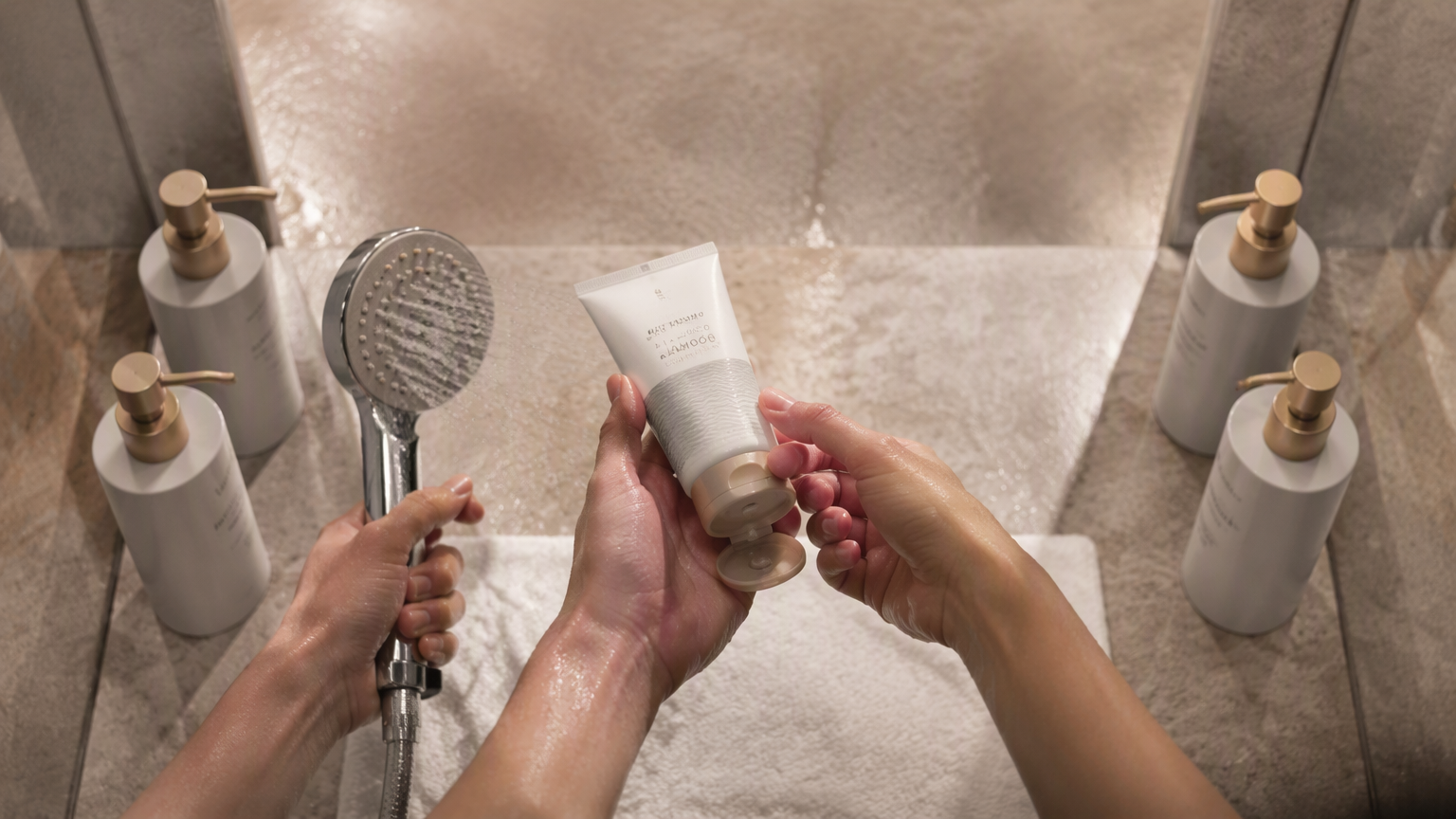
 Oct 19, 2026Tube Toiletries Are Quietly Returning to Five-Star Hotels – Not Because They Are Cheap, but Because Guests' Way of Opening Bottles Has Changed
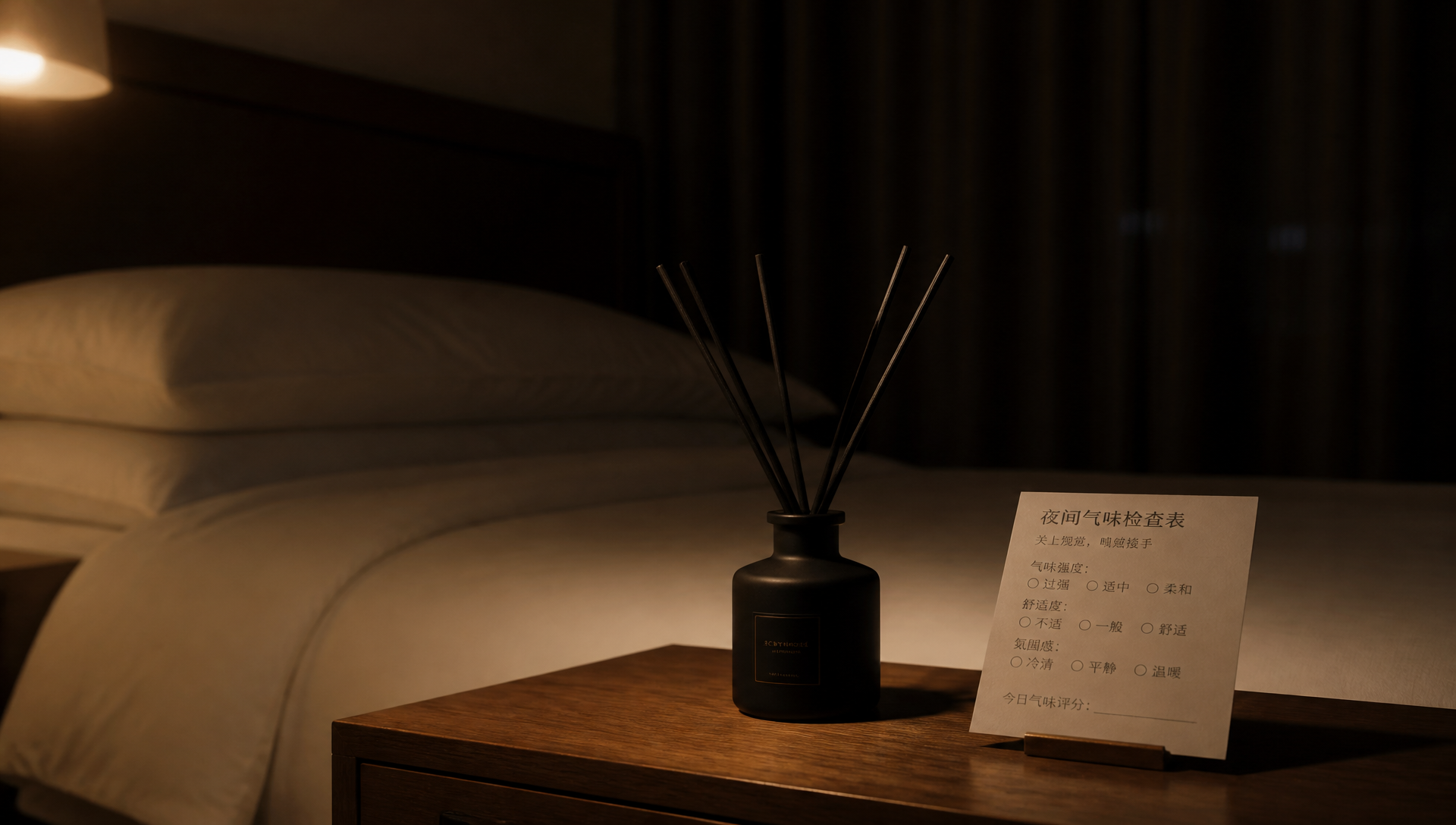
 Oct 15, 2026The One Hotel Detail Solo Travelers Care About Most: The Smell in the Room After the Lights Go Out
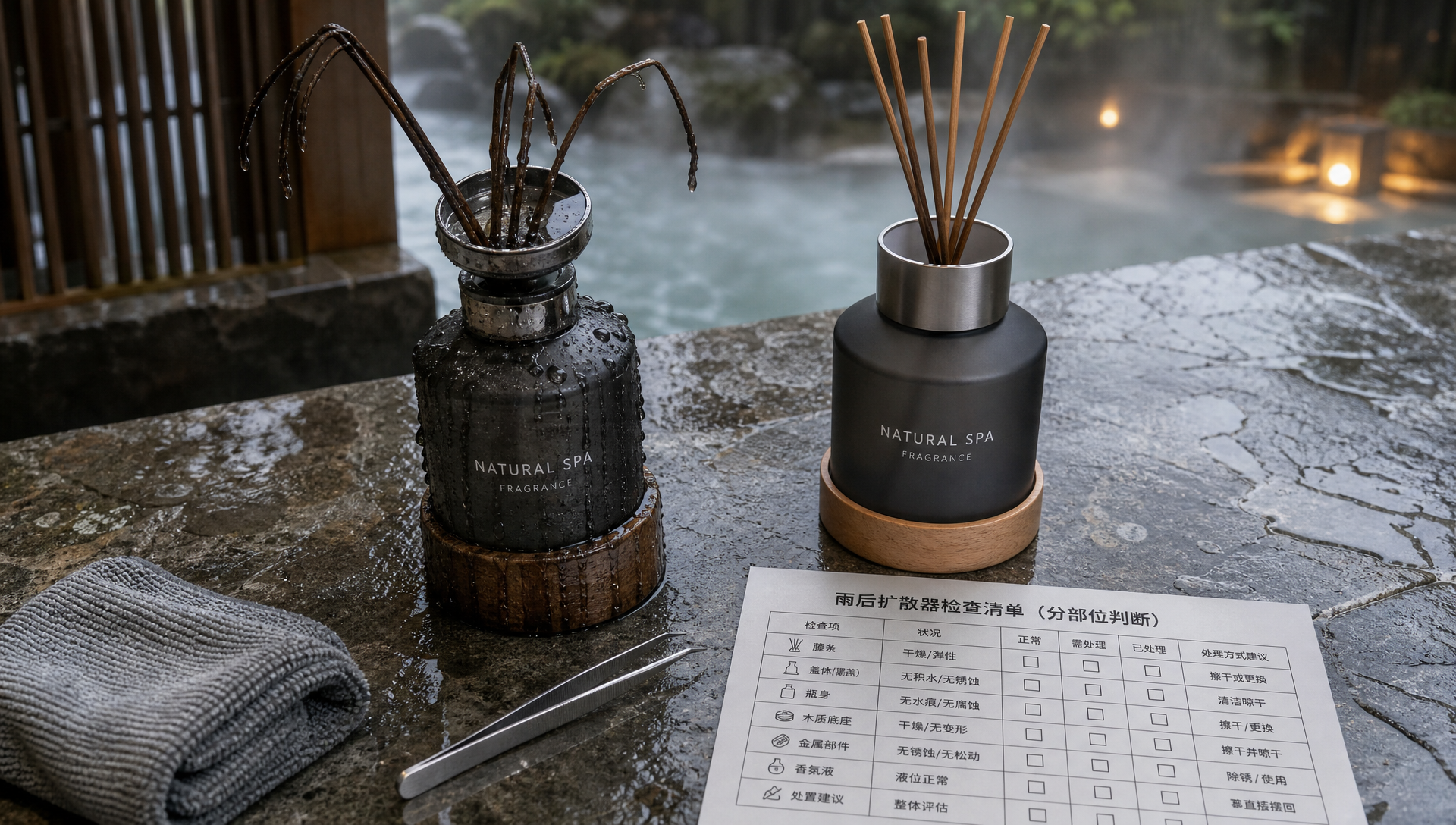
 Oct 13, 2026An Outdoor Hot Spring Fragrance Diffuser Left in the Rain All Night – Can It Still Be Used the Next Day?
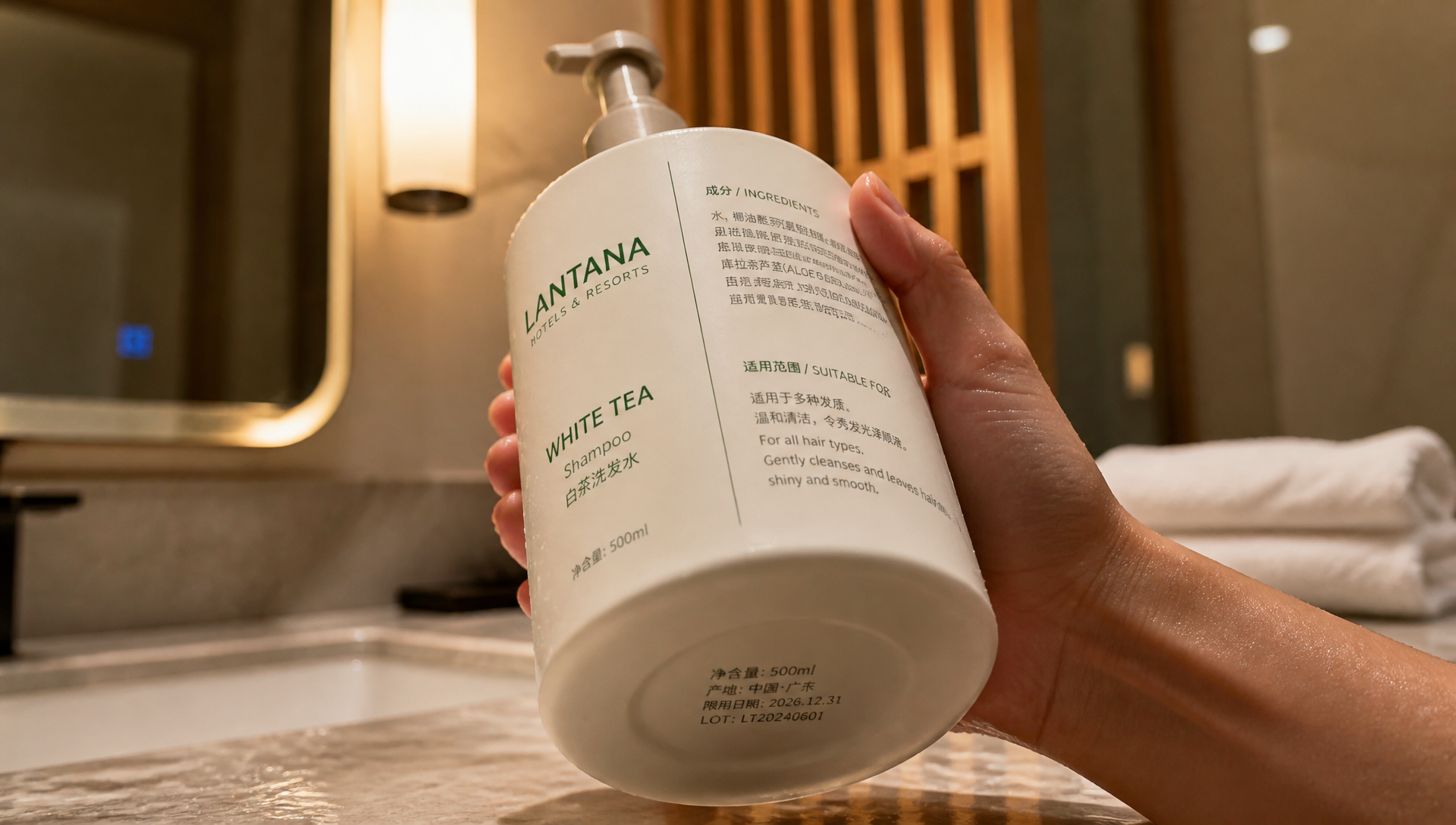
") Oct 09, 2026When Guests Pick Up the Large Toiletry Bottle to Check the Brand Name – Your Bottle Is Making a Silent Sale for You-(1)
Oct 09, 2026When Guests Pick Up the Large Toiletry Bottle to Check the Brand Name – Your Bottle Is Making a Silent Sale for You-(1)
Ask For A Quick Quote
If you are looking for more information on our services, or how we could potentially help, we would love to hear from you!