



When Hotel LOGOs Disappear from Bottles, Leaving Only a Color Block – The "De‑Branding" Trend in Premium Toiletries and the Brand Confidence Behind It
We lined up six premium hotel shampoo bottles, covered all logos with tape, leaving only the color blocks, and asked 100 frequent travelers to guess the brands blindly. The result was unexpected: the highest recognition rate was not for the bottle with the largest logo, but for the one with the most restrained color block – 60% of travelers recognized it by a single coral orange hue. The de‑branding of premium toiletries is never about abandoning the brand – it is about compressing brand memory into a color block, so that guests remember you even when they cannot see your logo. This article breaks down the design logic behind the color block after logo removal from four perspectives: guest experience pain points, hotel operational pain points, product competitiveness, and hotel profitability.
Guest Experience Pain Points – What Guests Remember Is Not the Logo, but the Color Block
A guest's attention in the bathroom lasts only a few seconds. They do not stare at the bottle to examine how finely the logo is embossed – but they unconsciously register the color in front of them. In a follow‑up study one month after checkout, fewer than 20% of guests could accurately recall the hotel's shampoo brand name, but nearly half could describe the bottle's color.
This is not mysticism. Human visual memory retains color far longer than text – a color block is a brand mark that requires no reading. When premium hotels remove the logo from the bottle, they do not create empty space – they create room for the color block to speak for itself. When guests open the bathroom door and see a row of bottles in the same color family, that sense of deliberate order conveys a level of quality that no gold‑foil logo can match.
Conversely, bottles covered in logos leave guests indifferent. Too much information is no information at all – logos, ingredient lists, and marketing messages stacked together become a blur that guests cannot remember. The essence of de‑branding is to reduce cognitive load for guests – to lower the memory cost to a minimum and let the brand enter their subconscious as a single block of color.
Hotel Operational Pain Points – Three Headaches Caused by Logo Processes
From an operational perspective, de‑branding is not about aesthetic preference – it is about practical cost reduction.
The first headache is logo detachment. Hot‑stamped logos tend to lift at the edges in high‑humidity bathroom environments. Silk‑screen logos wear off over time. When guests see chipped paint on a bottle, their first reaction is not a process issue – it is that hotel hygiene is substandard. The color block solution uses integral coloring – the color is part of the material itself, so there is no issue of detachment.
The second headache is batch color variation. When suppliers change or batches change, the ink color on logos shifts slightly – old and new bottles placed together immediately reveal the inconsistency. Integral‑colored bottles use standard color management – each batch is color‑matched before shipping, with color difference values kept within a range indistinguishable to the human eye.
The third headache is restocking confusion. Once logo‑printed bottles are out of stock, replacement bottles from temporary sources may not match the logo – the entire bathroom visual system collapses. Under the color block system, the hotel only needs to lock in a single color code – any manufacturer can replenish stock to the same standard, significantly reducing supply risk.
Product Competitiveness – Which of Six De‑Branding Solutions Is More Memorable?
The key to de‑branding is not removing the logo – it is replacing it with a color block that completes brand expression. We compared six solutions across four dimensions: recognition, premium feel, process complexity, and restocking flexibility.
Among the six solutions, the brand color solid bottle offers the best value for money. It uses a single block of color to complete brand recognition – the process is simple enough for any established factory to execute, and restocking can be seamlessly achieved by matching the color code. The full‑logo solution, by contrast, is process‑intensive yet delivers the lowest recognition – it is the solution with the greatest investment for the smallest return.
We conducted a real‑world test on brand color solid bottles. Among the same group of guests, only 10% could name the brand when shown a full‑logo bottle. When shown a brand color solid bottle, the recognition rate rose to 40%. When combined with matching color details on the cap and pump, it approached 50%. The color did most of the memory work that the logo used to do.
As a shampoo bottle manufacturer, our advice to clients is direct: de‑branding is not about abandoning branding – it is about switching brand expression from text to color. Lock in a primary brand color, unify it across the entire product line, and a row of bottles in the bathroom becomes a breathing brand wall.
Hotel Profitability – De‑Branding Saves More Than Just Printing Costs
The most visible benefit of de‑branding on the balance sheet is eliminating the logo printing process. But the real returns come from three less obvious areas.
The first is wastage reduction. Logo‑printed bottles that are misprinted must be scrapped. Under the color block system, the color is inherent to the material – there is no misprinting to redo – wastage rates can be reduced to less than one‑third of original levels.
The second is inventory simplification. The logo solution requires separate inventory for each design variation. The color block solution requires only a locked color code – inventory categories are cut in half, and capital tie‑up drops accordingly.
The third is reputation. This is the most valuable. When guests remember a hotel not by its logo but by its color block, the hotel's brand equity is no longer tied to a single factory – supplier changes become seamless as long as the color code remains consistent.
De‑branding is a form of brand confidence. Hotels that remove their logos assume that guests are already familiar enough with them – they do not need a few words on a bottle to remind them. This confidence is itself communicated to guests through the restraint of the color block, becoming one of the reasons they are willing to pay a premium for the room rate.
The Closing Hook
Next time you stay at a premium hotel, take a moment to look at the row of bottles in the bathroom – see if it takes just a single color for you to remember the hotel. If the answer is yes, then it has already built brand confidence into every detail. When you are ready to upgrade your hotel's toiletries, start by asking yourself: "What is my brand color?" If you cannot answer that, it is time to begin with a bottle that belongs only to you.
Eight Questions Procurement Managers Ask Most About De‑Branded Bottles
Q: Will de‑branding make guests feel the hotel has no brand identity?
A: Quite the opposite. Color is a stronger memory anchor than text – as long as the color block is consistent and restrained, guests are more likely to remember the hotel. The logo answers "do you recognize it?" – color answers "do you remember it?" – and the latter is more important.
Q: Is the color block solution more expensive?
A: The initial mould investment for integral coloring is slightly higher, but it eliminates the printing process and misprint wastage – over the long term, it is more cost‑effective. For hotels with over 100 rooms, switching to a color block solution can reduce annual comprehensive costs by over 20%.
Q: Will integral‑colored bottles fade?
A: We use masterbatch coloring – the color is evenly distributed throughout the material, not a surface coating. It will not wear off like silk‑screen printing. The colorfastness in high‑humidity bathroom environments has passed ageing tests – color difference remains stable within two years.
Q: Can color consistency be maintained across different batches?
A: Yes. We manage color codes using international standard color systems. Each batch is color‑matched with a colorimeter before shipping, with color difference kept within a range indistinguishable to the human eye. The hotel only needs to provide the color code once – all subsequent batches are produced to the same standard.
Q: Will changing suppliers cause color mismatches?
A: No. As long as the color code is locked, any factory producing to the same standard can replenish stock. We recommend that hotels include the color code in procurement contracts as a hard acceptance criterion – this ensures no brand discontinuity when changing suppliers.
Q: What type of hotel is the color block solution suitable for?
A: It is suitable for premium hotels with a clear brand color and a preference for restrained expression. If the hotel is still building brand awareness, it can start with a transitional solution combining logo and color block, gradually reducing the logo as guests form color memory.
Q: Should the entire toiletries line use the same color?
A: Not necessarily. The base line should use a unified color system to create a sense of order. Signature items can highlight one primary color as a memory point, but all bottles should feel cohesive when placed together. The color palette can be managed with the supplier's assistance.
Q: How do I know if the color block solution is right for my hotel?
A: Start with a small‑scale test. Choose one floor for a trial run, collect guest feedback and review keywords. If more comments mention color and quality, it means the color block is doing the branding work. We support small‑batch sampling for hotels to test before committing.
latest articles
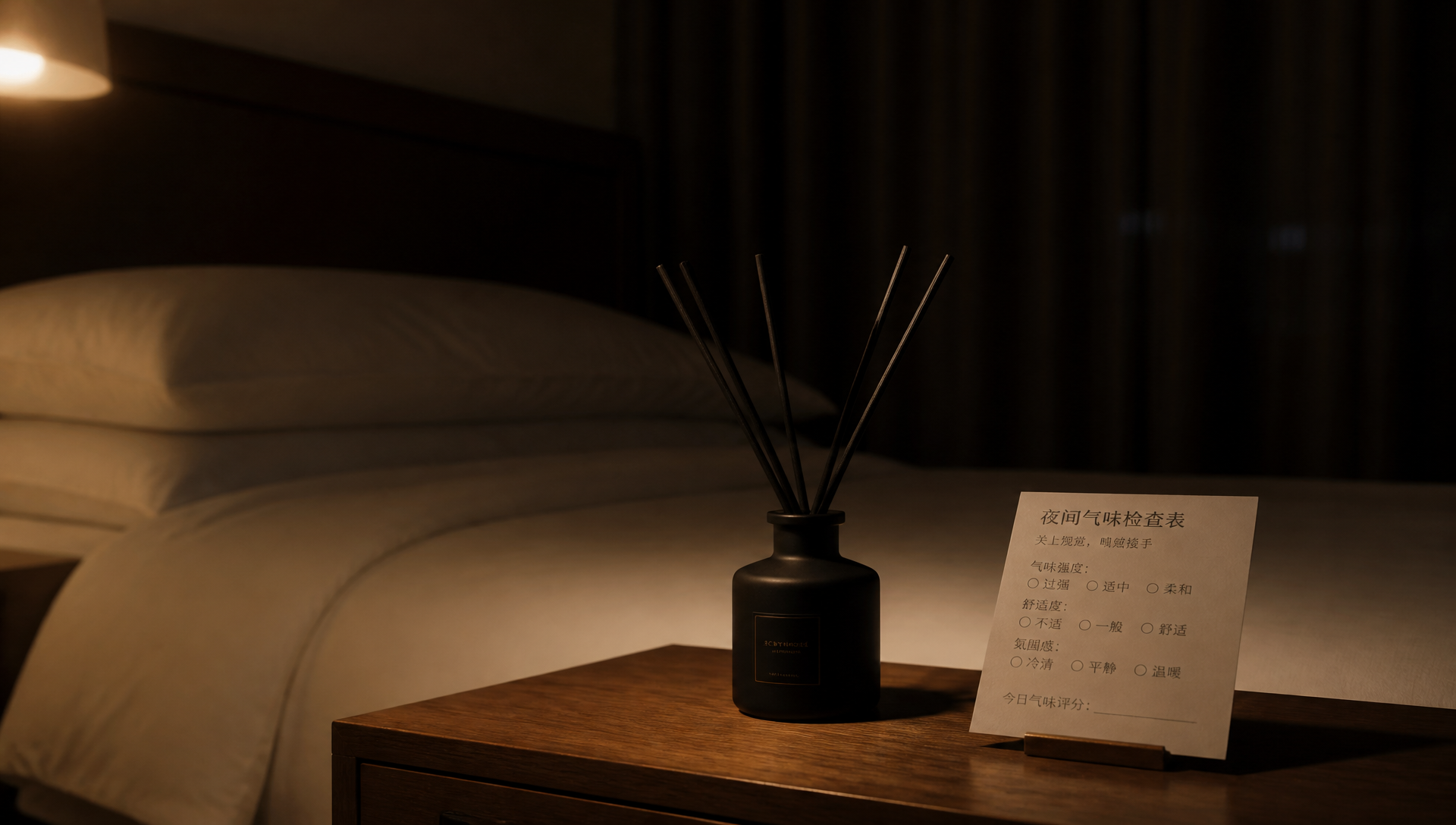
 Oct 15, 2026The One Hotel Detail Solo Travelers Care About Most: The Smell in the Room After the Lights Go Out
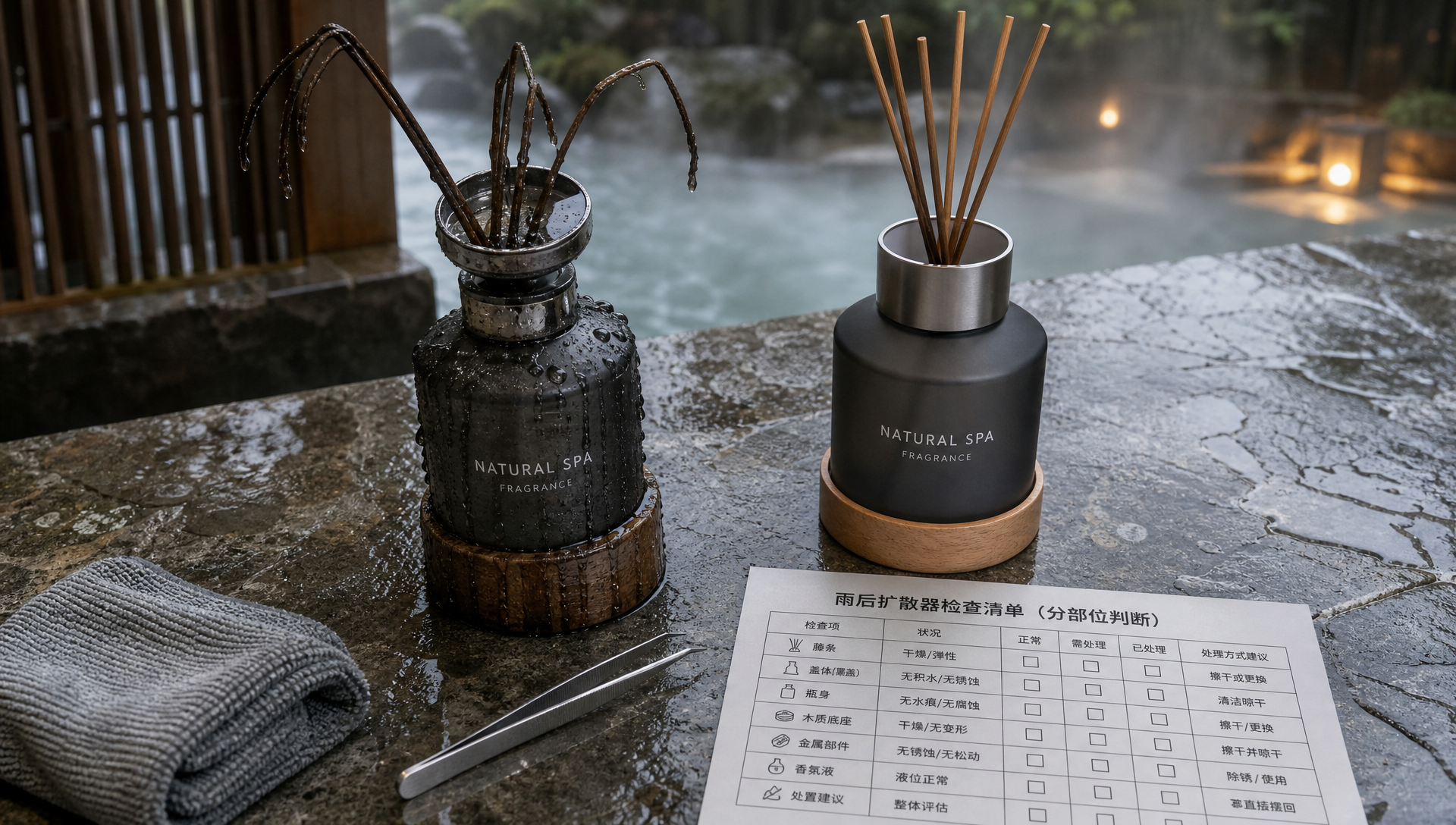
 Oct 13, 2026An Outdoor Hot Spring Fragrance Diffuser Left in the Rain All Night – Can It Still Be Used the Next Day?
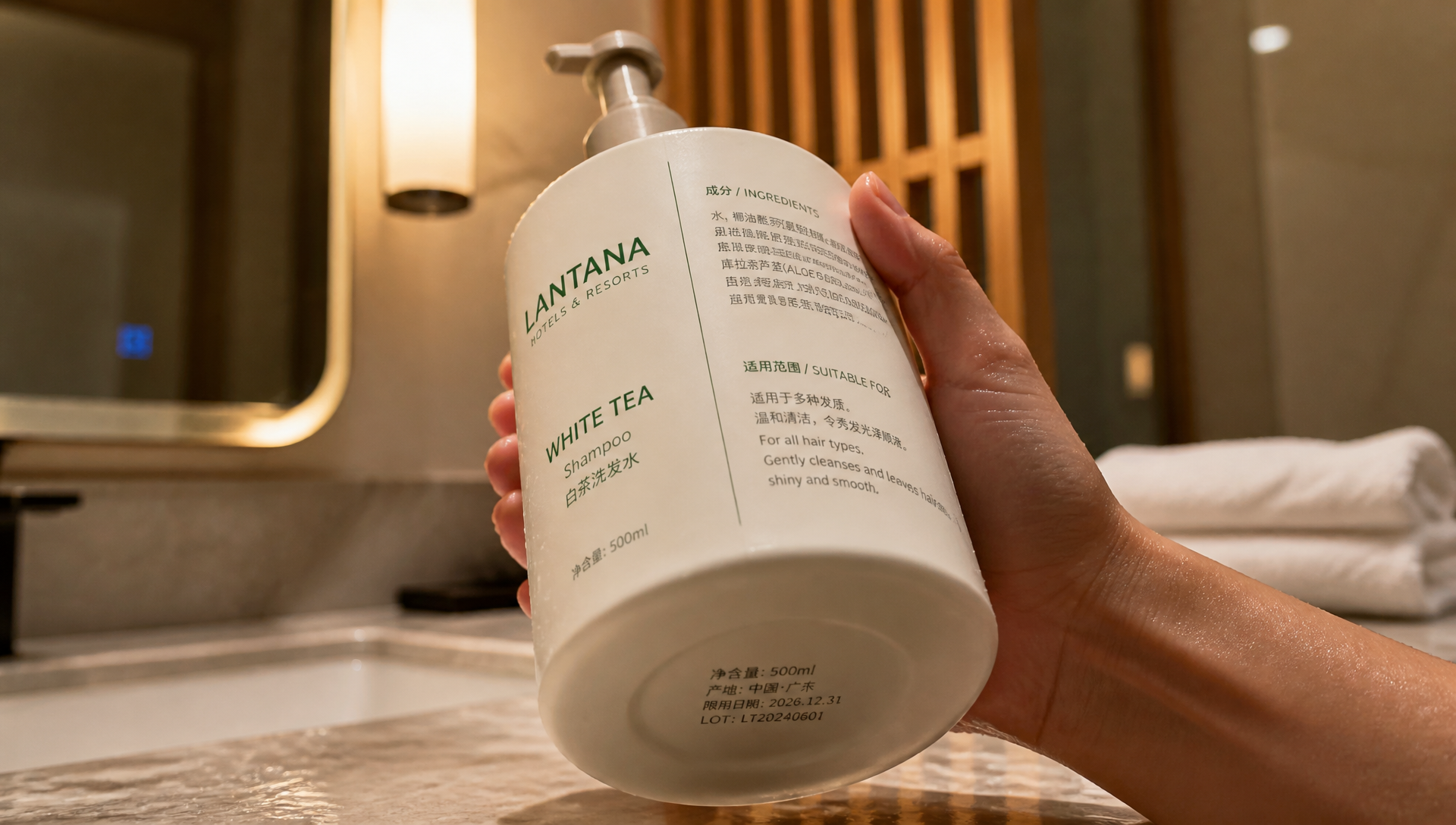
") Oct 09, 2026When Guests Pick Up the Large Toiletry Bottle to Check the Brand Name – Your Bottle Is Making a Silent Sale for You-(1)
Oct 09, 2026When Guests Pick Up the Large Toiletry Bottle to Check the Brand Name – Your Bottle Is Making a Silent Sale for You-(1) Oct 09, 2026When Guests Pick Up the Large Toiletry Bottle to Check the Brand Name – Your Bottle Is Making a Silent Sale for You
Ask For A Quick Quote
If you are looking for more information on our services, or how we could potentially help, we would love to hear from you!